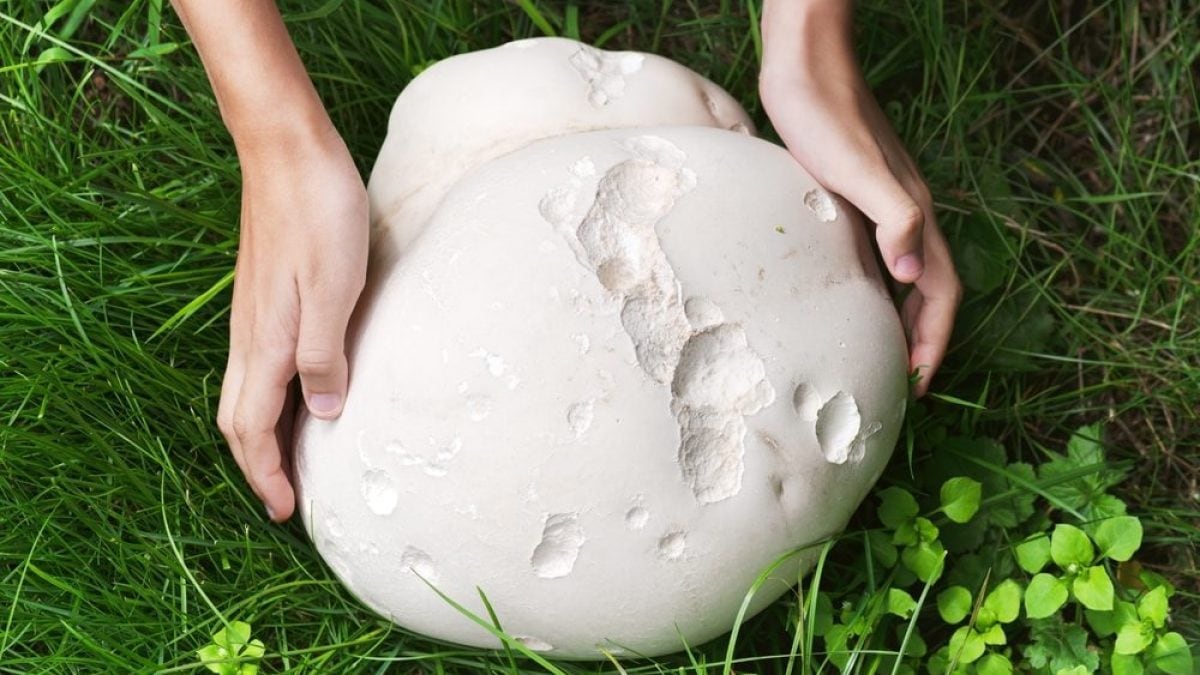
The world of mushrooms is one of the most unique, curious, and peculiar: in addition to the classic edible mushrooms like porcini and chanterelles, as well as the more well-known inedible ones like Amanita muscaria, there are a whole host of very strange-looking mushrooms. But don't be put off by them, because sometimes they're incredibly tasty. This is the case of the giant puffball, a strange member of the puffball family, characterized by their bulbous shape and complete lack of a foot.
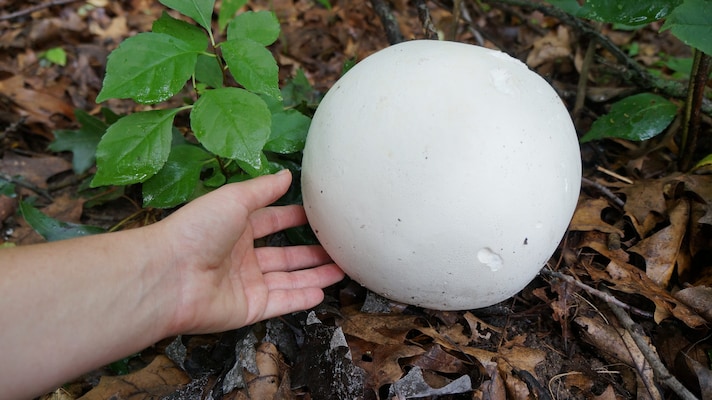
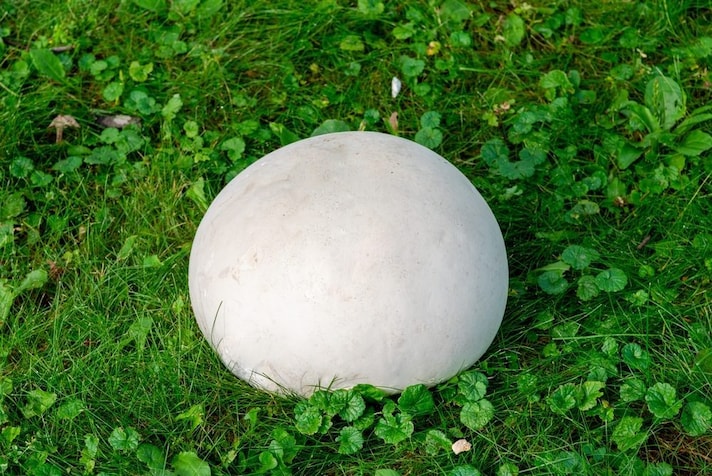
In fact, the giant puffball looks just like a ball, only it is outsized compared to the classic dimensions of mushrooms of its species: if other puffballs can look like golf balls, the Puffball is more like a soccer ball or a full moon, similarities accentuated not only by its considerable size (from 5 kg up to 25 kg in weight!) but also by its colour, a dazzling pure white and its perfectly spherical shape.
This easily recognizable mushroom has become a social media sensation in recent years, precisely because of its uniqueness: it might seem anything but edible, but it's actually delicious and can be used as a base for many recipes. Not only that, but the giant puffball has been known for at least two hundred years, but not for its culinary uses. Between the 1700s and 1800s, it was used medicinally for its ability to fight infections. This practice is no longer used today, but the puffball is certainly cooked: how is it prepared and how can you tell if it's good? Here's everything you need to know about one of the largest and most peculiar mushrooms in the world.
What is The Giant Puffball and Where Is It Found?
The giant puffball, also known as the giant puffball or the giant puffball, is a mushroom belonging to the Agaricaceae family. This mushroom, whose scientific name is Calvatia gigantea, is primarily known for its distinctive, immediately striking appearance: it has a fairly regular, rounded shape, a very bright white color, and lacks a stem like all puffballs, but is anchored to the ground by tiny, slender roots. What makes it even more distinctive, however, is its enormous size, typically weighing around 5 kg but capable of growing to enormous proportions, with specimens weighing up to 20-25 kg and reaching 1 m in diameter.
The puffball is a mushroom that reproduces without the use of embryos: like all puffballs, when it reaches full maturity, the giant puffball explodes, releasing a dark powder into the air. This powder contains the spores needed for reproduction, which, once released into the air, are often carried not too far by wind or insects. For this reason, the giant puffball usually grows in small colonies, and once one is identified, it is not uncommon to find others nearby.
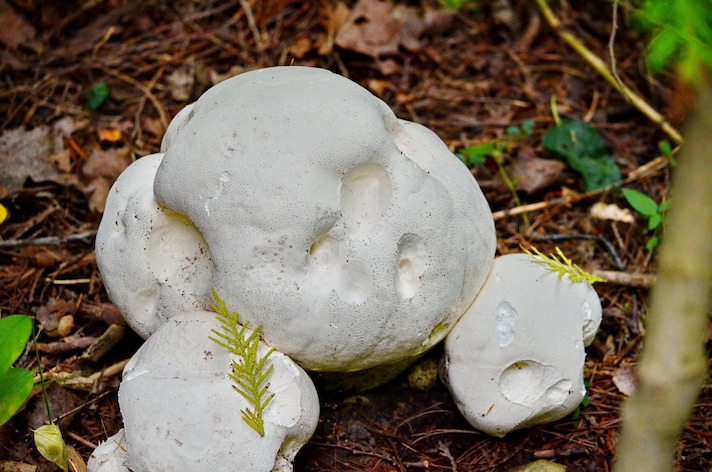
Its preferred habitat is grass in gardens, parks, and especially pastures (but it is sometimes also found in woods, although it is not tied to a particular tree like other mushrooms). It grows up to an altitude of 3,000 meters and is particularly widespread in the United States, but it is also found in Europe.
How Can You Tell if a Giant Puffball is Edible or Not?
Unlike other types of mushrooms, the giant puffball is extremely difficult to confuse with other inedible specimens, precisely because of its highly recognizable shape. Despite this, however, it's always best to remain vigilant, as the world of mushrooms always harbors potential dangers. The giant puffball is only edible when its surface is smooth, even, and perfectly white, with a firm consistency and an eggy odor.
If the mushroom's surface appears yellowish, brownish, or mottled, or if it's soft and spongy to the touch, it means the puffball is no longer edible and is reaching peak ripeness, the moment when it "explodes" to release its spores. What if you've already picked it? The characteristics to look for are the same: once cut, the mushroom should be firm, compact, and very white, with a texture and color reminiscent of feta or tofu.
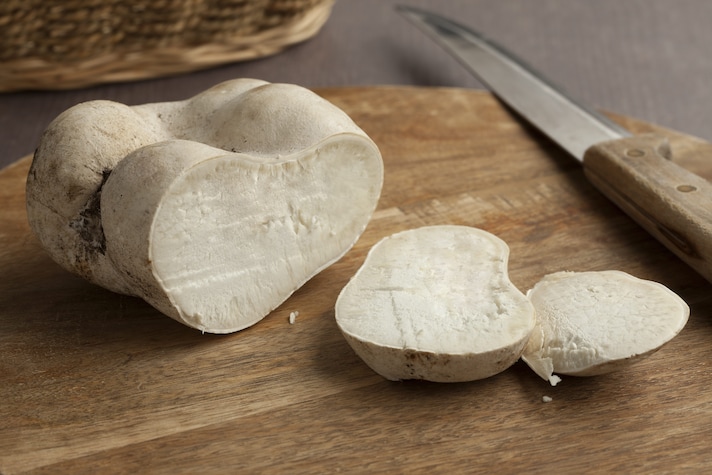
In addition to these signs, odor is also a sign of edibility: in its final stage, the mushroom begins to give off a nauseating odor that makes it clear that it is no longer worth eating. If you find a giant puffball, therefore, it's easy to determine whether it's still good or has "expired," and if you pick it, remember to consume it immediately because it is a mushroom that spoils quickly, both while still in the ground and after being picked.
How to Use Giant Puffballs in Cooking
Once you've found your giant puffball, confirmed it's edible, and brought it home, how do you cook it? First of all, remember a very important rule: this mushroom should never be washed, only removed from its thin outer skin, because water would make it too soft and ultimately ruin it. Also remember that, once cleaned and treated properly, the giant puffball can be used immediately or frozen and eaten later.
The puffball lends itself to a variety of preparations, partly because it has a very neutral flavor that allows it to be paired with many ingredients. The most common recipe is stewed, but it's also very common to cut it into slices a few centimeters thick and cook it like a grilled, broiled, or roasted steak; due to its firm texture, it's also perfect breaded and fried, just like a cutlet. Of course, cooking it with rice is a must, for a creamy risotto in full respect of mushroom gastronomic tradition.
Videos on social media have also revealed the most creative uses of Puffball: there are those who cut large slices and use them to replace the pizza base, or even those who use mushrooms in place of tofu in vegan recipes, or even those who flatten the large slices with a rolling pin to use them in place of pasta sheets to prepare decidedly alternative lasagna and cannelloni.
The culinary use of the giant puffball, however, is rather recent: it was once used not as a food, but as a natural medicinal remedy. Discovered in the second half of the 18th century by the German naturalist August Johann Georg Karl Batsch, it was a century later that this variety's remarkable ability to fight infections was noted: doctors of the time were so convinced of this property that many of them, after cutting the puffball into strips, inserted it between bandages to protect wounds, preventing them from becoming infected and promoting better healing.

