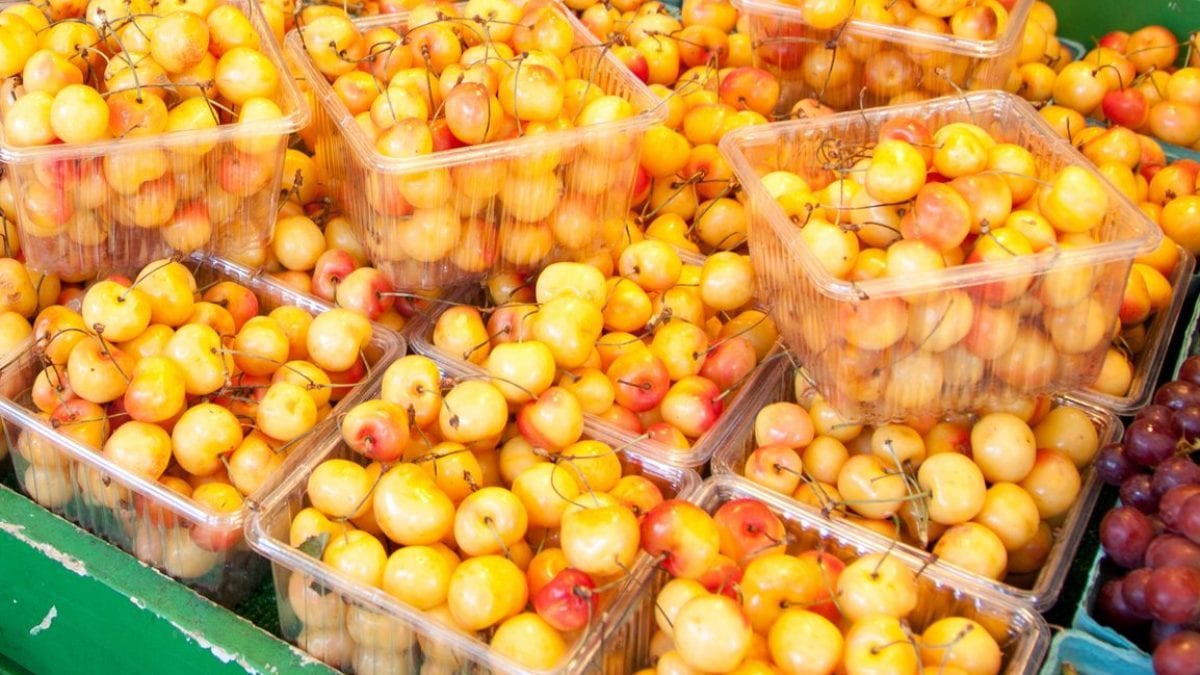
The arrival of spring and summer means our tables fill with cherries, among the most beloved fruits of the warm months of the year. There are many varieties of cherries, but we're sure you've never seen this one because it's quite rare these days: it's the yellow cherry, a particular type of cherry that resembles a small golden nugget. It's not often seen on fruit and vegetable stalls anymore, but it's actually an ancient variety, already known in the 16th century, as evidenced by its presence in many still life paintings of the time; various documents tell of how it was a fruit particularly beloved by the Medici family, and that they even grew some trees on the family estate. But why does this cherry have this color and does it have other differences from the classic cherry we know? Let's discover all the characteristics and peculiarities of the delicious yellow cherry.
What is the Yellow Cherry?
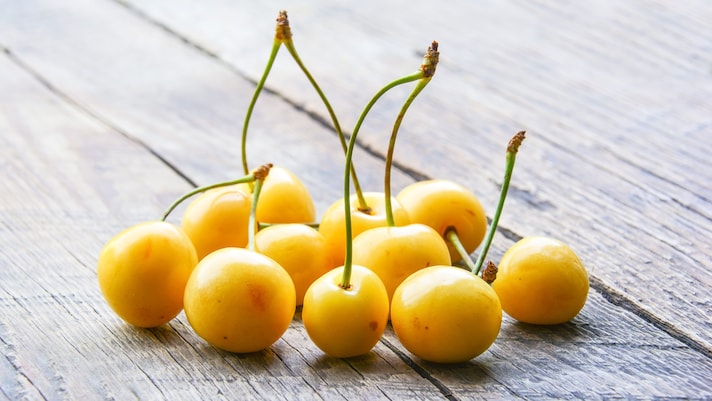
The botanical name for the yellow cherry is Moscatella Gialla or Durone Moscatella Gialla, and it's a uniquely Italian variety characterized by large, round, yellow fruits that, at first glance, almost resemble cherry tomatoes. This particular fruit grows on very large trees, reaching up to 7 meters tall, and its golden-yellow hue makes it one of the most "smart" fruits around.
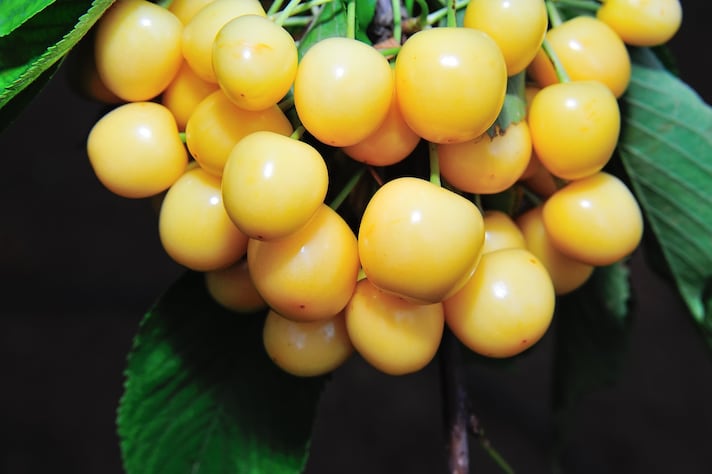
Thanks to their color, the fruits are able to fool predatory birds by convincing them that they're dealing with something unripe and inedible, prompting them to peck at other fruits, like the poor, unsuspecting red cherries. Furthermore, the less flashy color helps the fruits better camouflage themselves among the leaves, where they go less noticeable to birds.
A shame for them, a blessing for us: the flesh of the yellow cherry is firm and juicy, with a more bittersweet flavor than its red cousin and a light Muscat aroma. Furthermore, the yellow cherry is also larger than the classic red cherries. Today, the yellow cherry is considered a rare fruit, despite being an ancient specialty, because its very thin skin makes it unsuitable for long transport: it must be consumed almost immediately after harvesting, as it is not very resistant and begins to deteriorate quickly.
Despite this difficulty, some people still grow yellow cherries (but these are small crops for local consumption) and over the years, through various grafts, different varieties have been invented: to name a few, there is the Leningrad variety, which ripens later than the others (which are generally found between the end of June and the beginning of July), the Giallo Cortile, with its large pulp, the Giallo Drogana, characterised by larger than average berries or the Bigarro Giallo, with a thin skin and therefore not suitable for long transports, because they are not very resistant.
How to Use Yellow Cherries in Cooking
The yellow cherry, as we've explained, has a more bittersweet flavor than its red cousin, with a more or less intense aftertaste depending on the fruit's ripeness and a distinctive muscat aroma. For this reason, it lends itself very well to not-too-sweet sauces with which to accompany meat, fish, or cheeses, but it's also excellent as a jam to spread on bread and toast, or as a filling for delicious desserts like the classic fruit tart. In any case, there's nothing stopping you from using the yellow cherry in any sweet recipe you'd normally use the red one: there are dozens of them, each tastier and more delicious than the last.
;Resize,width=767;)
