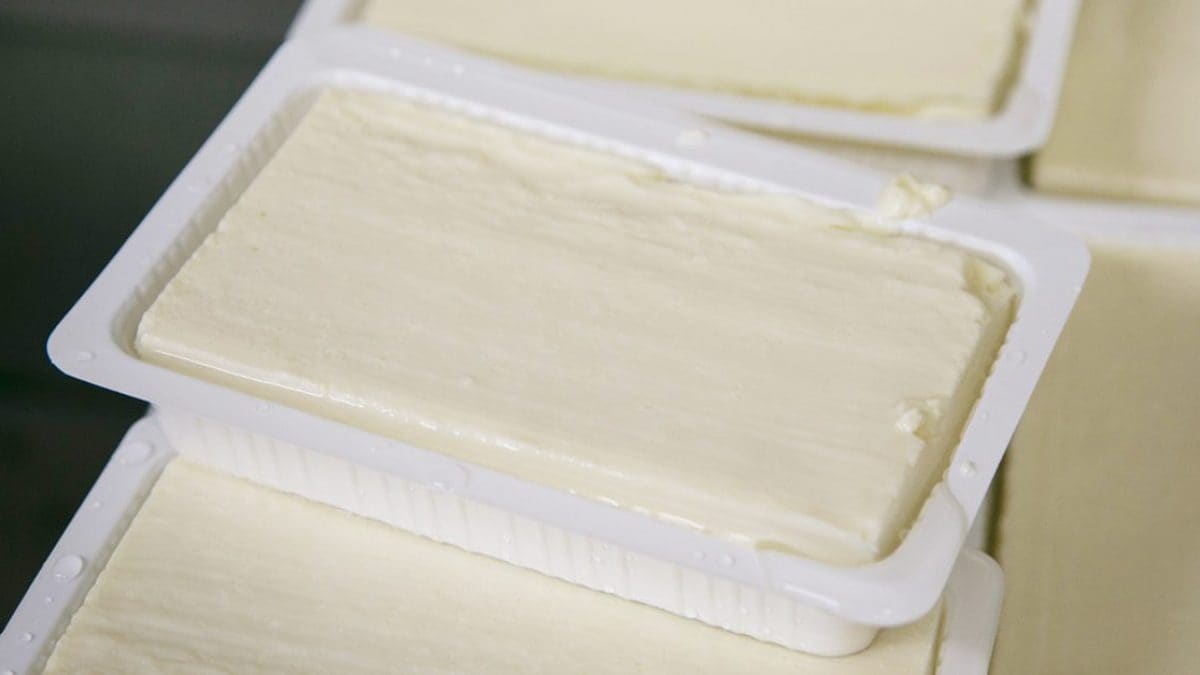
A Chinese specialty, although known in the West by its Japanese name, tofu (literally "boneless meat") is a staple in many Far Eastern cuisines. It resembles fresh cheese (which is why it's also called "vegetable cheese") and is made by coagulating a milky liquid derived from yellow soybeans. Rich in protein (about 15 grams per 100 grams of product) and low in fat and carbohydrates, it's a great alternative to meat for vegetarians, vegans, or anyone simply looking to reduce their excessive meat consumption.
It comes in the form of a block and can have a soft, velvety consistency or a firmer, more compact consistency, depending on the curdling agent used in the coagulation process. Easily digestible and relatively low in calories, it's a food that can be consumed by everyone, as long as the soy used comes from organic farming (for this reason, always read the labels). If you've ever tasted it, and the memory isn't the most pleasant or memorable, know that it deserves a second chance: its delicacy and distinctive neutral flavor are, in fact, its winning characteristics. Versatile in the kitchen like few other ingredients, tofu should be thought of as a kind of "sponge," a blank canvas waiting to be painted: it absorbs the aromas and flavors you marinate, season, or cook it with, revealing a very distinct personality. And if you don't know where to start, no problem: we'll guide you.
How Tofu is Produced
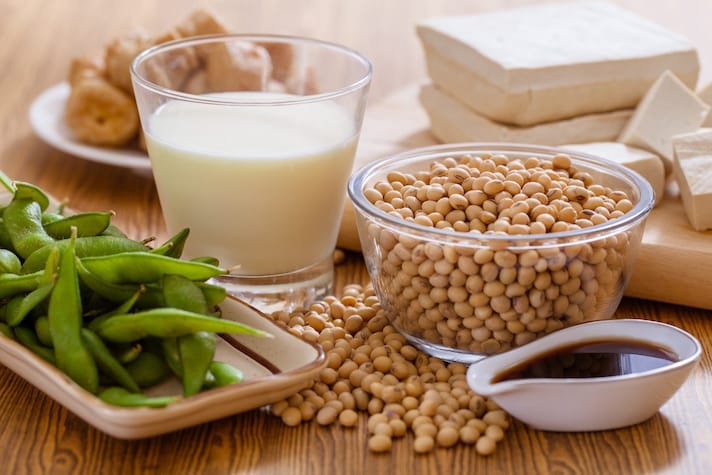
Tofu, to reach our tables in the form we all know, follows a completely unique and singular production process. On an industrial scale, yellow soybeans are first carefully washed, then soaked in enormous vats of water for about 24 hours; once doubled in volume, they are crushed and then filtered; the resulting liquid, or soy milk, is then used to make tofu. At this point, a curdling agent is added, and depending on the choice, the resulting consistency will be firmer or softer and more velvety (known as silken tofu). Among other ingredients, calcium sulfate and calcium chloride—used to produce the typical Chinese tofu, which is softer and more tender—or magnesium sulfate, which is generally used to make the smoother and firmer Japanese tofu.
Once the sediment has formed, the excess liquid is removed and only the solid portion is retained; if it is still too soft, it is pressed until the desired firmness is achieved. It is then packaged and stored in the refrigerator: once opened, just like a fresh cheese, it should be consumed within a few days.
What if we want to make it at home? Soak 500 grams of organic yellow soybeans overnight; drain and then blend them in a high-powered food processor, gradually adding about 4 liters of room-temperature water. Pour the resulting mixture into a saucepan and boil for a few minutes; turn off the heat and strain everything through a coarse-mesh sieve and then a finer one (alternatively, you can pour the liquid into a clean kitchen towel and wring it out well).
Transfer the resulting soy milk to another heavy-bottomed saucepan (the remaining solids, called okara, can be used to make meatballs, breads, muffins, etc.) and boil for about 5 minutes. Remove from the heat, add 1 tablespoon of nigari (a natural rennet composed almost exclusively of magnesium chloride), dissolved in 200 grams of hot water, and stir well. Collect the soy flakes that rise to the surface, transfer them to the appropriate mold, and let them rest for at least 1 hour before unmolding. At this point, the tofu is ready to be worked, flavored, and then cooked according to your favorite recipe.
Characteristics and Properties
Nutritionally, tofu is rich in plant-based protein and low in fat (with no cholesterol at all). Easily digestible and low in calories (about 145 calories per 100 grams), it's particularly suitable for vegetarians and vegans—a valid alternative to other protein sources—and can be consumed by everyone, including those with celiac disease or gluten intolerance.
Speaking of proteins, however, a necessary clarification must be made: since they have an average biological value, since they do not contain all the essential amino acids, it is best to combine tofu with a source of complex carbohydrates, preferably wholemeal, to obtain a balanced and well-balanced dish from a protein point of view.
It has an excellent vitamin content, particularly vitamin A and B vitamins; it is exceptionally rich in calcium, a mineral that makes it an essential food for bone health and the prevention of osteoporosis; it also contains good quantities of iron, potassium, phosphorus, and omega-3. It is also low in sodium, making it an ideal substitute for cheese in diets for people with hypertension or who are overweight.
Like all soy foods, tofu contains lecithin, a substance that can lower blood cholesterol levels; isoflavones, on the other hand, have an important anti-inflammatory effect, preventing cellular aging and protecting skin health.
Tofu's Thousand Uses
Tofu is one of the most versatile and eclectic foods available in the kitchen. Although it may seem like a soft cheese, similar in appearance to Greek feta, just tasting it will instantly change your mind (and perhaps even disappoint you). Yet it's precisely its neutral, delicate flavor that makes it so versatile and surprising: properly treated, seasoned, and cooked, this food is capable of absorbing all the aromas and flavors of the ingredients it's paired with, revealing a remarkable personality and achieving truly superb results.
You can marinate it with extra virgin olive oil, soy sauce, and spices to taste (turmeric, curry, paprika, etc.), then cut it into cubes and quickly sauté them on a hot grill: simply place them on a bed of lamb's lettuce, carrots, and thinly sliced fennel, and you'll have a fresh and light second course. You can blend it with spices, herbs, or some leftover cooked vegetables, add a drizzle of oil, and create delicious burgers or meatballs, served with a portion of crispy potatoes. You can always massage it with a drizzle of oil and a little tamari sauce, coat it in a whole-wheat cornbread, and bake it in the oven until lightly browned. You can also scramble it in a pan with dried tomatoes and spinach, as if they were simple scrambled eggs. You can coat it in rice flour or batter and fry it in boiling oil to make an irresistible appetizer, or reduce it to a smooth, velvety cream, perfect for spreading on slices of bread or for dipping raw vegetables.
It can be stuffed with sautéed vegetables, like a roasted chicken breast, its protein content can complement any soup or cream soup (like the famous miso-based one), and, in its silkiest form, it's also an unexpected ingredient for puddings, soft cakes, and delicious pancakes. Here are a few delicious uses.
1. Golden Tofu With Spring Onions
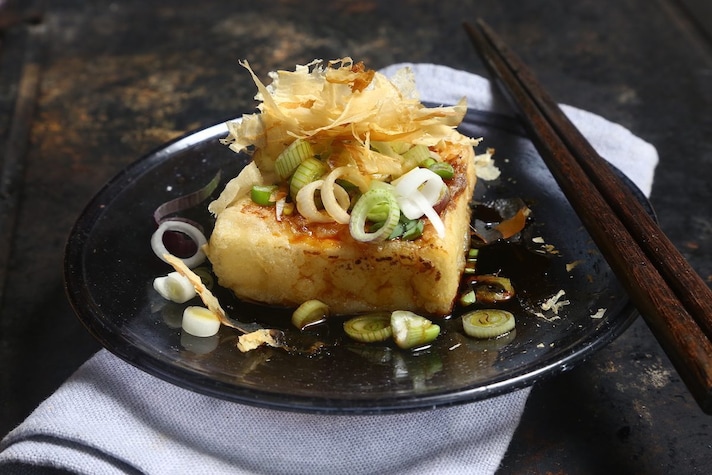
In this Japanese-inspired recipe, tofu is coated in cornstarch and then quickly pan-fried with a drizzle of oil until a golden crust forms. The sauce it's drizzled with, made with mirin, soy sauce, and kombu seaweed, enhances the delicate texture of the "vegetable cheese" and the freshness of the spring onion, creating a bold and distinctive flavor contrast. A perfect dish to serve at an ethnic dinner with friends or if you're looking for something delicious and alternative.
2. Agedashi Tofu
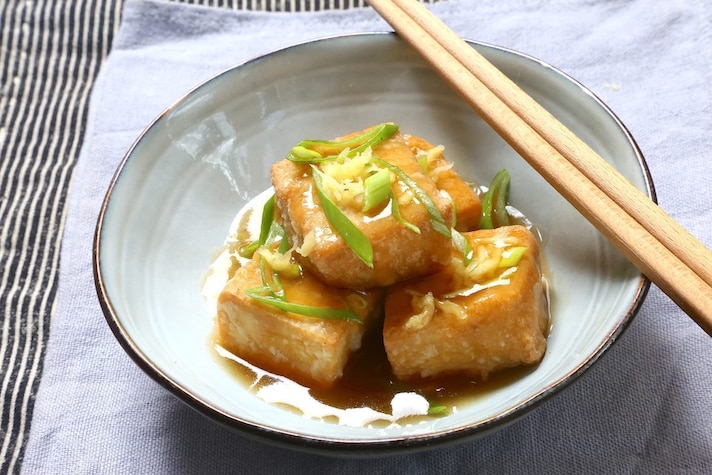
Agedashi tofu is a typical Japanese dish, traditionally served as an aperitif at izakaya, the traditional Japanese bars where people gather after work to enjoy a snack and a glass of sake. In this recipe, the tofu is cut into squares, coated in potato starch, and then fried in hot oil. Once golden brown and crispy, it's drizzled with a savory, creamy dashi broth sauce and garnished with spring onion and fresh ginger. In this recipe, our beloved plant-based cheese will absorb all the flavors and aromas of the ingredients it's paired with, resulting in a balanced and irresistible end result.
3. Tofu Curry

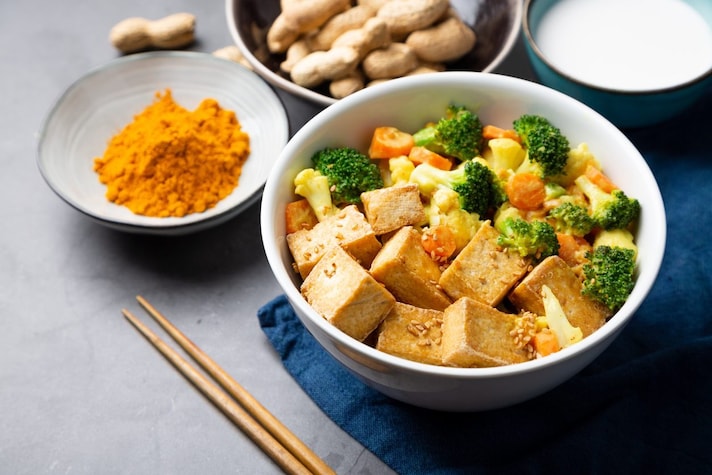
In case you're still skeptical about this food, here's a main dish that will literally change your mind. Finely chop a leek or shallot and sauté it in a large pan with a drizzle of oil; season with a pinch of turmeric and cumin, then add whatever vegetables you have on hand (sliced carrots, broccoli florets, peas, etc.) and the cubed tofu. Cover with coconut milk (100% pulp), a splash of hot vegetable broth, and cook for about twenty minutes, until the cooking juices have thickened. Garnish with a few coriander leaves and serve with a portion of basmati rice. Complete and truly satisfying, you won't regret it.
;Resize,width=767;)
