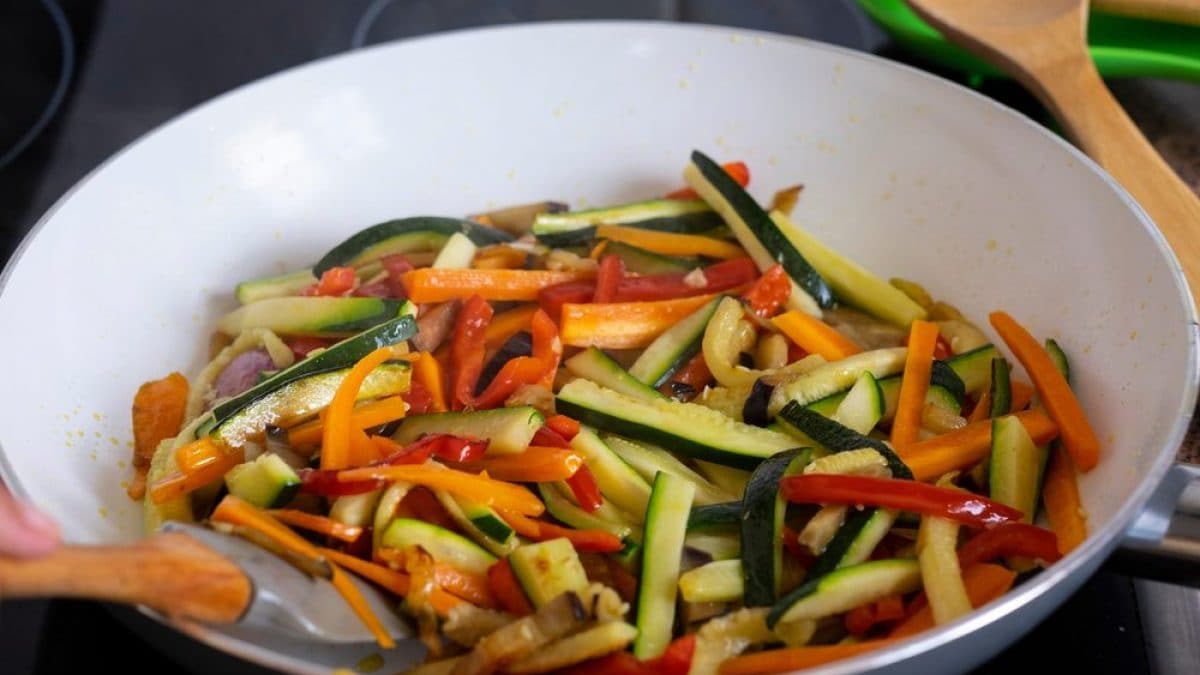
What's better than a juicy, tender slice of meat with a delicious golden crust on the outside? This is what searing allows you to achieve, a cooking technique widely used especially for cooking meat and making it particularly succulent, but which can also be used for other types of foods, such as fish, certain vegetables (zucchini and peppers, for example), and certain cheeses. In all cases, searing improves the food's texture and flavor, as it involves cooking it in a fatty substance.
It might seem like a simple operation, but this type of cooking requires a certain amount of attention: if you don't follow the steps correctly, the risk of burning the ingredient is very high, as is the risk of overdrying it and making it too dry or stringy. What does searing mean, and what are the most common mistakes that prevent perfect cooking? Here are the tips to follow to master the browning technique.
What Does It Mean to Sear Something Well?
Searing is a basic cooking technique that involves cooking food in a fat, usually clarified butter and extra virgin olive oil, but also, less commonly, lard or margarine. Rapid cooking at a high temperature, combined with the fat in which the food is cooked, creates a golden, crispy outer crust and a softer, more flavorful interior. The appearance of this crust indicates that you're searing well: it means the chemical process known as the Maillard reaction (not to be confused with caramelization) has taken place. The outer crust, in fact, forms following the interaction between sugars and proteins during cooking at a certain temperature, thus causing the appearance of a flavorful and aromatic brown layer, which makes the food much more delicious.

French scientist Louis Camille Maillard, the first chemist to discover it in 1912, noted that during cooking at high temperatures (between 285°F/140°C and 355°F/180°C), a chemical reaction occurs between amino acids and reducing sugars that creates melanoidins, which in turn improve the food's texture and flavor. A well-done searing, therefore, leads to the Maillard reaction, resulting in a food with a golden, crispy, and flavorful surface and a softer, juicier interior—not burned but not pale either, and cooked evenly on all sides.
What Are The Most Common Searing Mistakes?
Searing seems like a simple enough technique, but it actually hides several pitfalls: many factors influence the success of the Maillard reaction, and if you're not aware of them, it's very easy to get it wrong. One of the most common reasons for searing incorrectly is the choice of pan you use: it may seem like a trivial reason, but it's actually crucial. For a perfect browning, the pan must first of all be non-stick, and then its size must be proportionate to the size of the food being cooked: the larger the ingredient, the larger the pan diameter should be.
If the pan is too large, the exposed fat will tend to burn, while if the food is too small, a layer of steam will be produced that will tend to stew the meat rather than sear it. It's also very important for the pan to have a thick enough bottom: temperature control is essential for searing, and a pan that's too thin won't allow for consistent heat.

Another factor that can easily lead to a mistake when searing is the choice of fat in which to cook the meat. Clarified butter is best because it can withstand high temperatures without burning and has a perfectly neutral flavor, but you can also use lard (but be careful, it's much fattier) or a mixture of butter or margarine and extra virgin olive oil; in this case, the oil helps the butter resist high temperatures. You can also use other types of oil, but make sure they have a fairly high smoke point: some oils are not suited to high temperatures and will degrade if exposed to excessive heat.
Among the other most common mistakes that lead to incorrect searing are also:
- not heating the pan enough, a mistake that leads to uneven cooking of the meat and therefore to a partial or completely absent Maillard reaction;
- using too much fat, which would make the dish too greasy and heavy, as well as making it much more caloric;
- Overloading the pan by adding too much food at once causes the temperature to drop and therefore you will not be able to sear it;
- Do not turn the food regularly so that all sides are well seared, resulting in partial searing with some parts that may be too raw or overcooked.
The Steps to Searing to Perfection
Given the mistakes listed, what should you do to sear perfectly? First, you need to prepare the food: remember, it can be seared plain (slices of meat, vegetables, potatoes) or breaded (a Milanese cutlet), but you need to pay attention to the seasoning. Salt and spices can be added before cooking if the ingredient is whole, while if it's chopped or very thin, it should be seasoned toward the end of cooking, as it requires more seasoning and could burn in the pan. If you prefer to season it later, that's fine, but remember to do it once you've removed the pan from the heat to prevent the seasoning from burning.
The ingredient must be brought to room temperature before searing, and it's a good idea to pat it dry with paper towels to absorb any excess liquid. As we've explained, the pan must be preheated for proper searing. There are two stages to searing: first, you need to melt the fat of your choice and add the meat once it's ready. At this point, the temperature must be quite high to trigger the Maillard reaction and form a golden crust on all sides of the ingredient. The ideal searing temperature is between 285°F/140°C and 390°F/200°C, and the Maillard reaction begins at a temperature of 312°F/156°C. For truly perfect searing, it's ideal to use a kitchen thermometer so you can constantly and accurately monitor the internal and external temperatures of the food.

How do you know when to turn an ingredient? Usually, the right time is when you can't feel any resistance on the bottom of the pan, but it depends on the type of food you're cooking: for example, steak usually shouldn't be turned more than once, and the same goes for fish, because it's not firm enough and could fall apart. The second stage of searing involves lowering the heat to finish cooking on low heat, allowing the heat to penetrate deeply without burning the food, thus preserving its tender and appetizing flavor. There's no hard and fast rule regarding cooking times; it depends on the type of food you're cooking, so we recommend following the times indicated in the recipe you're using.
;Resize,width=767;)
