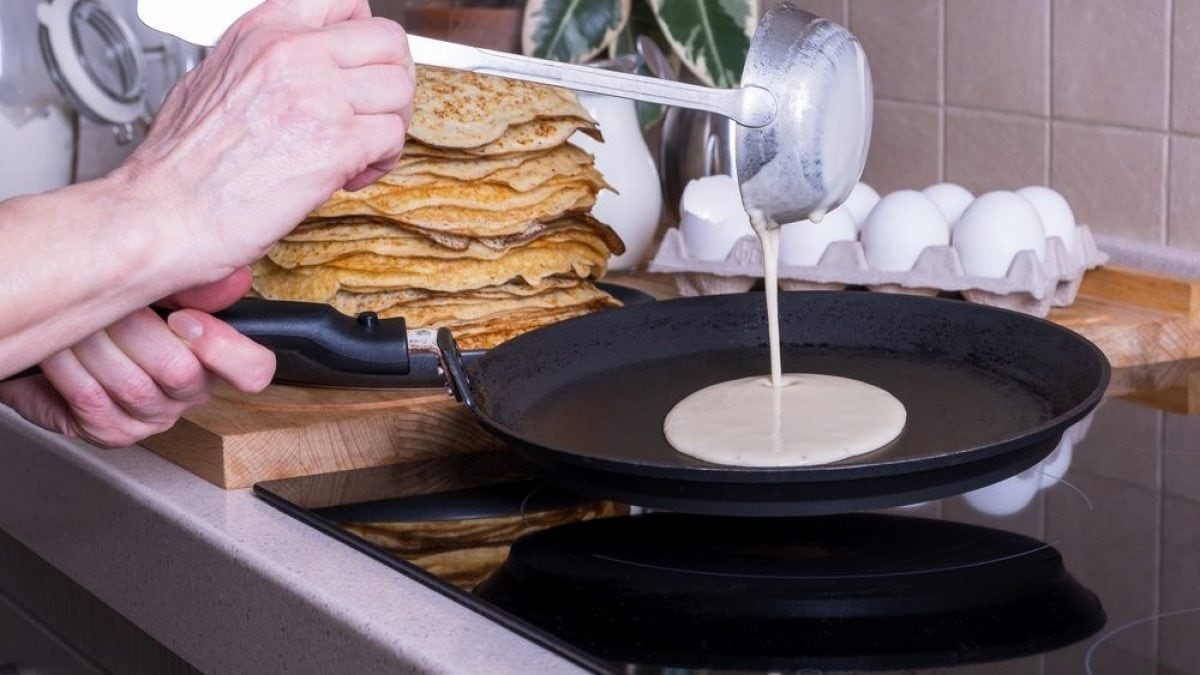
Delicious for weekend breakfast, brunch, and even as a dessert: crêpes are a delicious and versatile classic, with the advantage of being customizable to suit your tastes, whether sweet (from Nutella to the elegant crêpe Suzette) or savory, with fillings of cheeses, cured meats, and seasonal vegetables. Making this specialty to perfection, however, isn't just a matter of a perfect batter: the recipe, in its simplicity, requires special attention to cooking, which must be even, keeping the disc intact and free from burning. Therefore, a crêpe maker, or a special crêpe pan, can prove to be the perfect ally to avoid mistakes. There are several models on the market, from professional ones to those suitable for beginners, but they all share features that make them the ideal choice for this preparation.
What a Crepe Pan Looks Like
Serving crêpes is always a pleasure: they can be made even in a "regular" pan, but if you're serious about achieving impeccable results, then we recommend this specific tool. It's incredibly satisfying, designed specifically to facilitate cooking delicate doughs that need to remain thin, soft, and not break. Let's take a look at the special features of crêpe pans.
Non-Stick Material
First of all, it's essential that they are non-stick. This is the only way to prevent the dough from sticking while using very little fat. Starting with this essential detail, you can find pans on the market made of:
- Non-stick aluminum: these are lightweight supports, with excellent thermal conductivity, easy to use and have a Teflon or ceramic coating.
- Cast iron: one of the best materials for heat distribution, ensuring even cooking. They are heavier (and more expensive) and require adequate maintenance.
- Stainless steel: these have the advantage of being both easy to handle and durable. They are available with a non-stick coating, but can be coated with oil or butter.

Low Edges And a Wide, Flat Bottom
The construction of crepe pans, with their round shape, differs from that of other pans in that they have minimal or even no edges and a completely flattened bottom: this favors even heating of the entire surface onto which the mixture is poured and its being easily spread and turned during cooking.
Ergonomic Handle
The handle is usually long and made of an insulating material, which is heat-resistant, making it perfect for avoiding burns and for holding the pan with a comfortable and secure grip.
Dimensions
These pans range in diameter from 20 to 30 cm: the small size is easier to handle than the large one, which represents the traditional standard size for a crêpe, ranging between 28 and 30 cm. There are also 14-16 cm pans on sale, for mini versions (or pancakes).

How to Choose The Right Pan
After looking at the main features of this stand, it's helpful to consider other aspects when purchasing, tailoring them to your needs. Let's look at some examples:
- Hob compatibility: Depending on the material they're made of, pans are suitable for different hobs. If you have an induction hob, make sure you're purchasing a suitable tool by looking for the appropriate icon on the packaging or located on the bottom.
- Weight: A lightweight pan like an aluminum one is undoubtedly easy to use. Meanwhile, cast iron, though heavy, is known for its ability to achieve perfect cooking results. By evaluating your cooking skills and your knowledge of how different materials behave, you can make the best choice.
- Cleaning: Again, this depends on your habits and skills. Nonstick-coated pans are generally easy to clean: some only require hand washing to preserve the finish. If you prefer the dishwasher, it's helpful to check the manufacturer's instructions. If you opt for cast iron, know that it's not dishwasher safe and requires proper care to maintain its best.
- Costs: Price ranges range from the lowest, between 10 and 20 dollars, to the mid-range, around 25-35 dollars, reaching the high end, over 50 dollars, for high-end, professional, or designer accessories. It's up to you to decide which one to go for: if crêpes are a treat to indulge in every now and then, then even a low-budget option can be a good choice, while if you decide to make them your signature dish, then consider making an investment.

How to Use It Best
Whether you've purchased a cheap or expensive crepe maker, the rule is always the same: treat it with the best care to ensure it lasts. Avoid scratching it by using improper utensils: in this case, you can opt for spatulas, suitable for spreading, turning, and even closing crepes, or for the "râteau," literally the wooden rake shaped like a capital T used to spread the batter. To obtain a layer of uniform thickness, always pour the batter in the center and then spread it over the entire surface. When it's time to turn the crepe, if you don't have the two tools mentioned above, you can also use a silicone spatula. Before proceeding with the post-use cleaning, let the pan cool completely and then simply wipe it with a dish sponge (with the soft, non-abrasive side) soaked in a few drops of non-aggressive detergent. If there are any remaining batter residues, don't scrape them off: a damp cloth will do the trick. Last but not least, use the crepe maker exclusively for crepes, without cooking other foods, as this could compromise their condition and, consequently, the result.
;Resize,width=767;)
