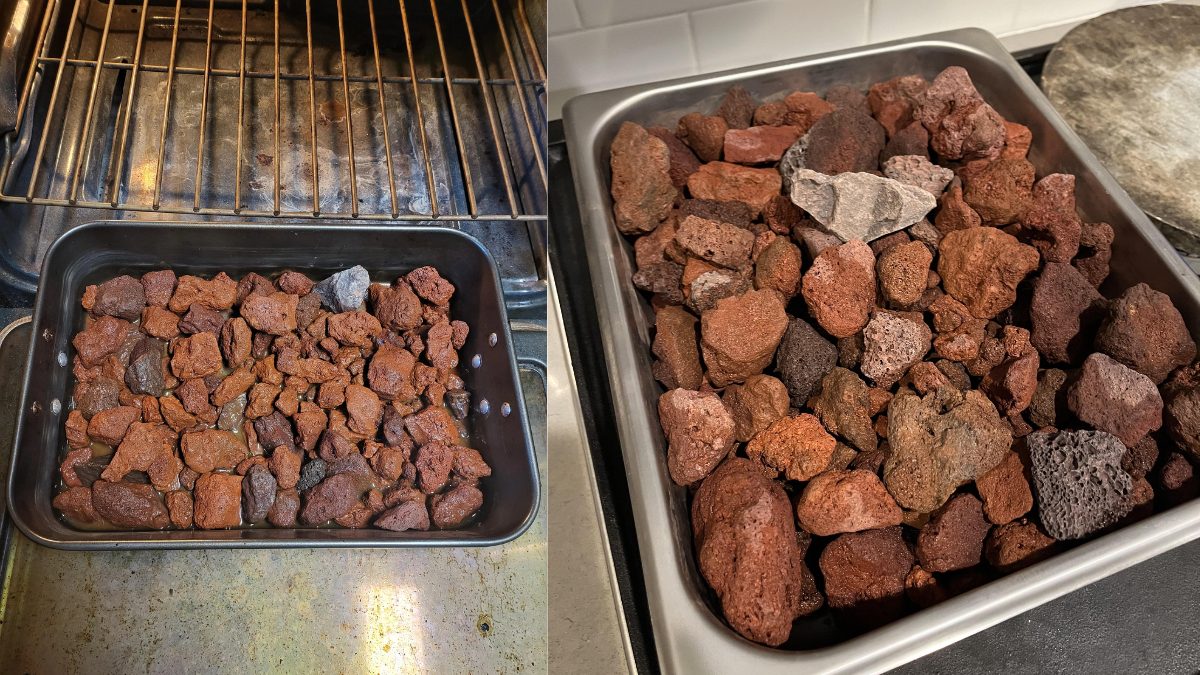
If you’ve been scrolling through holiday cooking tips online and stumbled across advice that sounds more appropriate for a campsite than a kitchen — yes, you read that right. People are putting rocks in their ovens, and no, it’s not a prank, a dare, or the latest minimalist decor trend. It’s actually a surprisingly old-school cooking trick that’s having a moment again, especially during the holiday baking rush. And while it might look a little unhinged at first glance, there’s a practical reason behind it, one that makes a lot of sense once you understand what’s happening inside your oven.
What Kind of Rocks Are We Talking About?
Let’s clear up the most important point right away: not just any rock will do. The rocks people are using are typically clean, dry, oven-safe stones, like:
- Pizza stones
- Baking stones
- Unglazed ceramic stones
- Smooth river rocks that have been thoroughly washed and dried
The goal isn’t to recreate Stonehenge on your oven rack. It’s to add thermal mass, something heavy that absorbs and holds heat.
The Real Reason: More Even Heat
Holiday cooking puts ovens through a lot. Multiple dishes going in and out, doors opening constantly, temperature swings that can turn a perfect bake into a guessing game. This is where rocks come in. Stones absorb heat as the oven warms up, then slowly release it back into the oven. That extra stored heat helps stabilize the temperature, making it less likely to drop dramatically every time you open the door. Uneven oven heat can lead to:
- Cookies browning too fast on the bottom
- Pies baking unevenly
- Bread failing to rise properly
- Roasts cooking inconsistently
Adding stones helps the oven recover heat faster, keeping the environment more consistent — especially helpful in older ovens that struggle to maintain a steady temperature.
Yes, Bakers Have Been Doing This Forever
If this trick feels oddly familiar, that’s because it is. Professional bakers have long relied on stone decks and heavy baking surfaces to create stable heat environments. Home bakers often use pizza stones for the same reason, even when they’re not making pizza. What’s different now is that people are applying the same idea more broadly, keeping stones in the oven full-time during heavy cooking periods, like Thanksgiving through Christmas.
It’s not trendy so much as rediscovered.
But Is It Actually Safe?
When done correctly, yes — but with some important caveats.
Do:
- Use stones designed for high heat
- Place them on a lower rack or oven floor (if your oven allows it)
- Let them heat up gradually with the oven
Do not:
- Use wet or damp rocks
- Add stones to a hot oven suddenly
- Use decorative, painted, or porous stones
Moisture trapped inside a rock can cause it to crack — or worse — when heated. That’s why proper drying is non-negotiable.
What About Energy Efficiency?
Interestingly, stones can also help your oven work a little smarter. Because they retain heat so well, ovens with thermal mass may not need to cycle on as frequently to maintain temperature. That can mean slightly more efficient cooking — helpful when your oven is basically running nonstop for days. Is it going to slash your energy bill? No. But during marathon holiday cooking sessions, every bit of stability helps.
Putting rocks in your oven won’t magically fix every baking problem. It’s most useful if:
- You have an older oven
- You bake frequently and open the door often
- You’re cooking multiple dishes at once
If you rarely bake or mostly use your oven for quick weeknight meals, you probably won’t notice much difference. This is a situational upgrade, not a universal necessity.
;Resize,width=767;)
