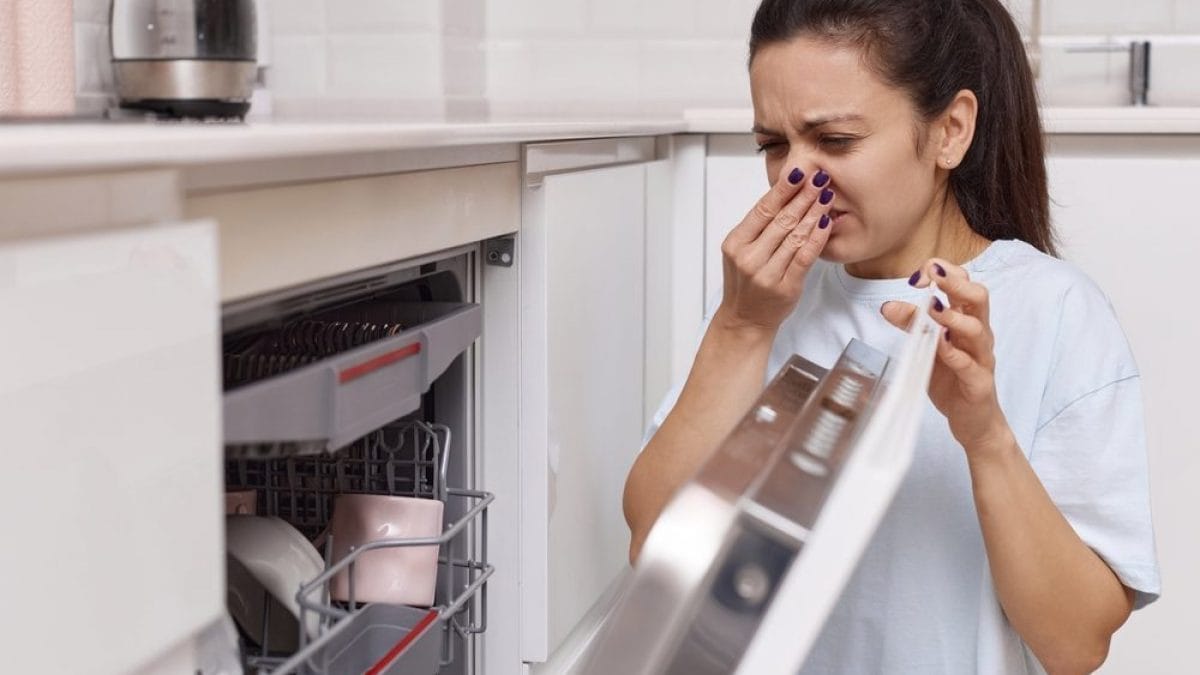
You've just finished washing the dishes —perhaps in the dishwasher, or by hand—and yet, immediately afterward, an unpleasant odor hits you: a bit "stinky," a bit "rotten egg" or "badly boiled egg." It's as frustrating as it is unpleasant: those dishes appear clean, but the aroma lingers, and risks tainting subsequent meals. Many think it's the fault of the last items on the plate—perhaps a plate with eggs, or smelly fruits or vegetables—but often the root of the problem is quite different. Often, the "culprit" is the dishwasher (or the washing method), maintenance, water quality, or the presence of bacteria or mineral deposits that release smelly compounds. Understanding the causes is useful not only for eliminating the bad smell, but also for preventing it from returning, making the kitchen more hygienic and healthier.
Why Does That "Egg-Like" Smell Appear After Washing the Dishes?
You might open the dishwasher or pick up a freshly washed glass and notice that typical "rotten egg" smell. Even if the dishes appear clean, the odor lingers and often spreads from one item to another. The underlying cause is almost always the same: hydrogen sulfide (H₂S) is formed, a gas that has the characteristic odor of sulfur and rotten eggs.
This gas is produced when tiny food residues —especially proteins and fats—remain on dishes, the drain, the filter, or inside the dishwasher and are broken down by specific bacteria. Large amounts of dirt aren't necessary: a warm, humid environment like that of a dishwasher is sufficient for sulfide-reducing bacteria to proliferate, which convert sulfates in water and organic residues into H₂S.

Once created, the gas easily binds to surfaces, especially if there's a light layer of limescale or if the detergent hasn't thoroughly degreased. This is why the smell lingers even after a seemingly perfect wash.
It doesn't take a complete overhaul: rinsing the dirtiest dishes, avoiding protein residue, keeping the dishwasher clean, and using a suitable detergent are already enough to almost completely prevent the odor from forming. With these small measures, the problem is drastically reduced, and dishes will smell truly clean again.
What Really Causes The Problem
The mechanism is always the same, but the practical causes can vary. The most common are:
- Food residues and proteins that remain on dishes and ferment (eggs, milk, cheese, meat, broths).
- Dirty dishwasher filter or drain that drains poorly, creating stagnant water.
- Hard water, which leaves limescale deposits that can retain odors and bacteria.
- Ineffective or poorly dosed detergent, which leaves a thin film on dishes.
- Dishes that are too dirty or too close together in the basket, preventing the water jet from reaching all surfaces.
In some cases, household water is rich in sulfates, which naturally accentuates the odor. These are all situations that, in their own way, favor the formation and persistence of the typical sulfurous odor.
How to Eliminate The Odor and Prevent It From Coming Back
Here is a list of useful methods to prevent, reduce or eliminate this type of odor from your dishes.
1. Dishwasher Maintenance

Clean your dishwasher regularly, including the filter, spray arms, seals, and drain. Run an empty cycle every 1–2 months with white vinegar or baking soda to dissolve limescale and residue. Avoid overloading: dishes must have space to wash properly.
2. Hand Wash and Pre-Wash

If you wash dishes by hand, remove larger residues immediately after each meal, then use hot water and a grease-dissolving detergent. Even if you use the dishwasher, a quick rinse before placing strong foods (eggs, cheeses, broths) is always preferable.
3. Effective Natural Remedies

To eliminate bad odors, some natural remedies are useful: be careful, however, because they are not effective for disinfecting, but only for degreasing and deodorizing. In particular, you can use:
- White vinegar: eliminates odors and dissolves grease and limescale.
- Baking soda: excellent for deodorizing and removing stubborn residues.
- Lemon: The natural acidity helps neutralize odors and aids in degreasing.
If The Problem Persists
If the problem persists after following our advice, you can proceed as follows:
- Change your detergent and choose a more degreasing one. If your dishwasher continues to emit bad odors, it may be that the detergent you're using isn't dissolving grease and residue well. In these cases, it's helpful to try a more degreasing formula, preferably one with enzymes. These help dissolve residues that would otherwise remain in the filters and on the bottom of the machine, becoming one of the main causes of the odor. If you don't notice any improvements after a few cycles, you can change brands: sometimes the difference is noticeable right away.
- Check your water supply. Water can also have a bigger impact than you think. If it has an unusual odor —for example, sulfur, chlorine, or mold—this can transfer to the inside of your dishwasher. You can check this simply by running the water and smelling it both hot and cold. Furthermore, if your water is very hard, limescale tends to build up inside the machine and traps grease and dirt. This mix can cause unpleasant odors over time. In this case, it may be helpful to check the salt level in your dishwasher, slightly increase the detergent dose, and occasionally run a maintenance cycle with a dishwasher cleaner.
- Clean the filter more frequently. The filter is often the point where odors really originate: small food residues accumulate and ferment, especially if cleaning is infrequent. To avoid this, it's a good idea to clean it regularly: simply rinse it under hot water and use a brush to remove trapped residue. If you use it daily, clean the filter once a week; if you use it less frequently, even every 2–3 weeks is fine. Don't forget the tray under the filter, where deposits often remain that aren't immediately visible but contribute significantly to odors.
;Resize,width=767;)
