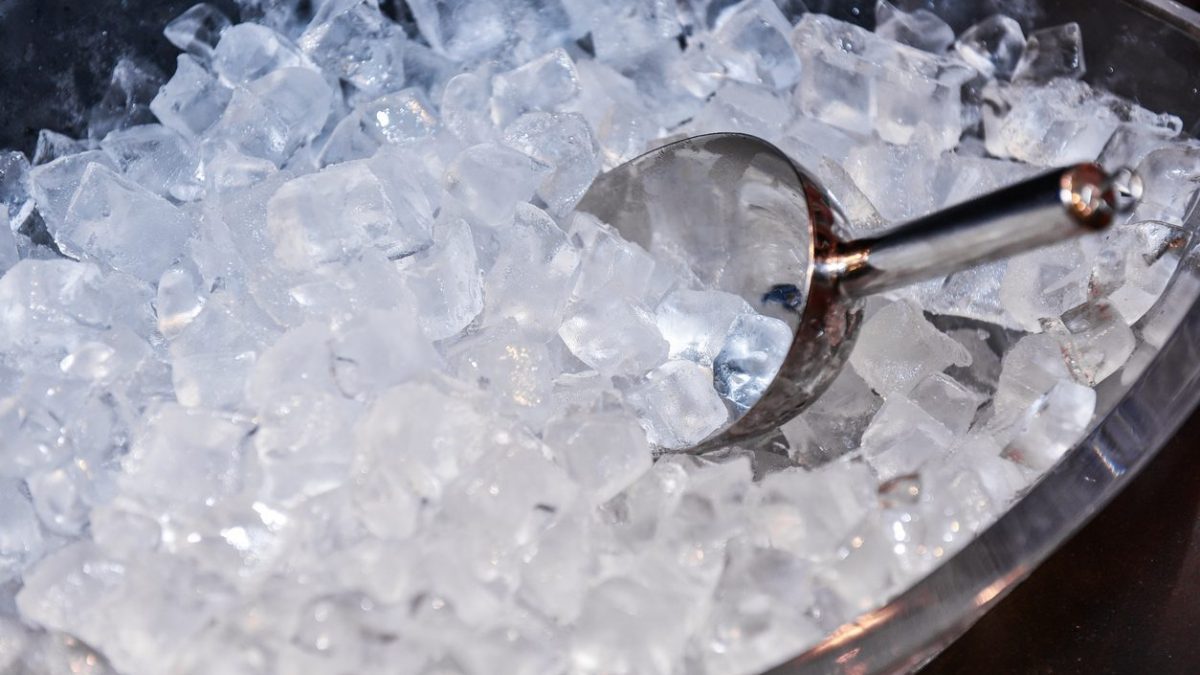
It is one of the most familiar, satisfying sounds in the culinary world. You drop a couple of fresh ice cubes into a glass and pour room-temperature soda, water, or a cocktail over them. Instantly, you hear an energetic snap, crackle, and pop.
But sometimes, it isn't just a gentle sound. Occasionally, you twist an ice tray or pour a drink only to watch your beautifully formed, solid cubes violently fracture, shattering into a sad slush of tiny, rapidly melting shards.
This isn't a failure on your freezer’s part, nor is it a glitch in the water matrix. The spectacular cracking of an ice cube is a fascinating display of thermodynamics, structural mechanics, and molecular physics playing out right inside your highball glass.
The Main Culprit is Thermal Shock
At its core, ice shatters due to a phenomenon called thermal shock. This is the exact same engineering crisis that causes a hot glass dish to shatter if you plunge it into ice-cold sink water. When ice cubes sit inside a standard home freezer, they chill down to a uniform temperature of roughly 0°F (-18°C). They are tightly contracted, rigid, and brittle. The moment you pour a room-temperature or warm beverage over that cube, the environment changes drastically.
- Rapid Outer Expansion: The liquid instantly transfers heat to the outermost layer of the ice cube. Because solids expand when they heat up, the outer shell of the ice immediately wants to swell and grow in volume.
- The Frozen Core Resistance: Ice is a notoriously poor conductor of heat. It takes a relatively long time for that surface warmth to travel into the dead center of the cube. While the outside layer is expanding, the inner core remains incredibly cold, rigid, and contracted.
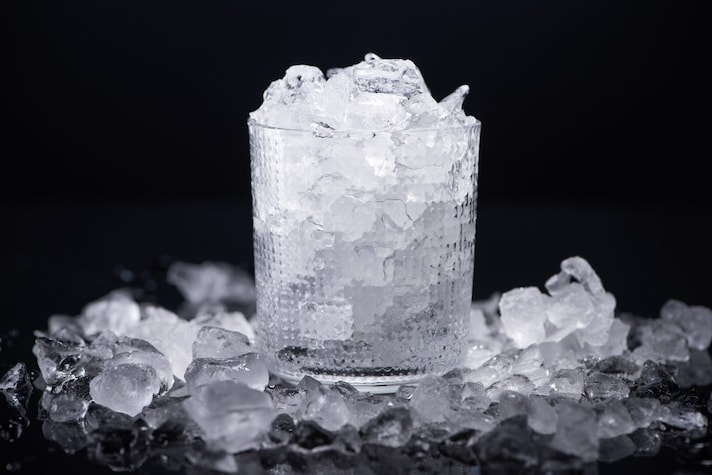
This creates a severe tug-of-war across the molecular structure of the cube. The outer layers are pulling outward, while the core refuses to budge. This uneven expansion creates immense internal tension—known as thermal stress. Because ice is brittle and cannot stretch, it relieves that internal pressure by violently cracking apart along its weakest lines.
The Microscopic Weak Spots of Air and Hard Water
If ice were a perfectly pure, flawless crystal grid, it could handle a surprising amount of thermal stress before breaking. However, the ice produced in average home kitchens is full of hidden structural flaws.
When you freeze standard tap water in a tray, it freezes from the outside inward. As the water solidifies, it pushes any dissolved gases (oxygen and nitrogen) and minerals (like calcium and magnesium) toward the center of the mold. This is why most home ice cubes have a distinct, cloudy, white core. That cloudy center is actually a dense network of microscopic air bubbles and mineral impurities.
These internal pockets act as built-in structural fault lines. When the external thermal stress hits the cube, the energy quickly concentrates around these tiny air pockets. The tension causes these micro-cracks to propagate outward at lightning speed, tearing the cube apart from the inside out and causing that distinct popping noise.
Mechanical Fractures
Sometimes, ice shatters before a single drop of liquid ever touches it. If you are using old-school, rigid plastic ice trays, you have likely had to aggressively twist, flex, or violently slam the tray against the kitchen counter to get the cubes to release. When you subject a rigid plastic tray to severe torsion, you are applying massive physical torque directly to a highly brittle material. Because the ice is frozen tightly to the plastic walls, the mechanical force causes the cubes to snap along their internal stress lines, leaving you with a handful of broken crumbles instead of clean blocks.

How to Mix Shatter-Free Ice
If you want pristine, crystal-clear ice cubes that melt slowly and evenly without exploding into shards, you can easily outsmart the physics of thermal shock with three simple adjustments:
- Temper Your Ice: The absolute easiest fix is patience. When you pull your ice tray out of the freezer, let it sit on the counter for one to two minutes before pouring a drink over it. This brief buffer period allows the severe temperature gradient to soften, equalizing the internal and external stresses of the cube.
- Switch to Silicone: Ditch the hard plastic trays for flexible silicone molds. Silicone allows you to gently push the cubes out individually from the bottom without applying any twisting force or mechanical stress to the ice.
- Boil the Water First: To eliminate the weak, cloudy core, use filtered water and boil it twice before pouring it into your trays. Boiling drives out the dissolved oxygen and gasses, resulting in much denser, clearer ice cubes with significantly fewer structural flaws.
;Resize,width=767;)
