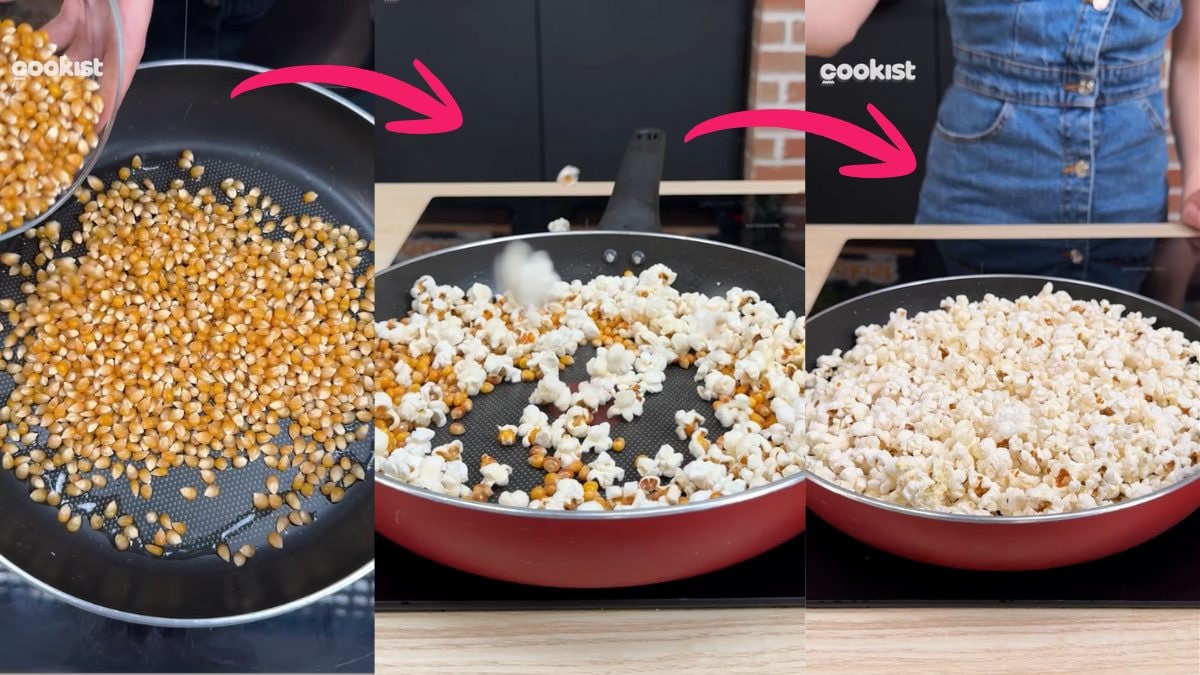
Have you ever wondered why popcorn pops? And more importantly, why some kernels just don't want to pop? Popcorn is one of the most popular snacks in the world. It comes from specific varieties of corn that are able to expand and puff up, but how does this happen? We'll explain in a very simple way how corn kernels pop and become popcorn.
Why Do Popcorns Pop?
It all depends on the corn kernel, which is composed of starch and water, with an outer shell, called the pericarp, made of cellulose, and therefore very hard. When the kernel is heated, the water inside it evaporates and tries to escape from this extremely hard shell but fails. It heats up more and more, reaching temperatures of up to 350°F/180°C, increasing the pressure, which can reach nine times normal atmospheric pressure, until it causes a real explosion, or POP! In this explosion, the starch also comes out, which in the meantime has softened due to the heat, becoming like jelly. It comes out in all directions and cools quickly, forming a sort of white bud all around. This is also why popcorn bounces: the very first part of the starch that comes out gives such a push that the kernel does a little spin.
Why Are There so Many Unexploded Kernels Left?
Not all corn kernels are created equal. Some have less water inside, so the pressure isn't strong enough to pop. Or the shell is cracked, or it's not as hard as others, allowing steam to escape before it heats up too much. So no matter how long you leave it on the stove, that popcorn won't pop… so when in doubt, make more!
;Resize,width=767;)
