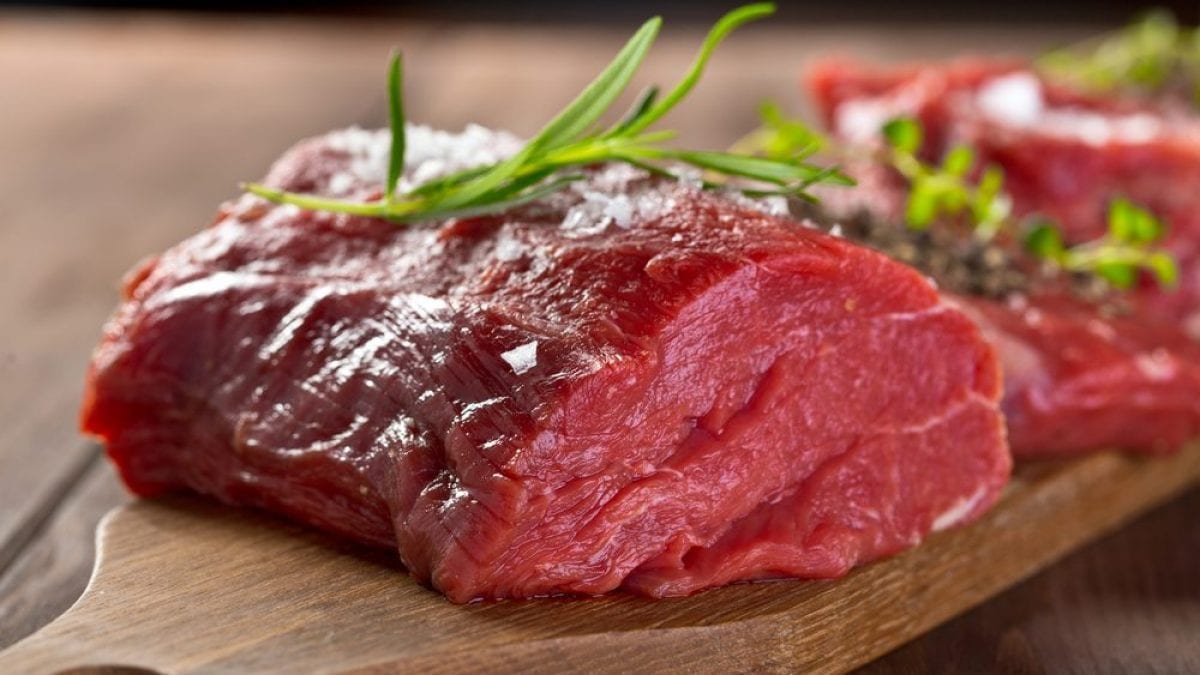
Sight is one of the senses that contribute to forming a judgment about a dish. It's not just a matter of appreciating the aesthetics of a dish, but also of understanding, or at least intuiting, whether a food is edible or not. Color is one of the factors that most influences conclusions about it, and this is why we tend to be wary of shades that are considered artificial (for example, blue) or that, depending on the food, veer toward pale or brownish. An example of this is the color of meat, especially red meat, which is considered fresh when it has vivid, purple hues. It often happens, however, that meat changes color between the moment it is purchased and consumed, becoming darker, or that products with duller tones can be found in the supermarket. One shouldn't immediately assume that deterioration is taking place or that it is a sign of lower quality. There are other factors at play: here they are.
What is Myoglobin, the Protein That Determines the Color of Meat
When we think of meat, we usually divide it into two main categories: white meat and red meat. And when we think of the latter, we associate the color with the presence of blood. In reality, it's not the blood that makes the difference, but myoglobin. Myoglobin is a protein found primarily in muscle fibers and has the ability to bind and store oxygen through an iron atom, providing energy to muscles during physical activity. Chicken and turkey contain a smaller amount of this protein, while pork, beef, and horse meat contain a higher amount: the more the animal uses its muscles, the more myoglobin there is. Its natural color is purple-red: when it begins to oxygenate, it reacts by becoming oxymyoglobin, thus taking on a bright red hue. When the iron within it oxidizes, it converts to metmyoglobin, which turns the meat gray or brown, as it is no longer able to bind oxygen. The factors that influence this color change are exposure to air and humidity, but they are not the only ones. For example, among these is temperature, which plays a fundamental role: higher temperatures accelerate the process of metamyloglobin formation, as we can see when we heat a steak over the fire, which darkens it.

Why Does Meat Darken? It's a Matter of Oxygen
In the same package of slices of meat, when placed side by side, it's easy to notice that the covered part appears more purple than the rest. This doesn't mean it's spoiled due to bacteria: the color change is due to a lack of oxygen in the muscles, which leads to oxidation of the iron atoms. Therefore, if the meat appears grayish, but firm and without unpleasant odors, it isn't spoiled, as also happens with vacuum-packed meat. Even when meat is cooked, its color changes because the heat causes a deterioration of myoglobin: the higher the temperature, the more the meat becomes gray-brown, hence the difference in hue between a rare and a well-done steak. Furthermore, fresh meat changes color, turning darker during the aging process, that is, when it is aged in cold storage to make it tender, digestible, and have an intense flavor.
;Resize,width=767;)
