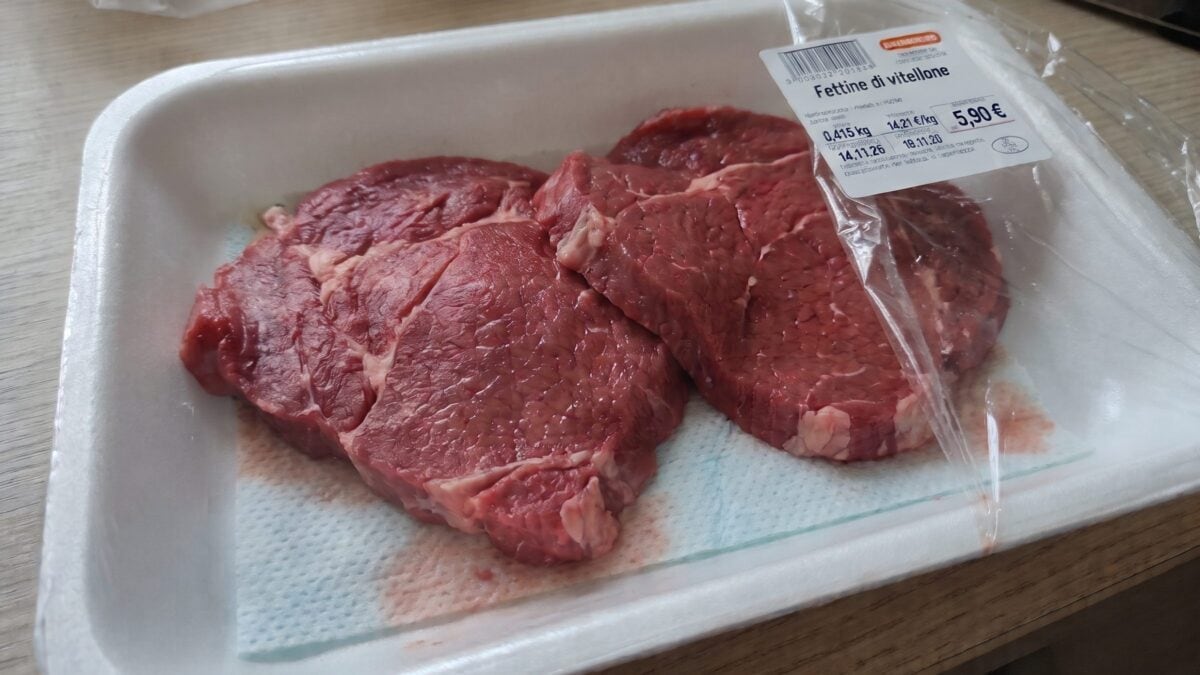
You've probably bought packaged meat at the supermarket: when you unwrapped it at home, you noticed a soft, absorbent sheet, similar to a cushion, underneath the food? That sheet might seem like an unimportant part of the packaging, but it's actually a very useful and important element. It's called an absorbent pad (or meat pad) and has a very specific function: it absorbs excess liquid and helps keep the meat fresh. Have you ever wondered what the real purpose of this sheet is? Have you ever wondered where it should be disposed of? Here's what the absorbent pad in meat packaging is for, what happens if it gets stuck to the food when you cook it, and where to dispose of it in the recycling bin.
What is The Absorbent Pad Under Meat?
The absorbent pad is a rectangle of spongy material placed between the meat and the plastic packaging containing it. It's made of a multilayered material that absorbs excess liquid released by the packaged food. This helps improve its condition and slow its deterioration, which is why the pad isn't just used for meat, but is also often found in packages containing fish, fruit and vegetables (especially pre-cut ones), and any other fresh food that might release liquids.
The "sheet," so called for convenience, actually has nothing to do with paper. It is composed of a double or triple layer: a macro-perforated polyethylene top film, a central layer of highly absorbent fibrous material, and, in the case of the triple version, a macro-perforated polyethylene layer. The top layer, the perforated one made of polyethylene (PE) or non-woven polypropylene (PP), is the part of the pad that comes into contact with the food and therefore has micro-holes that allow liquids to pass towards the absorbent core. The layer in the center of the pad is the absorbent layer, the heart of the product, the part that retains the liquid released by the food. In the three-layer version, the last layer is an added plastic film to contain liquids and prevent them from reaching the bottom of the tray.
What is The Purpose of The Absorbent Pad in Meat Trays?
Its multilayered composition allows the pad to perform its primary function: absorbing and retaining the liquids naturally released by fresh food. This keeps the product's surface drier, prevents free liquids from pooling on the bottom of the tray, and also improves the packaging's aesthetic and marketing appeal. Above all, it helps limit bacterial growth, which is essential for keeping meat fresh and safe for consumption.
Meat, like fish, naturally releases a certain amount of liquid, which collects at the bottom of the package. Meat in particular is particularly susceptible to this phenomenon: it contains a high percentage of water, generally between 65% and 75% of its weight, depending on the cut and animal species. Some of this water is retained within the muscle fibers, while some can escape during storage. The liquid that accumulates in the container, however, also consists of soluble proteins including myoglobin, mineral salts, and small amounts of other substances present in muscle tissue. The accumulation of these liquids can compromise the safety and preservation of the meat: since it is not a sterile liquid, but rich in organic substances and nutrients, the risk is that it creates an environment favorable to the persistence and spread of microorganisms and bacteria found in animal tissues responsible for meat spoilage.

The pad addresses this very aspect: it absorbs liquid and retains it within its structure, reducing the presence of free liquid in the package. However, there is one crucial aspect to consider. While the pad is useful, it cannot completely block bacterial growth and cannot make the meat microbiologically safe, because microorganisms can continue to multiply on the surface of the food and within the liquids retained in the pad. The absorbent pad is useful in reducing the risk of contamination, but it does not eliminate it completely: storage temperature, initial contamination, pH, and packaging type remain determining factors.
What Happens if You Accidentally Cook the Absorbent Pad With the Meat?
In the United States, the absorbent pad found inside meat trays is considered a food-contact material and must comply with regulations established by the Food and Drug Administration (FDA). Under the Federal Food, Drug, and Cosmetic Act and FDA regulations in 21 CFR, packaging materials must be suitable for their intended use and must not release substances into food at levels that could pose a health risk or alter its composition, flavor, or smell.
The FDA also regulates substances used in absorbent pads, including certain superabsorbent polymers such as sodium polyacrylate, through its food-contact substance framework. These materials may be used when authorized for the specific intended conditions of use. The absorbent material must remain contained within the pad, without coming into direct contact with the meat, and the pad must not become damaged or exceed its absorption capacity. If the pad leaks, tears, or releases its contents onto the meat, the product should not be consumed.
This doesn't mean, however, that the pad can be ingested or subjected to high temperatures. The pad is designed for food preservation, not cooking. And what happens if it accidentally gets stuck to the meat and ends up being cooked along with the food? In this case, it's important to check the condition of the material and the meat after cooking. If the pad remains completely intact, without melting, breaking, or deforming, the risk of contamination may be limited, but the safety of the food cannot be guaranteed based solely on the pad's appearance. If in doubt, it's wise not to consume the meat.
How to Properly Dispose of Absorbent Pads in The Recycling Bin
Absorbent pads are a component of food packaging that, once used, must be disposed of properly. But where should they be thrown? In the plastic, in the unsorted waste, or in the organic waste bin? It depends on two factors: their composition and local waste sorting regulations. In most cases, the absorbent pads used in meat trays must be disposed of in the unsorted waste collection, unless otherwise specified by the municipality or local waste management company. Although they contain plastic materials, they have a composite structure that includes several elements, including cellulose and superabsorbent polymers. This combination of materials, along with contamination with meat juices, generally makes them inappropriate for disposal in the paper or plastic waste collection.
As for the rest of the packaging, generally the tray and the top film should be disposed of in the plastic bin (unless your local waste collection system provides otherwise), while the label should be disposed of in the general waste collection, unless the manufacturer specifies otherwise (for example, if it is explicitly declared compostable, in which case it should be disposed of in the organic waste) or your local regulations provide different rules. Opening the tray, in general, is a moment that should not be underestimated from a food hygiene perspective. Raw meat can harbor potentially pathogenic microorganisms that can be transferred to hands, utensils, work surfaces, and other foods through direct contact or released liquids. Before opening the package, wash your hands, remove other foods from the work surface (especially ready-to-eat foods like salad, pre-washed vegetables, and bread), avoid splashing liquid when removing the food, and remove the pad without tearing or crushing it. Never reuse the pad, even if it still seems dry: throw it immediately in the appropriate unsorted waste bin and wash your hands again after handling raw meat and packaging material.

