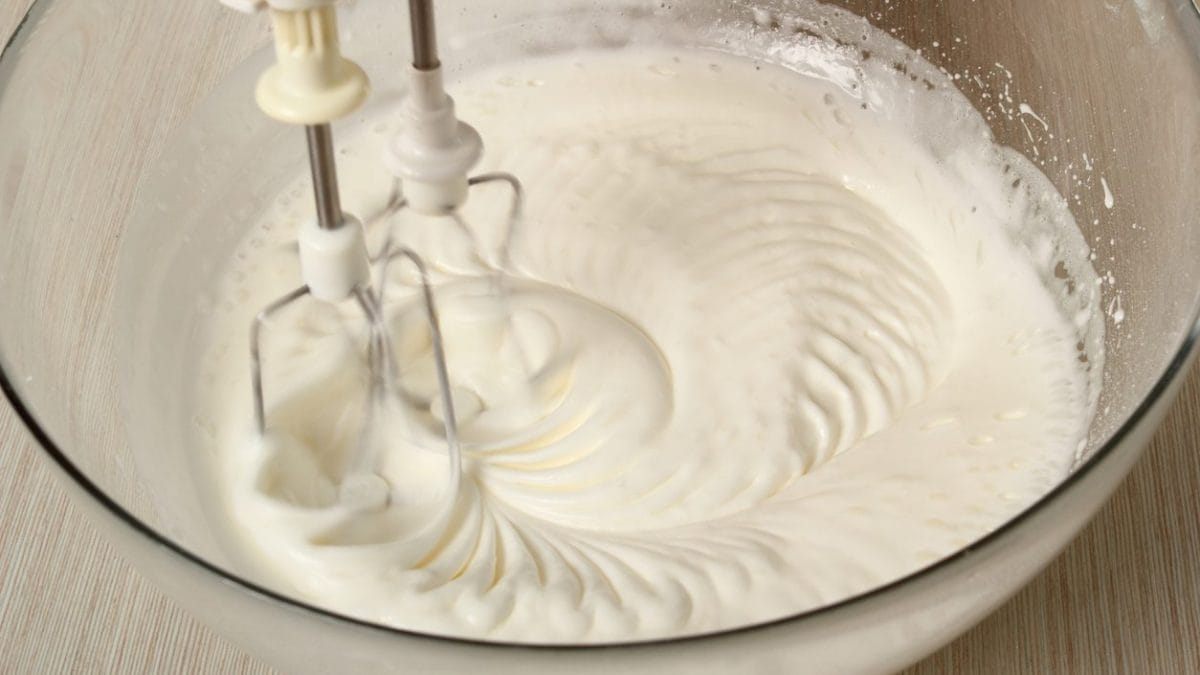
When it comes to whipping egg whites, one of the most common kitchen tips is to add a pinch of salt to facilitate the process. This tip, often passed down as a grandmother's trick or found in old recipe books, is actually a myth that both chefs and chemists alike categorically debunks. Chemists even conducted experiments to prove the theory, but, as they had expected, it failed: salt does not help whip egg whites; on the contrary, it actually makes them stiff. Adding salt, contrary to popular belief, can compromise the stability of the foam formed by the egg white. Although it appears to facilitate whipping at first, over time, sodium chloride causes a series of effects that make the foam less stable.
What Happens When You Add Salt to Egg Whites
According to chemists, "salt is detrimental to the stability of the foam, and there are no real advantages in using it since everyone has an electric whisk these days. In some cases, it might simply be irrelevant: for example, when making soufflés . In this case, the poor egg white foam almost always has much greater problems due to the presence of fat (fat-free soufflés are rare), which "kills the foam" (ever tried throwing oil in a bathtub full of foam?), so adding or not adding salt can have little effect on the final result. It certainly doesn't help, however."
But what exactly happens? During the initial moments in which the egg white is beaten, the sodium present in the salt helps the proteins reduce their negative charges, allowing them to come together and begin to form a network. This explains the perception that salt "helps" the initial process. However, this interaction also has negative consequences. Sodium, being a relatively bulky ion, interferes with the complete formation of the protein network, which is essential for foam stability. Furthermore, sodium chloride interferes with lysozyme, a crucial protein in egg white, reducing its ability to stabilize the structure. To make matters worse, salt attracts water (due to its hygroscopic nature), drawing it from the foam and further weakening the fragile protein network that is forming.
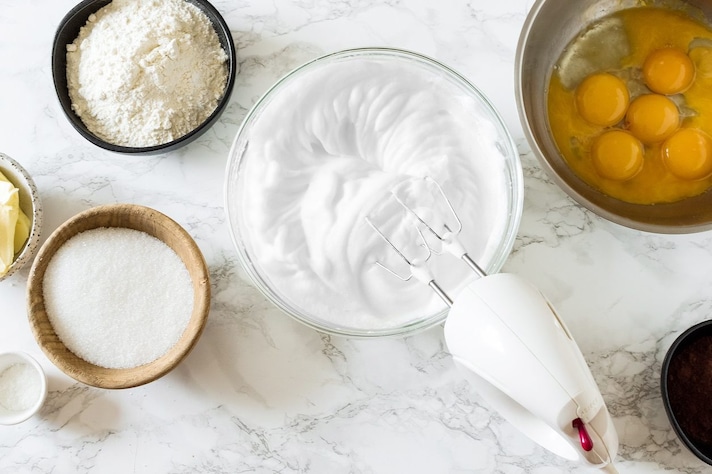
The origin of this myth may date back to a time when hand-whipping egg whites in cold kitchens was a laborious and time-consuming task. In that context, any aid to speed up the process might have seemed useful. Today, however, with the widespread use of electric whisks, adding salt no longer makes practical sense and, in fact, compromises the final result. To improve the stability of the foam, it is more useful to add an acid. Ingredients such as lemon juice (citric acid), vinegar (acetic acid), cream of tartar (potassium hydrogen tartrate), or other weak acids work by releasing H+ ions that strengthen the foam without the problems associated with salt. These acids make the egg white proteins more resistant and promote a more stable and long-lasting whipping.
;Resize,width=767;)
