When it comes to household cleaning, looking for alternative solutions that use natural products (avoiding chemical ones) is a good practice, but we must be careful not to consider so-called grandmother's remedies "miraculous": in most situations they work effectively, but only if carried out in synergy with other interventions (routine or exceptional) that have the same objective. This is the case of placing coarse salt inside the refrigerator: it can be useful for absorbing some of the humidity present and for combating bad odors as it exploits a scientific principle, but on its own the expedient would prove to be a functional failure and a waste of food, with the ingredient undoubtedly having more value in the pasta water than locked away in the appliance.
Why Put Coarse Salt in The Fridge
This is a measure based on one of the many properties recognized by sodium chloride – the chemical compound that almost entirely constitutes the crystals of common table salt – among which is its, albeit modest, hygroscopic power. What does this mean? A hygroscopic substance (or material) is capable of capturing water molecules present in the surrounding environment, absorbing, in the case of the refrigerator, part of the humidity found inside in the form of water vapor. Related to this is the fact that sodium chloride can be helpful against bad odors, but not because it retains them: simply because by acting on humidity, it makes both their formation and circulation less favorable. As mentioned, a handful of salt in the refrigerator is not enough to counteract both factors, which can instead be kept under control by monitoring the appliance daily (paying attention to food preservation) and with a deep clean every 4-5 weeks or before leaving the house for long periods (see holidays). If you notice that your refrigerator is particularly humid and tends to form a lot of condensation, contact an expert: a bowl of table salt certainly won't fix it.
How to Use This Trick
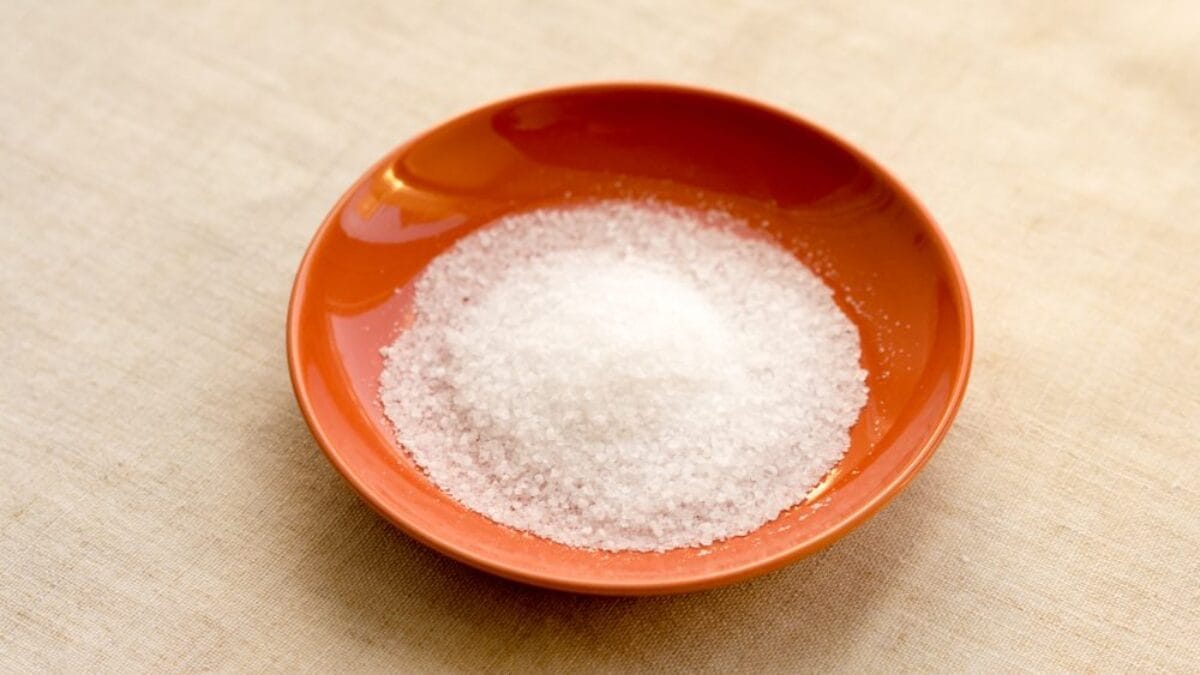
Let's start with the bowl itself: get a shallow bowl or a container without a lid, fill it with two or three tablespoons of coarse salt and place it in the refrigerator on one of the shelves (not in a closed compartment like the vegetable box, and away from other food) and let it sit for 3-4 days. Then empty, wash, dry and replace with new salt, repeating the process as needed.

When to Resort to This Remedy and The Alternatives
Coarse salt can be a great ally in maintaining a clean appearance for longer after your monthly sanitization. In short, it's a "little helper" that starts with a refrigerator in excellent condition, primarily through regular cleaning. Don't underestimate the rubber seals that allow the door to close properly: if worn, the risk is for hot air to infiltrate, lowering the outside temperature and encouraging condensation to form. Complementary strategies are also welcome, but not substitutes. For example, baking soda is a much more effective product than salt, considered a natural "odor eater," while lemon is popular as a deodorant: you can create a solution with lemon juice, baking soda, and salt instead of salt alone to enhance the action of the sodium chloride.
;Resize,width=767;)
