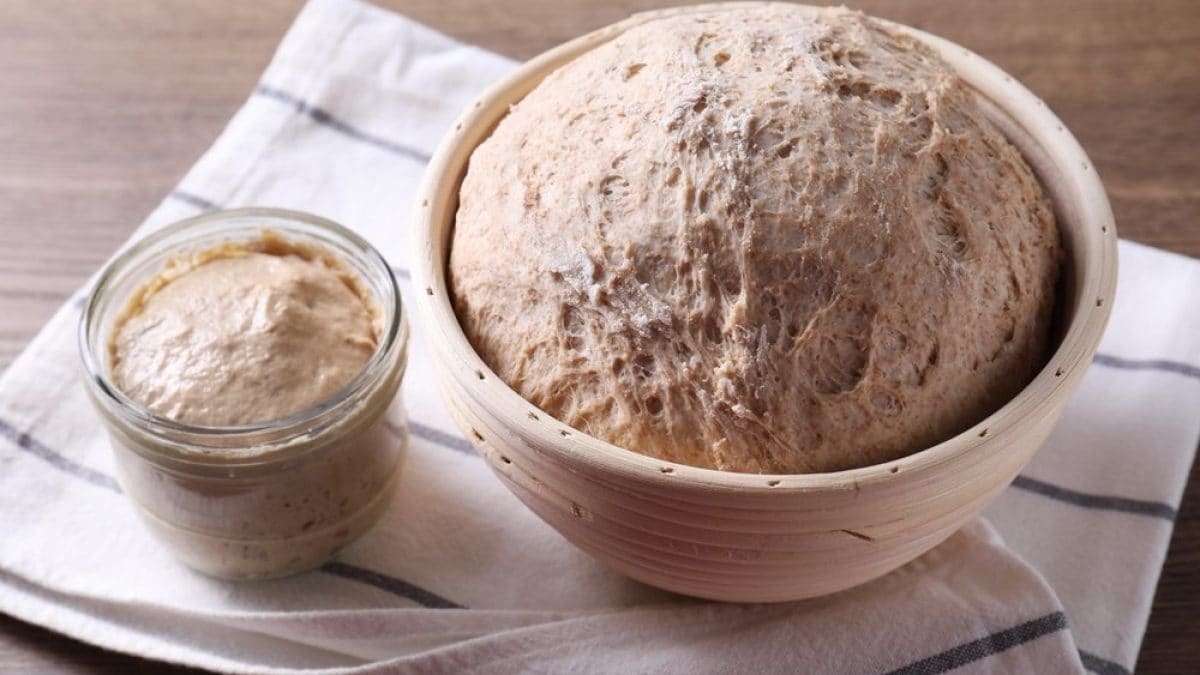
We've probably all tried to make a loaf of bread, a pizza, or a focaccia at home at least once, only to discover that baking isn't exactly child's play. Even following a recipe to the letter, the result can be very different from what you'd expect. One of the most complex steps (despite it seeming the simplest, as the person kneading the dough doesn't actually have to do anything) is leavening, especially if sourdough starter is used, as it's a living ingredient that behaves differently depending on multiple variables. Therefore, asking how long a dough needs to rise properly and mature is a valid question, but one that doesn't have a clear-cut answer. Below, we've tried to provide some helpful timeframes to help you get started, especially if you're just starting out.
What is Sourdough, Exactly?
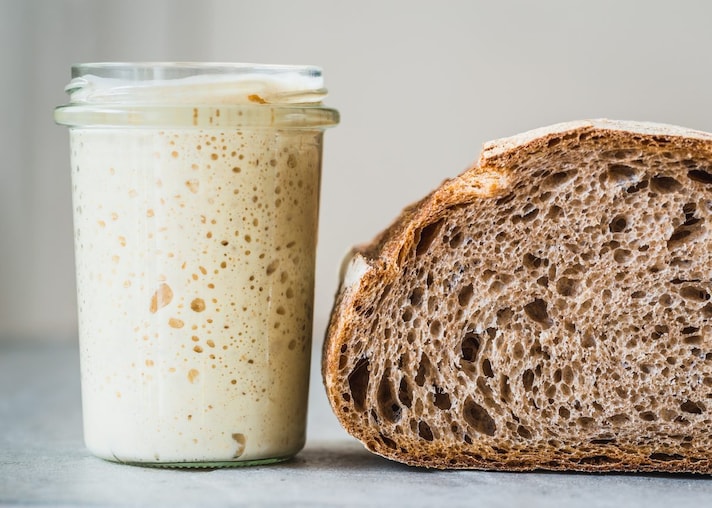
When we talk about sourdough or sourdough starter, we're referring to a natural yeast made with water and flour that develops the microorganisms (yeasts and lactic acid bacteria) necessary to initiate dough fermentation. It's a living substance that needs to be refreshed and preserved properly, otherwise it loses its effectiveness, if not "death" itself. Compared to brewer's yeast, thanks to its composition, which also includes enzymes that contribute to the digestibility and preservation of the final product, bread, pizza, or focaccia made with sourdough starter will tend to be lighter, tastier, and more fragrant over time. Sourdough starter can have a solid or liquid consistency, called li.co.li, characterized by a very high level of hydration, equal to practically 100%. Here, we're using the more common solid version as a reference.
A General Guide to Rising Times
To calculate the dough's rising times, we start from a general proportion, that between flour and yeast: on average, the percentage of the latter to the total of the former is around 20-25%. Therefore, taking 1 kg of flour as a reference, we will use 200-250 grams of yeast, reaching up to 300.
The quantity of yeast, however, is not the only aspect to consider: the ambient temperature plays a fundamental role, as both cold and heat have different consequences on leavening, inhibiting or accelerating the action of microorganisms. A constant temperature, therefore without sudden changes, between 75-79°F/24-26°C is considered optimal for yeast metabolism. At home, place the dough in a suitable container and cover it with a cloth to prevent the surface from drying out. You can leave it on a kitchen cupboard or keep it in the oven with the courtesy light on, so as to protect it from any drafts. When the temperatures drop, as is typical in winter, the times tend to lengthen, while in summer the heat could speed up fermentation too much, making the use of the refrigerator useful. The dough is left at room temperature for 1–2 hours to start fermentation (the cold would not allow it) and then transferred to the refrigerator until ready to use.
Having said this, let's try to give some indicative times, starting from 1 kg of 00/0 flour with various doses of solid sourdough.
- Sourdough starter: 250-300 g Room temperature: 4-7 hours In the fridge: 8-12 hours
- Sourdough starter: 200-220 g Room temperature: 5-8 hours In the fridge: 10-15 hours
- Sourdough starter: 150-180 g Room temperature: 7-10 hours In the fridge: 12-18 hours
- Sourdough starter: 120-140 g Room temperature: 8-12 hours In the fridge: 14-20 hours
- Sourdough starter: 100 g Room temperature: 10-13 hours In the fridge: 16-20 hours
It is important to remember that the total leavening often includes an initial resting phase as a whole dough and, in the case of bread and pizza, a second leavening phase called proofing, which takes place after dividing the dough into individual loaves, so trust the recipe you are following.
Why Every Dough is Unique
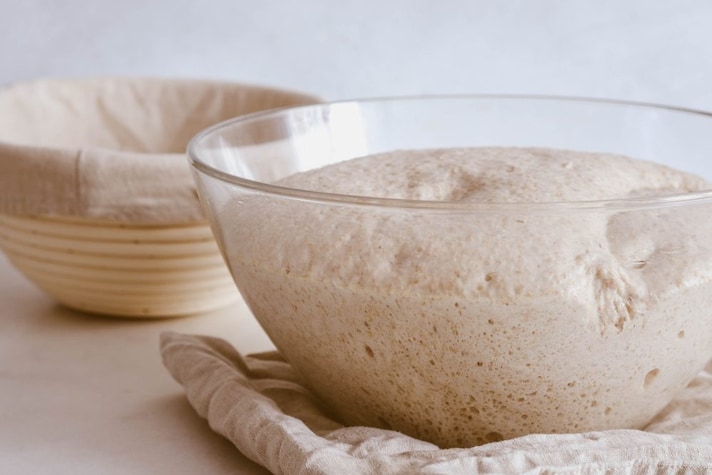
While these values can be useful as a starting point, they are subject to many variables, making each dough different from the next. It's no coincidence, in fact, that even famous master bakers and pizza chefs maintain that a product made with sourdough is never the same as the previous one.
- The first factor is the strength of the sourdough starter, which depends on its age, the flour used, the frequency of refreshments, and how it's managed daily. An active sourdough starter, capable of tripling its volume in three or four hours, will take less time than a less vigorous starter. Those accustomed to using it recognize its effectiveness simply by looking at it and smelling it.
- The second factor is the strength of the flour, indicated by the W value. Strong flours are suitable for bread and pizza as they are richer in gluten than weak flours: they absorb more liquid and retain more carbon dioxide, thus supporting longer leavening times without the dough collapsing.
We haven't mentioned it yet, but the amount of water also affects the baking time, with low, medium, or high hydration doughs. Don't forget that the temperature of the water itself shouldn't be underestimated. Finally, consider the recipe's characteristics. So far, we've talked about bread and pizza, but there are also leavened products with doughs that include additional ingredients such as fats (oil, butter), sugar, honey, salt, dried fruit, candied fruit: ingredients that can either hinder or help leavening, depending on the combinations.
;Resize,width=767;)
