It's probably happened to everyone at least once in their lives: traveling, tasting a typical recipe, and wondering if you've already tasted it elsewhere. It's thanks to traditions, techniques, exchanges, and influences that have made the world a veritable gastronomic laboratory, with different ways of combining the same ingredients and the integration of dishes from far away, which have since become part of national specialties. Well, you might have a similar feeling with pancakes, the star of the Anglo-Saxon breakfast and brunch, of which variations on the theme can also be found in other places, from Korea to the Netherlands, by way of Russia and Morocco. One could almost say, when in Rome, do as the Romans do: here, we'll show you ten variations that have many things in common while also being completely different.
1. Pancakes (USA and Great Britain)
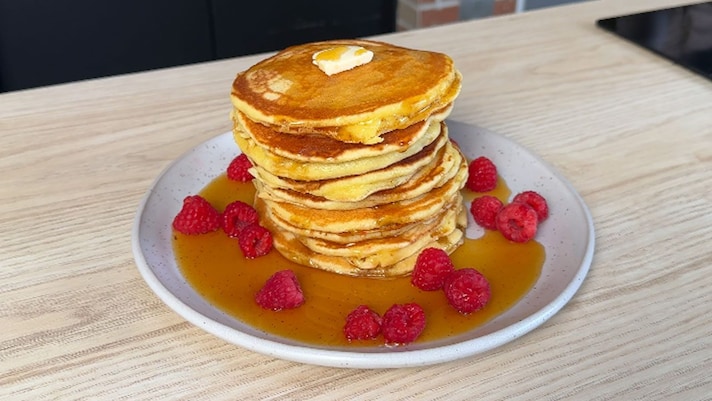
Let's start with the great Anglo-Saxon classic, the quintessential pancake, the star of North American breakfasts, also popular in Great Britain (where it's celebrated on Shrove Tuesday ), Ireland, Australia, and New Zealand. This is the most popular and well-known version in the world, traditionally enjoyed garnished with a cube of butter, maple syrup, and fresh fruit, such as strawberries, raspberries, and blueberries.
2. Poffertjes (Netherlands)
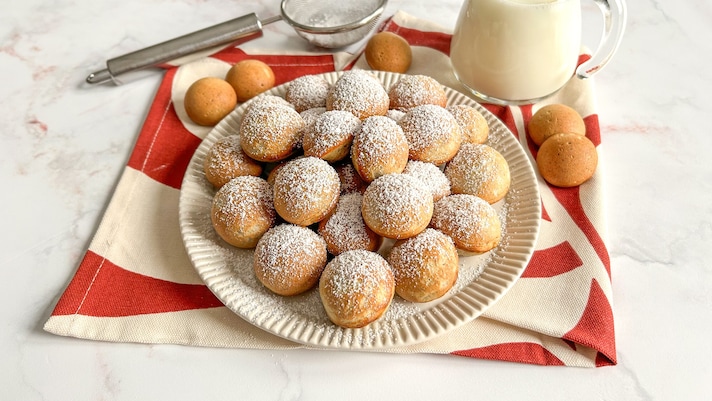
Also known as "Dutch pancakes," poffertjes are traditional pastries that are smaller and thicker, with a very soft interior and the typical slightly flattened sphere shape obtained using a special pan. The original version's distinctive touch comes from the use of buckwheat flour in the dough instead of wheat flour, along with brewer's yeast, milk, and eggs. They're delicious dusted with powdered sugar and garnished with butter, strawberries, raspberries, or chocolate spread and dollops of whipped cream.
3. Æbleskiver (Denmark)
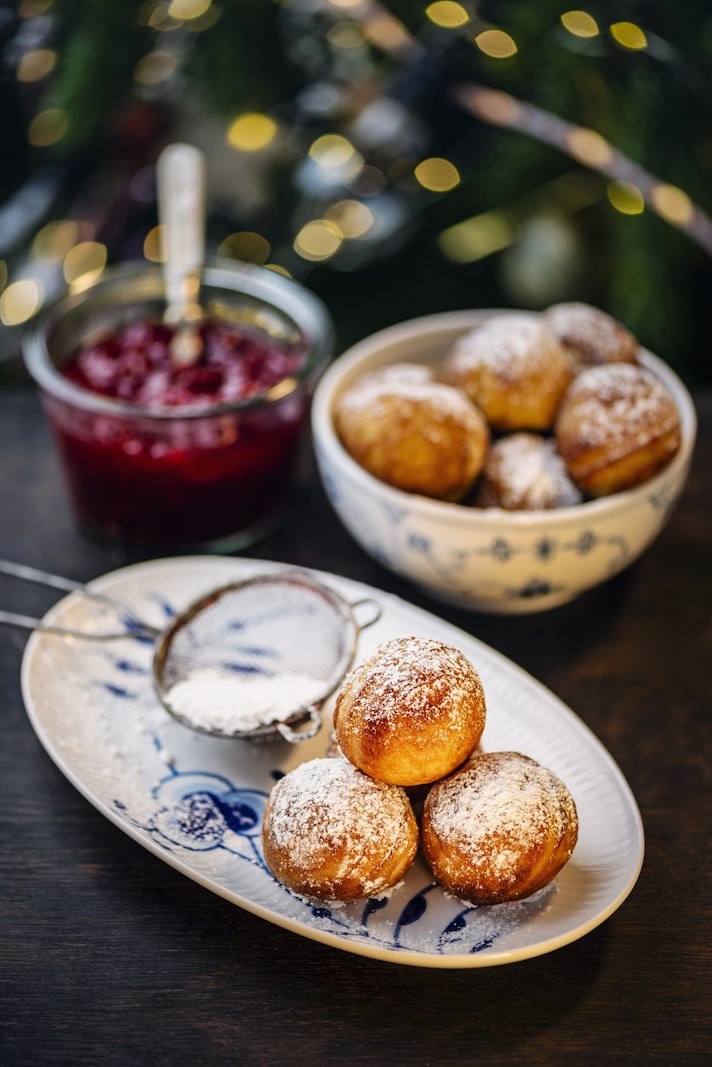
Let's travel to Denmark to discover æbleskiver: once again, this is a classic specialty, round almost like a tennis ball (always made in a specially designed pan with seven cavities called æbleskivepande) that can be described as a mix between a pancake and a doughnut in terms of texture, airy and soft. The name literally means "apple slices," probably because in the past they were included in a batter made from wheat flour, buttermilk, milk (or cream), eggs, sugar, a pinch of yeast, flavored to taste with cardamom or lemon zest: they are served with red fruit jam and powdered sugar.
4. Racuchy (Poland)
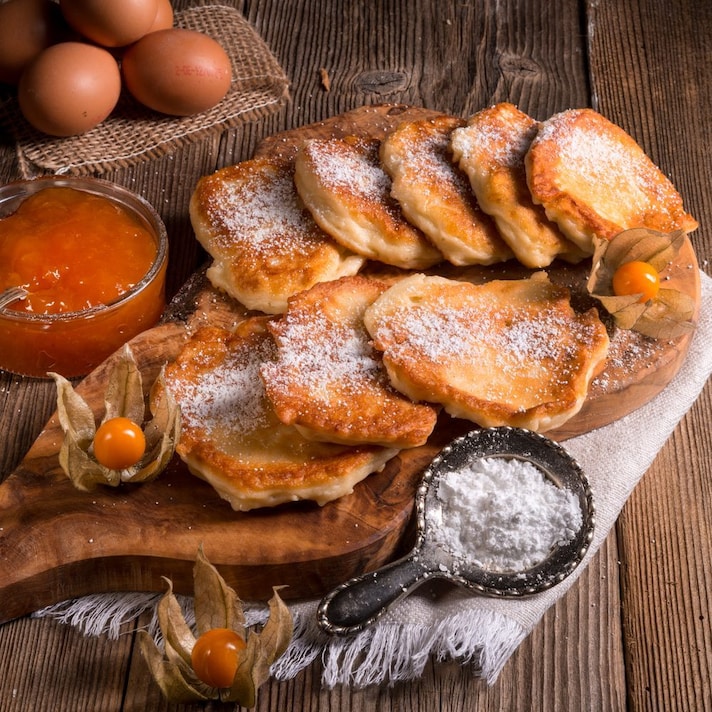
Poland, however, has decided to leave apples behind, with its pancakes called racuchy: a very popular preparation made by mixing flour, milk, eggs, sugar, and baking powder (or baking soda), the dough is then fried in a pan, resulting in a rustic, irregular texture. The most popular version is the one with apples and decorated with powdered sugar, but there are also options with other fruits (such as bananas) or "plain" ones, eaten as a snack or accompanied by sour cream during meals.
5. Lívance (Czech Republic)
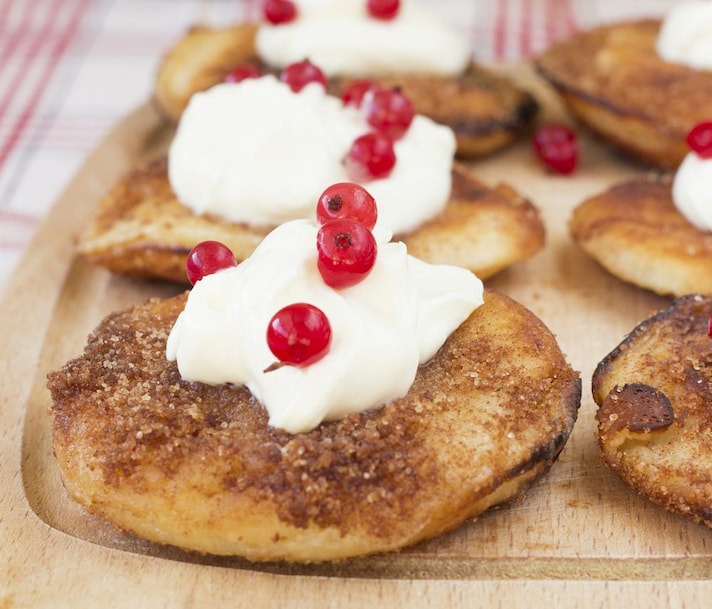
Pancakes that taste familiar also exist in the Czech Republic and are known as lívance: these are homemade pancakes made with a semi-liquid batter made with flour, milk, sugar, eggs, and a little salt. They are fried in butter and then served simply sprinkled with sugar or with fresh fruit and sour cream. They are a home-cooked dish, most often served with children.
6. Syrniki (Ukraine, Belarus, Russia)
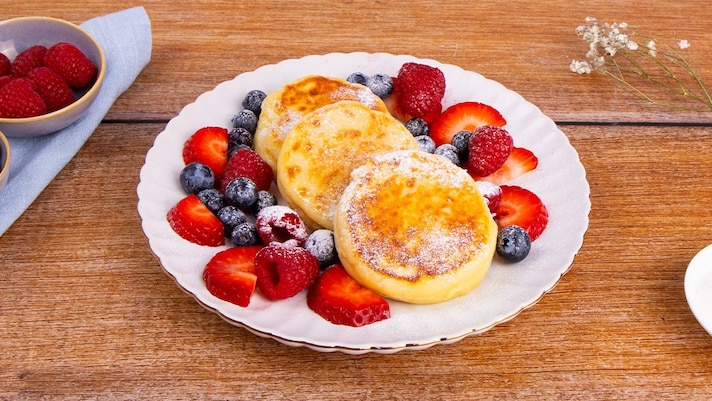
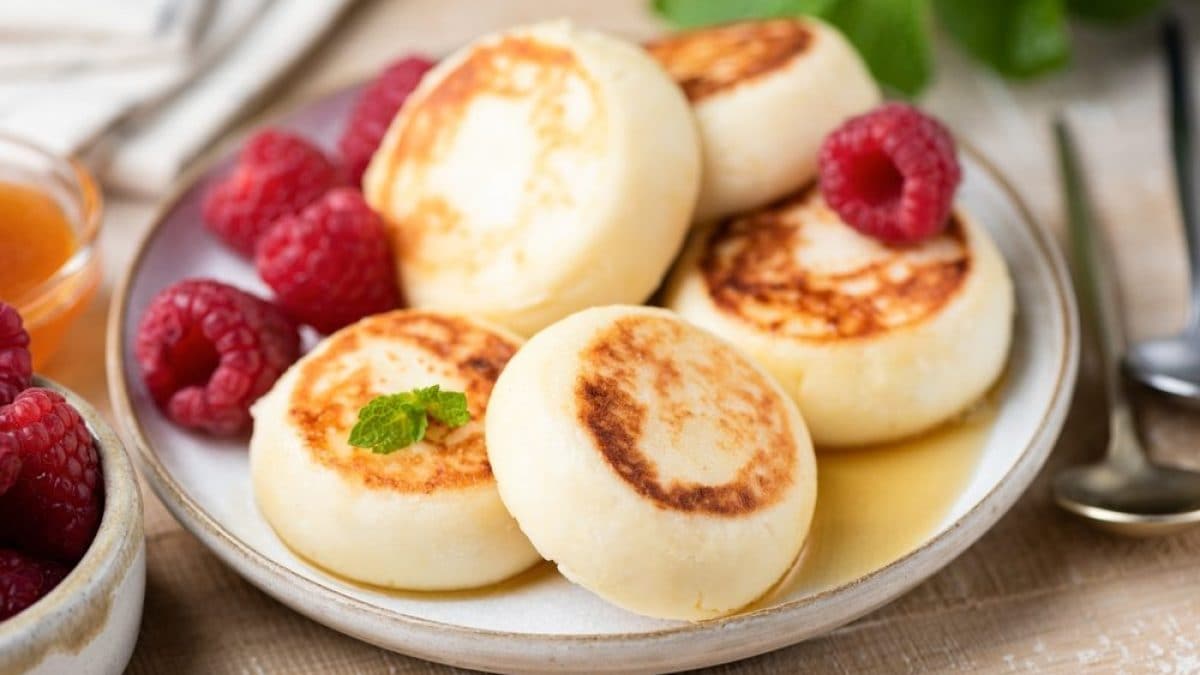
We move further east for a traditional dish common to the cuisines of Ukraine, Belarus, Russia, Estonia, Latvia, and Lithuania. We're talking about syrniki, cheese pancakes with a crispy exterior and a soft, flavorful center, thanks to the use of a dairy product widely used in Central and Eastern Europe called tvorog in the dough, mixed with eggs, flour (optional), and sugar. The consistency is reminiscent of German quark or, albeit with a few more differences, ricotta, so much so that if you want to try a homemade recipe, you can use the latter as a substitute, as it's easy to find. What are the best toppings for syrniki? Sour cream, red berries, or applesauce are also all good choices.
7. Baghrir (Morocco)
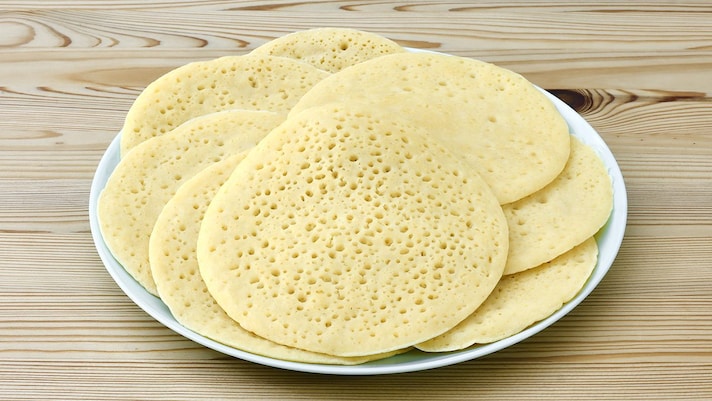
Similar pancakes have also reached Morocco and are called baghrir: compared to the previous types, they are thinner, often associated with crêpes, and it is a vegan recipe, given that the basic mixture includes water, semolina, flour, yeast, sugar, and salt. They are cooked in a pan for a few minutes, until the distinctive bubbles form on the surface, a distinctive feature of this dish. Traditionally, they are enjoyed for breakfast with butter and honey or as an energy boost during Ramadan.
8. Serabi (Bali and Java)
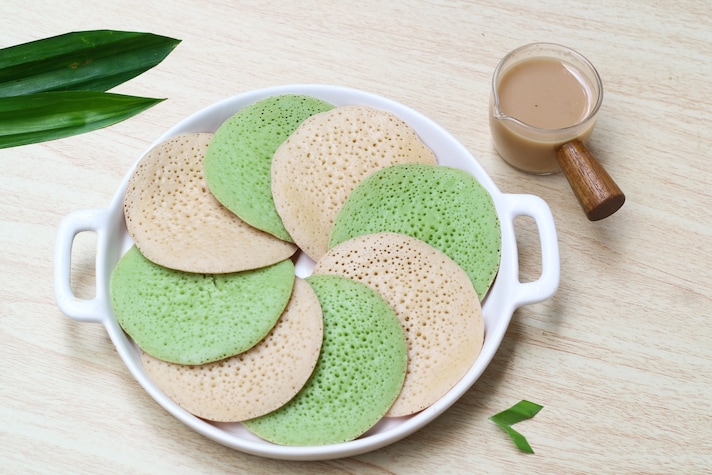
In the Indonesian archipelago, another pancake variant emerges. Serabi are sweet pancakes whose ingredients reflect local produce: the flour is rice flour, while the milk is coconut, resulting in a highly aromatic batter. They are commonly served during religious ceremonies as a ritual food, as a sign of gratitude, and at the end of a meal as a dessert, drizzled with coconut sugar syrup.
9. Hotteok (Korea)
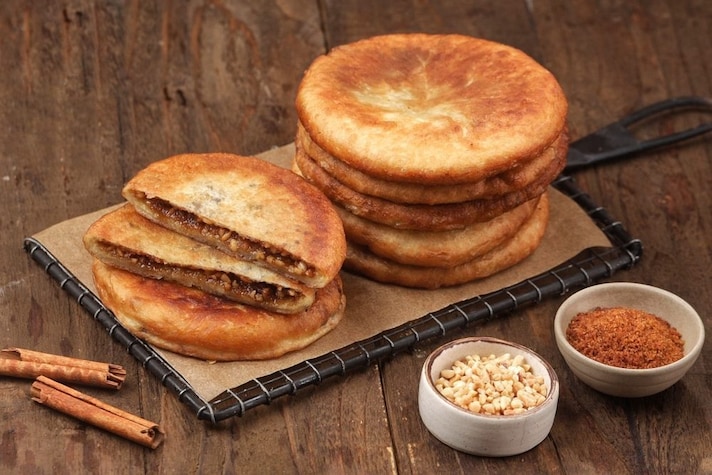
Staying in Asia, we fly to Korea, where among the endless (and delicious) street food options to be discovered in the markets, hotteok, known as Korean stuffed pancakes, also make an appearance . A true snack that requires a long leavening of the dough (at least 3 hours) and includes glutinous rice flour among the ingredients, while the filling usually consists of cinnamon -flavored brown sugar, honey, or dried fruit, although many different versions have been created, with chocolate, red beans, but also vegetables and cheeses for a savory twist.
10. Dorayaki (Japan)
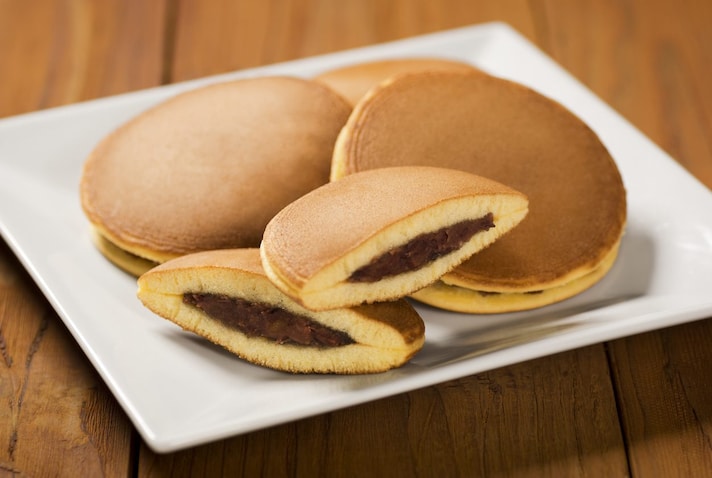
We conclude with the famous Japanese pancakes, or dorayaki, the favorite dessert of Doraemon the cat, protagonist of the manga (comic) and anime (cartoon) of the same name. Their appearance resembles that of two very soft pancakes made with a sponge cake-like batter, sandwiched together: inside is a generous layer of anko, the typical Japanese azuki bean jam, but nowadays they can be filled with anything you like, including Nutella.
;Resize,width=767;)
