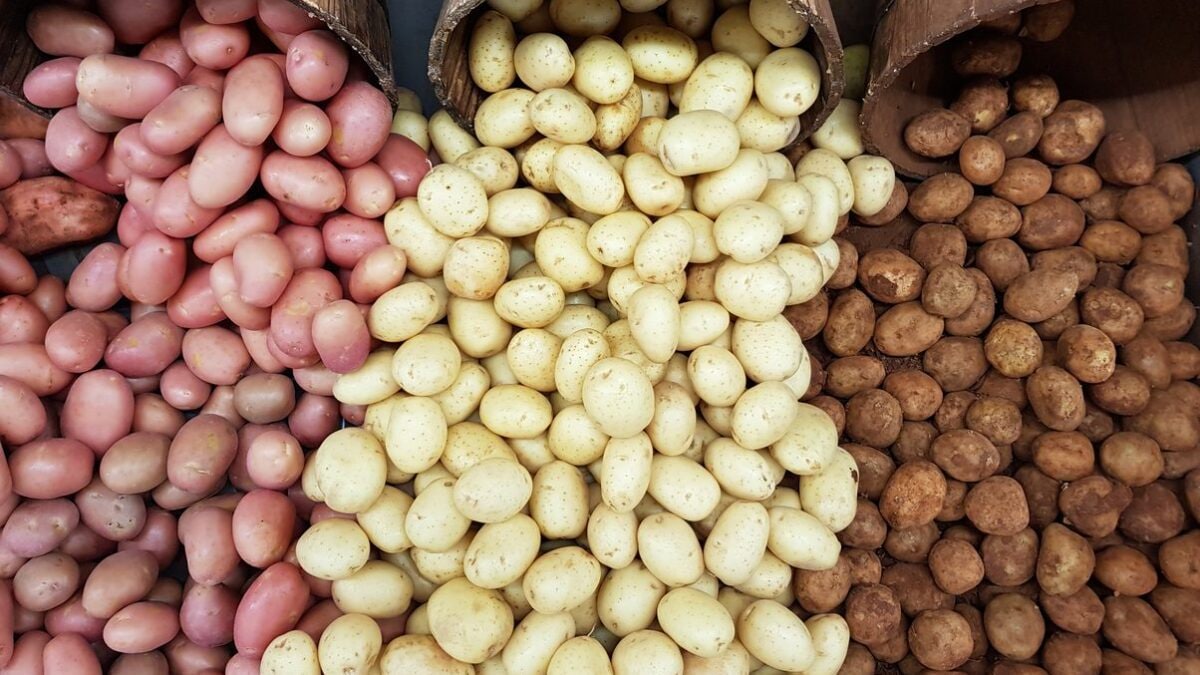
Potatoes are a vegetable that hails from distant lands, but they are now so widespread and ingrained in our culture that they seem to have always been a part of every culture. However, the history of the potato begins through the conquistadors of the Spanish Empire: potatoes arrived in the Old World around the sixteenth century, but their origins are actually in the Andes, where they have always been eaten by local peoples in Bolivia, Chile, and Peru. Once they reached Europe, their versatility allowed them to be incorporated into various cuisines around the world, all the way to the Far East, passing through India, Africa, and Arabia.
Yet, despite their current status as an integral part of the Western diet, knowledge of this versatile and delicious tuber remains very limited. The most common in our kitchens are yellow-fleshed and white-fleshed potatoes, at most reaching as far as red potatoes or sweet potatoes, with their vibrant orange skin. In reality, however, the range of potato varieties existing in the world is much broader and more multifaceted. In nature, in fact, these vegetables have a spontaneous tendency to variability, with the result that, alongside the most common and easily found varieties on the market, there exist types of potatoes that are, to say the least, unique. From the purple potatoes of the Andes to those that look like bananas, through tubers with blue or almost black skin, there are thousands of varieties born from centuries of peasant selection and adaptation to the territory: let's embark on a journey to discover some of the most curious potatoes in the world.
1. Vitelotte Purple Potato (France)
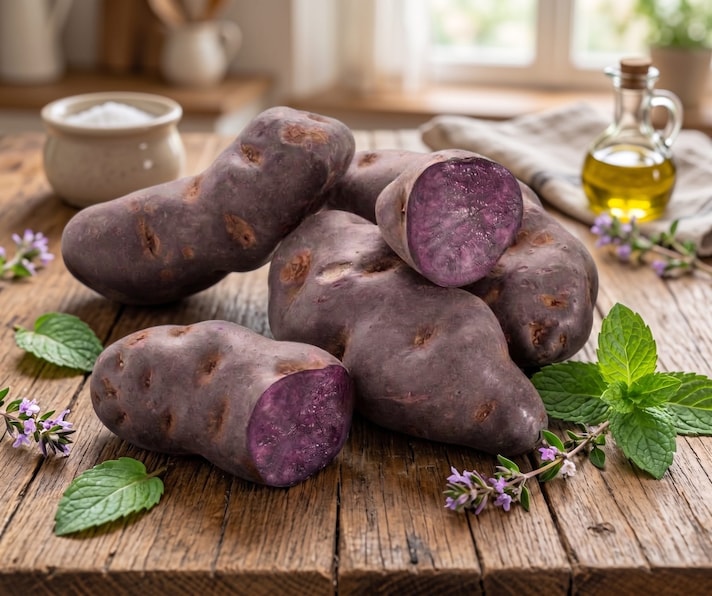
The Vitelotte purple potato is an ancient and prized variety native to the Andes and widespread in France before the 19th century, also known as the "truffle potato." It is one of the most famous colored potatoes thanks to its almost black skin and flesh, which is a deep, natural purple due to anthocyanins, the same pigments found in blueberries. It has a floury texture and a light, nutty flavor: it is used primarily for purple purées, colorful chips, and spectacular dishes.
2. Styrian Blue Potato (Austria)
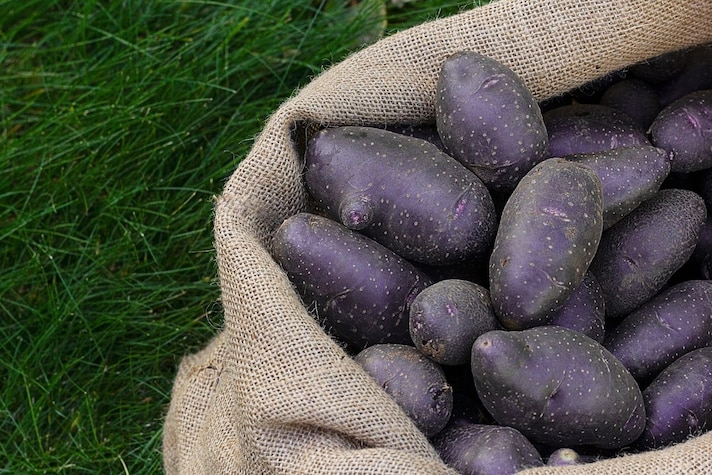
The Styrian blue potato is not an official or widespread variety, but it is part of a group of rare blue or purple-fleshed potatoes grown in Central and Alpine Europe. Also called the Blue Potato, the Styrian potato is striking for its blue-purple skin and flesh: the color is very intense, but completely natural and not the result of artificial modifications. Grown primarily in rural areas of Austria and Germany, it has become famous for its ability to color dishes without the use of artificial coloring: blue gnocchi, colorful mashed potatoes, and distinctive-looking salads.
3. Papa Negra (Peru)
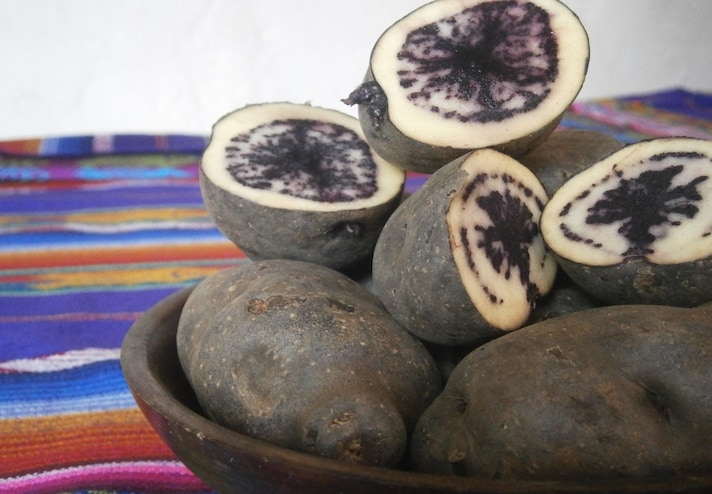
Home to the beloved tuber, Peru boasts over 3,000 traditional potato varieties. The papa negra is one of the most fascinating: characterized by a black or very dark brown skin and a white interior, it contains less starch than other potato varieties and has a particularly creamy consistency. It was already cultivated by the Andean populations before the arrival of Europeans and is still used today in Peruvian cuisine for soups, stews, and traditional dishes like papa rellena.
4. Ratte Potato (France)
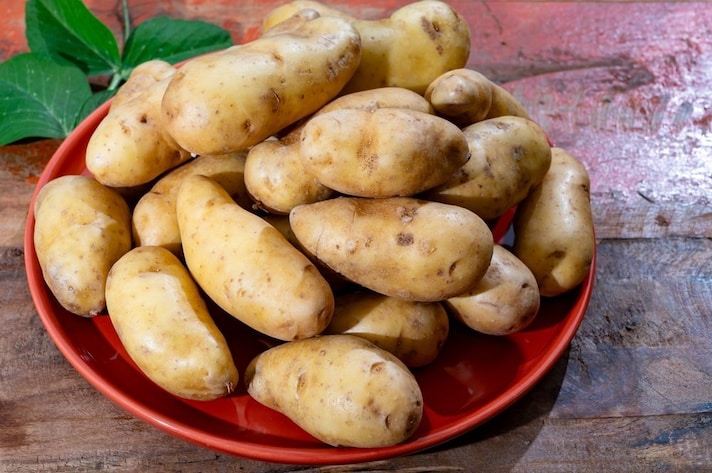
Small, elongated, and almost peanut-like in shape, the Ratte du Touquet is one of the most beloved potatoes in French cuisine. Also known as the asparagus potato or butter potato for its smooth, melting texture, the Ratte is famous for its distinctive flavor, reminiscent of chestnuts and hazelnuts. For years, it was a nearly forgotten variety, only to be revived by Michelin-starred chefs for its ability to accompany meat, fish, and refined dishes.
5. Ozette Potato (United States)
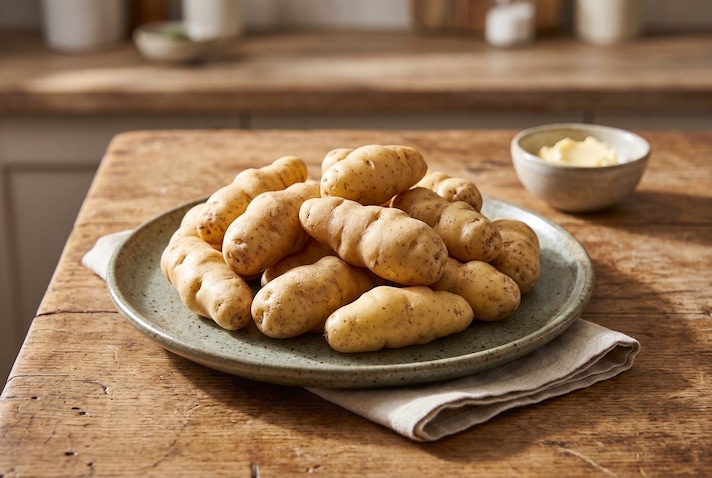
Small, elongated, and knobbly, the Ozette potato has a curious history: unlike other American varieties that arrived via Europe, it was imported directly from South America, likely brought by Spanish colonists in the late 18th century. It was cultivated for over two hundred years by the Native American Makah tribe, and its name derives from one of their ancient villages. Rediscovered in the 1980s, the Ozette potato is now part of several biodiversity conservation projects and is considered one of the most important historic varieties in the United States. Rich, creamy, and with a distinctive nutty aftertaste, it is excellent roasted or boiled.
6. Papa Púrpura Potato (Peru and Bolivia)
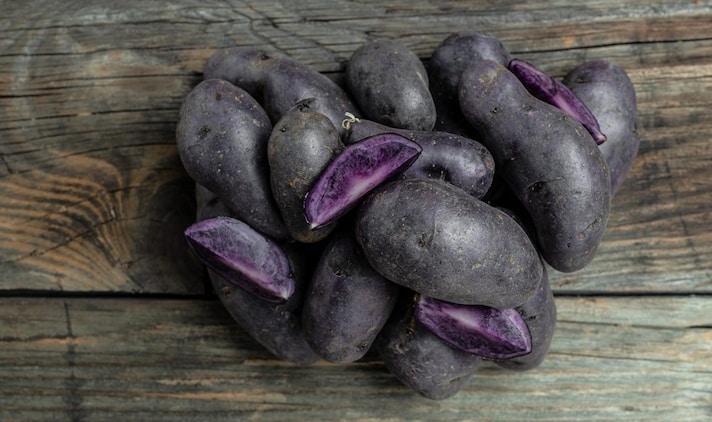
Andean peoples have always cultivated potatoes of various colors: purple, red, yellow, and variegated. The papa púrpura is one of the most spectacular varieties. Its intense, dark purple color is a natural adaptation to the extreme conditions of the mountains, where the plants have developed protective pigments against the sun and radiation, and it retains its color even after cooking. Flavor-wise, the papa púrpura has an aftertaste reminiscent of hazelnut or chestnut, while its texture is denser and firmer than a common potato.
7. Papas Antiguas de Canarias (Canary Islands)
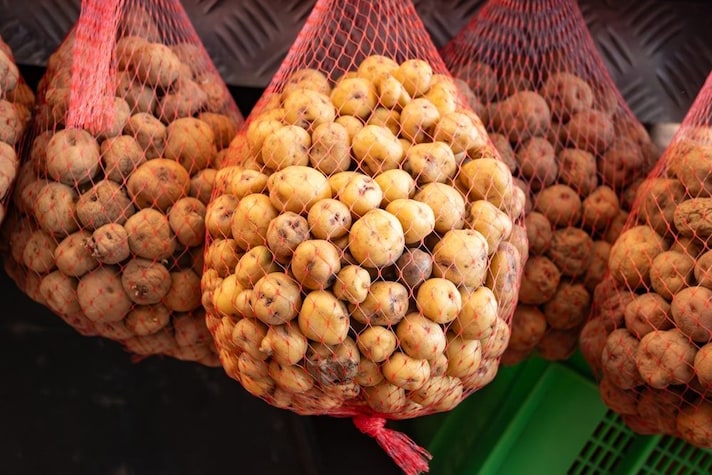
Papas antiguas (old potatoes) from the Canary Islands are a group of ancient potato varieties grown in the archipelago for centuries, descending from potatoes imported from South America via the Spanish trade routes. Small, often irregularly shaped, and with skins that can vary greatly in color, from yellow to red to dark purple, they are one of the most characteristic products of Canarian cuisine. Among the traditional varieties is the Papa Negra, particularly prized for its intense flavor. These small potatoes are ideal for preparing the famous papas arrugadas (wrinkled potatoes): they are cooked with their skins in very salty water until the skin becomes wrinkled and covered with a thin layer of salt, then traditionally served with mojo, the typical Canarian sauce.
8. Highland Burgundy Red Potato (Scotland)
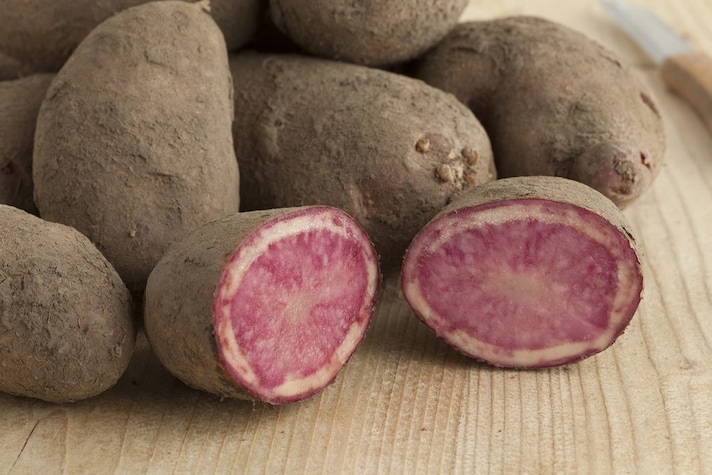
This Scottish variety almost resembles a beet: it has red skin and pinkish flesh that retains its color even after cooking. Born in the 20th century, it has become popular especially for salads and decorative dishes. Its flavor is delicate, slightly sweet, and its texture is very mealy and soft (almost creamy like butter when cooked), which makes it excellent for mashed potatoes, roast potatoes, and any recipe that calls for particularly buttery potatoes.
9. Edzell Blue (Scotland)
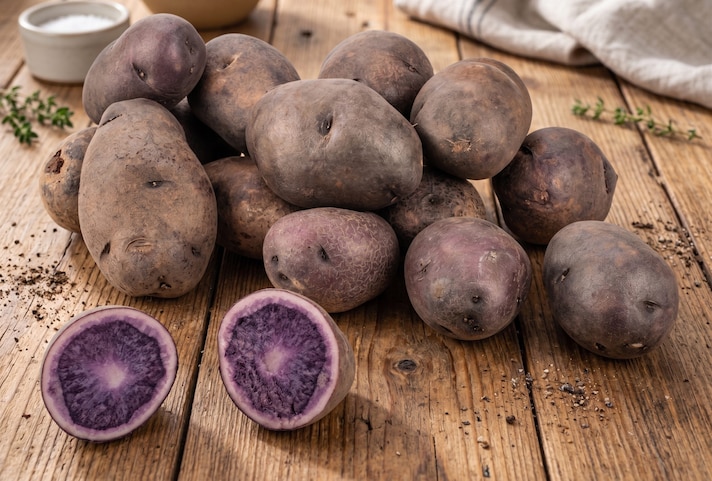
Also hailing from the heart of Scotland is the Edzell Blue, originally from the Scottish village of the same name and dating back to the late 19th century. It has a bluish/purple skin and white flesh, but its distinctive feature is that, after cooking, this firm potato becomes greasy and releases a pronounced flavor. It is ideal boiled whole, mashed, or fried.
10. Andean Potato "Moraya" (Peru)
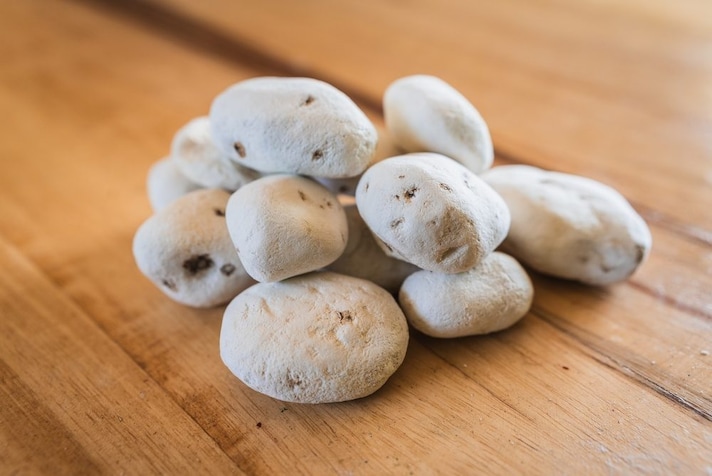
Moraya is a white, dehydrated Andean potato, obtained through an ancient natural freeze-drying technique invented by the Andean people. The mountain people would freeze the potatoes overnight and then dry them in the sun for days. The result was a light food that could be stored for months, essential for surviving the Andean winters. Moraya is still very popular today, especially for breakfast.
11. Banana Potato (Australia and New Zealand)
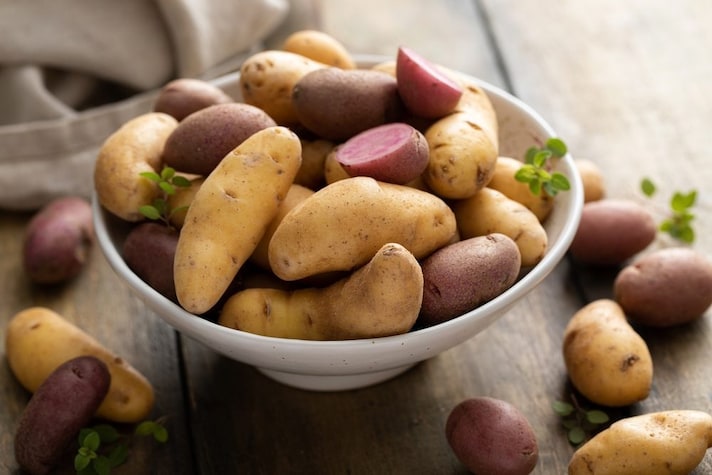
The Banana Potato is a small, elongated variety that resembles a mini banana. It has a thin skin and a creamy texture. It's often baked whole or used in salads because it holds its shape well.
12. Fortyfold Potato (UK)
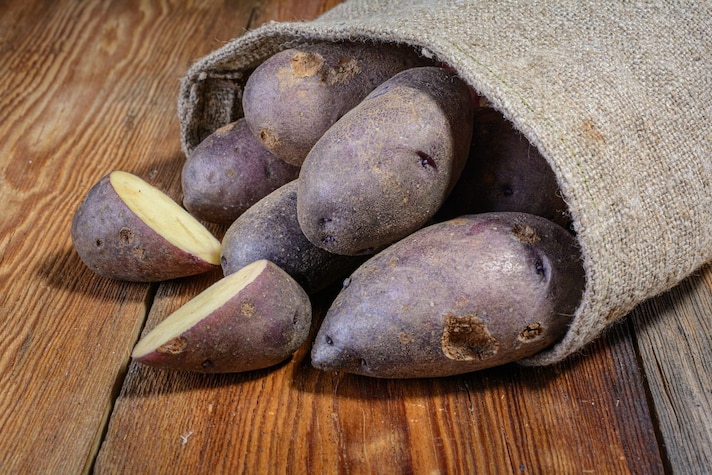
The Fortyfold is an ancient and historic English potato variety introduced in 1836, which for a time almost disappeared due to its lower yield compared to modern varieties. It has been revived by biodiversity enthusiasts for its historical value: it represents a key element of 19th-century English peasant cuisine. The Fortyfold is oval in shape with a blue-purple (or mauve and cream) skin and ivory-white flesh. It is a potato rich in dry matter, with a strong, rustic, and traditional flavor, and floury flesh. It is excellent baked with its skin or roasted, although the skin color fades during cooking.
13. Bamberger Hörnchen (Germany)
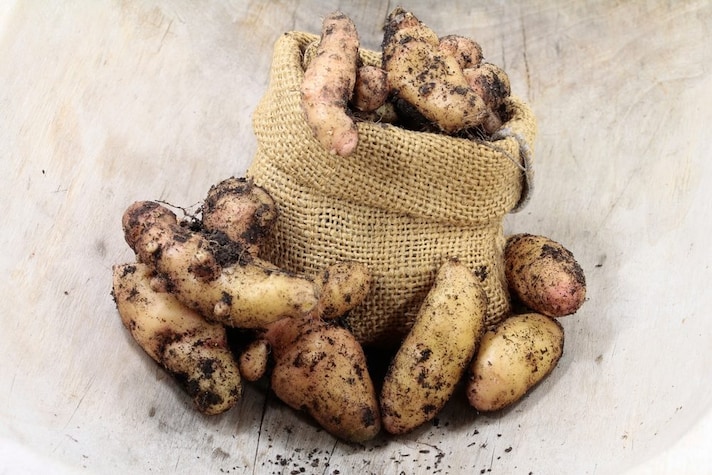
The Bamberger Hörnchen, or Bamberg Horn, is a particular species of potato native to Germany (ca. 1870). This variety is known above all for its small size – the potatoes are very small, horn-shaped, with pinkish-yellow skin and yellow flesh – and for its intense, aromatic, and distinctive flavor reminiscent of hazelnuts. Thanks to its firm, non-crumbly flesh, it is considered one of the best varieties for preparing the traditional German potato salad (Kartoffelsalat). It is often enjoyed boiled with its skin (Pellkartoffel) to maximize its aroma.
14. Blue Congo (Sweden)
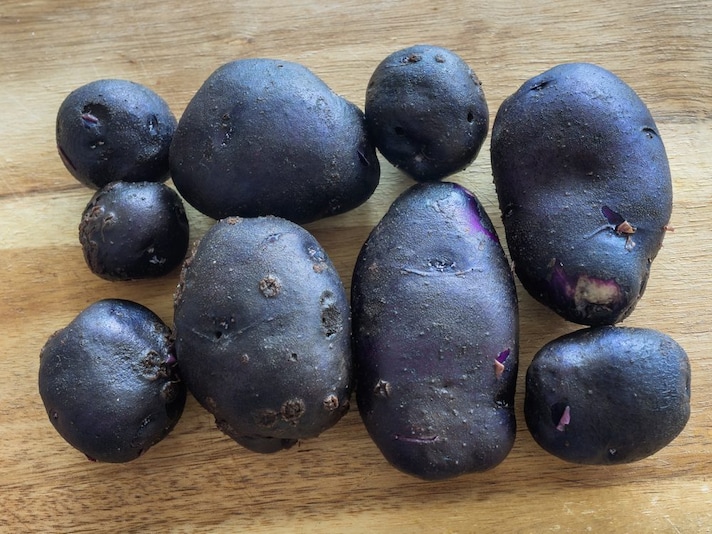
The Blue Congo potato (often also known as Swedish Blue) is an ancient potato variety in Scandinavia, characterized by a dark, almost black or blue-purple skin, and a deep blue interior. It has a strong, slightly nutty and sweet flavor, with firm yet creamy flesh that holds its consistency well during cooking: this makes it perfect for boiling, steaming, or baking.
15. Turquoise Potato (Italy)
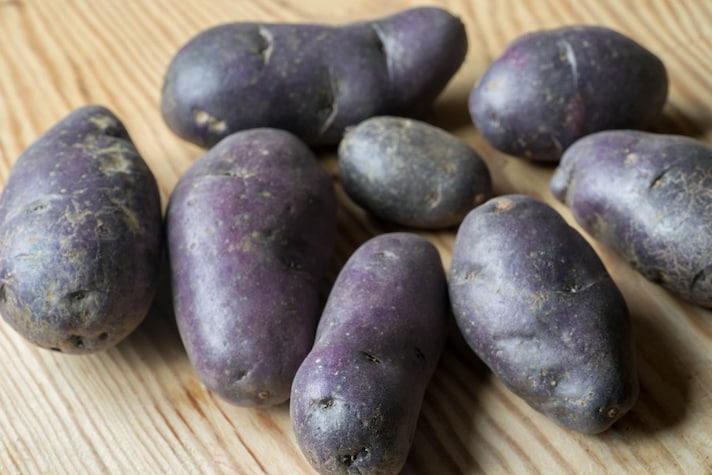
The Turquoise potato, also known as the "Turkish" or "Turchesca" potato, is an ancient potato variety grown in the Abruzzo mountains, particularly in the Gran Sasso area, since the 18th century. In the past, the Turchesa was an important food resource for the local population: thanks to its properties, it can be grown even at high altitudes, even above 1600 meters, and is easy to store. Despite its importance, the Turchesa potato has disappeared over time, increasingly replaced by other potato varieties that are more visually appealing. After almost disappearing completely, it has now been saved and, although a niche crop, is still cultivated in the Gran Sasso Park. It is recognizable by its deep purple skin, lumpy appearance, and firm flesh, which makes it suitable for boiling, pan-frying, mashing, or making gnocchi.
16. Ulluco Potato (Andes)
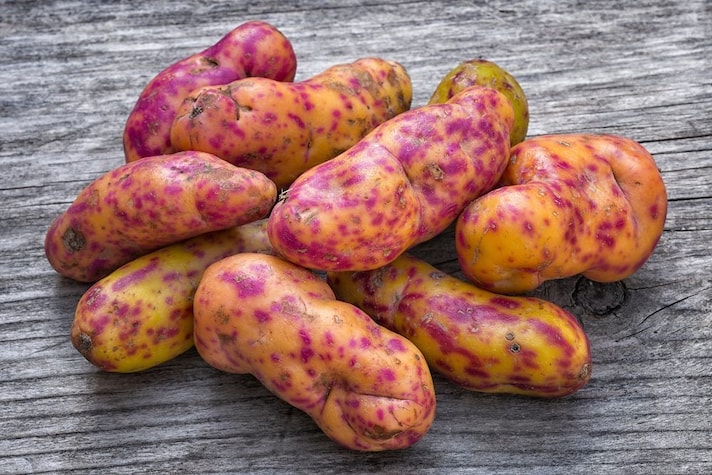
Although technically not a true potato, the ulluco belongs to the same large family of Andean tubers. It was impossible not to mention it on our list, because it is one of the most distinctive in the world: its very shiny and waxy outer surface can be yellow, pink, red, or purple, but it can also feature all of these shades at once, making the skin a veritable rainbow of colors. The inhabitants of the Andes have been eating it for over a thousand years in soups and stews, and even today it is the main ingredient in traditional Peruvian dishes such as olluquito con carne (a ulluco stew with beef, pork, or chicken).

