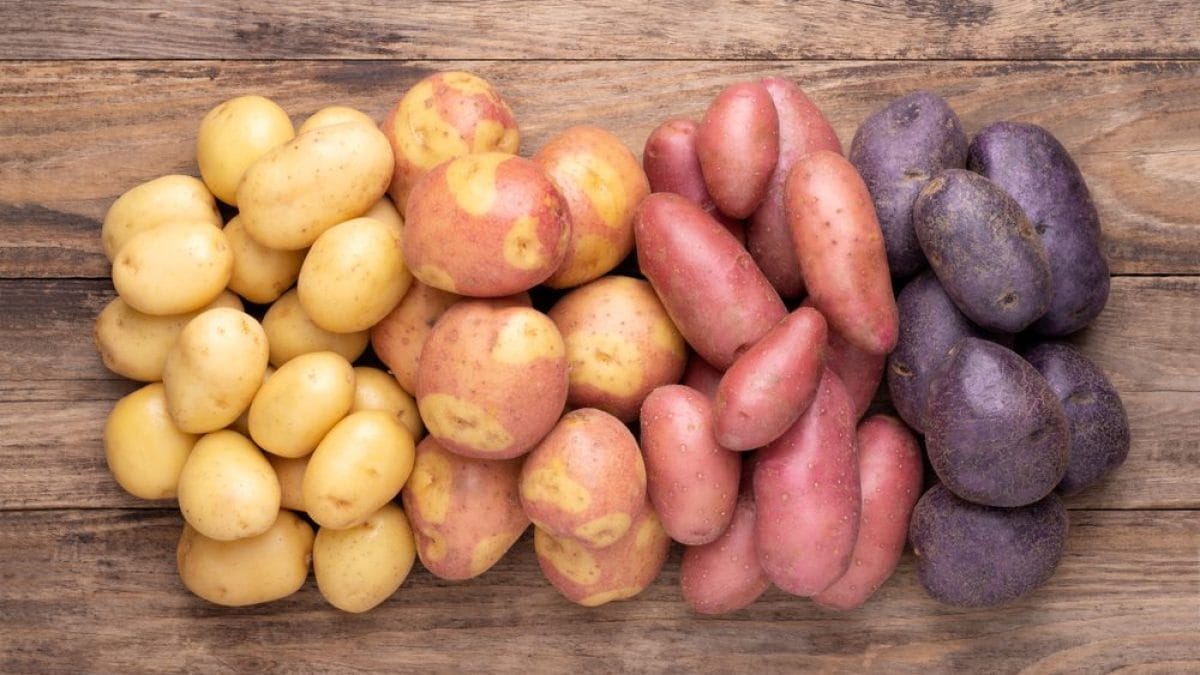
Native to the Americas, and having arrived in the West in the 1500s thanks to the Spanish who imported them from the Andes, today potatoes are so deeply rooted in our cuisine that it would be impossible to imagine a world without them. Inexpensive, versatile, and delicious when cooked in a variety of ways, potatoes are a true must-have, and can be used in everything from appetizers to desserts.
And not only that: they exist in many different varieties. In everyday life you are used to eating the most classic ones, those with yellow or white flesh, but in reality there are many types of potatoes and each is different from one another, with particular characteristics and specific recipes in which they are enhanced to the fullest.
From the flouriest to the firmest, from the most delicate to the sweetest, we'll guide you through the most popular potato varieties and explain how to use each type in recipes that best showcase its unique qualities.
1. Yellow-Fleshed Potatoes

Yellow-fleshed potatoes are probably the most common and widely used variety in the U.S. (and beyond), and include many prized varieties, such as the Yukon Gold potato variety. This type of potato is characterized by a compact, firm, and slightly floury texture, making it perfect for all side dishes, especially frying and baking because it retains its crispiness. They're also excellent boiled because they retain moisture well, but avoid using them in purees and batters.
2. White-Fleshed Potatoes

As famous and beloved as yellow-fleshed potatoes, white-fleshed potatoes are distinguished by their particularly pale flesh. They're a veritable concentration of starch, giving them a very floury texture that causes them to fall apart during cooking. This makes them ideal for recipes that require transformation: for example, if quite old, they're perfect for making homemade gnocchi, or they're excellent for making mashed potatoes, croquettes, and as a filling for savory pies.
3. New Potatoes

At least once in your life, you've probably eaten or prepared new potatoes, those small, round, firm chips that have become one of the most popular side dishes. These small tubers are sold freshly harvested, before fully ripening, and are typical of the period from July to late autumn. They have a thin, edible skin and soft, yet firm flesh, making them perfect for baking or pan-frying and served with meat.
4. Red Potatoes

They're called red potatoes, but that's actually a characteristic of their skin, which is a bright red. The inside is yellow, firm, and slightly floury, just like yellow-fleshed potatoes. What sets red potatoes apart from other similar varieties is their concentrated nutrients and more intense flavor. They also have particularly good skin, which is why, after washing them and if they're organic, they can be eaten with the skin on. They can be eaten roasted or boiled and are suitable for more elaborate recipes, such as stuffed potatoes.
5. Purple Potatoes

Purple potatoes are a truly striking variety: not only do they have a distinctive elongated shape, but above all, their skin and flesh are a vibrant purple color due to the presence of important substances called anthocyanins. Their texture is also very different from other varieties, being very floury and with a sweetish flavor, while in this case the skin is inedible because it is too hard and difficult to digest. You can use them to make gnocchi, purees, and creamy soups with an unusual color and low in calories: purple potatoes are also very lean (100 grams contain approximately 80 calories).
6. Ozette Potatoes

The Ozette potato deserves a special mention among American heirloom varieties. Grown primarily in the Pacific Northwest, especially in Washington State, it is an ancient potato believed to have been introduced by Spanish explorers in the late 18th century and preserved for generations by the Makah Nation. Rediscovered by chefs and food historians only in recent decades, the Ozette is still relatively uncommon outside specialty markets and farm-to-table cuisine. Unlike many modern potatoes, it has a distinctive fingerling-like shape, thin tan skin, and creamy white flesh with a rich, earthy, slightly nutty flavor. Its texture is firm and waxy rather than floury, making it especially well suited for roasting, pan-frying, and potato salads, while its ability to hold shape also makes it excellent boiled or grilled.
What About Sweet Potatoes?

Until a few years ago they were not very widespread in the West, but today you can easily find sweet potatoes everywhere, also known as American potatoes because they are widely used here. In reality they are not potatoes, which belong to the Solanaceae family.
But the tuberous roots of Ipomoea batatas, a species belonging to the Convolvulaceae family, are distinctive for their particularly elongated and large shape, their orange flesh, and their sweetish, sugary flavor. Rich in potassium and vitamin C but low in sugar, sweet potatoes lend themselves to a wide variety of preparations: they are usually used for crispy frying and baking, but they are also excellent roasted and even as a base for sweet potato pie, a must-have Thanksgiving dish.
;Resize,width=767;)
