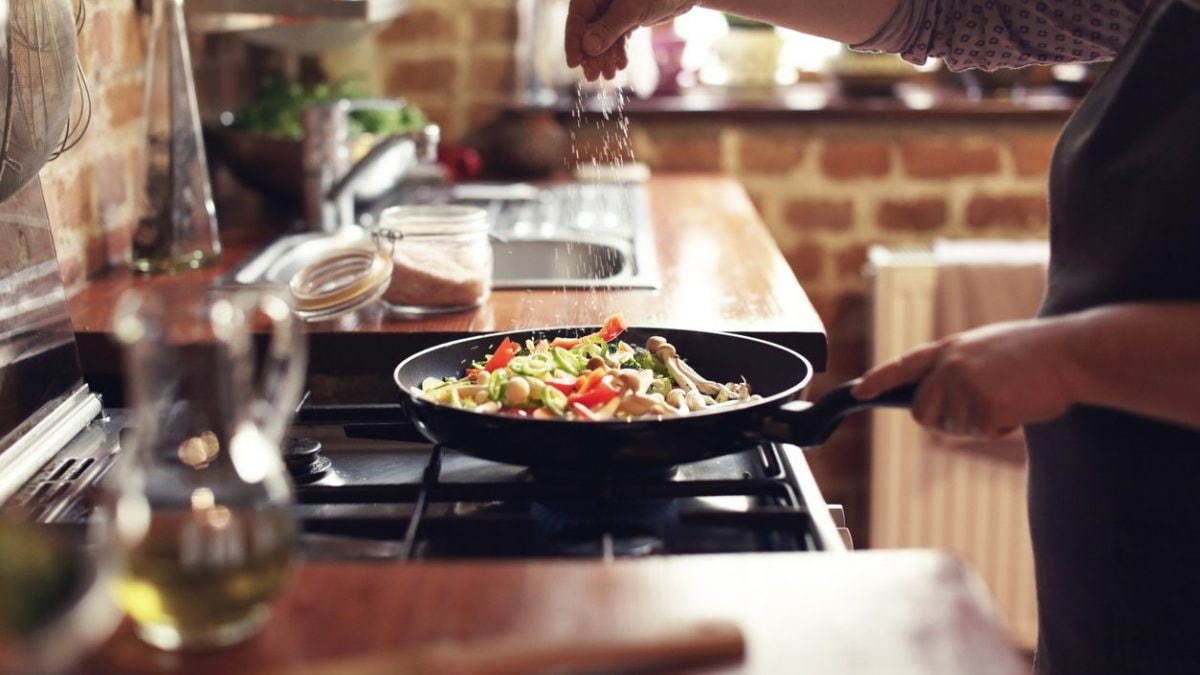
There are so many mistakes we can make in the kitchen: from collapsed dough to overcooked meat, to overcooked pasta or burnt desserts. And, beyond these obvious mistakes, there are some we make every day without realizing it. In this article, we want to talk to you about these very mistakes: a sort of short list of commandments to follow to always cook at your best and also avoid any waste.
1. Using Dull Knives

It may seem strange because they are less sharp than well-maintained ones, but this is precisely why they are more dangerous. Dull knives make cutting food more difficult, increasing the risk of the blade slipping and causing injury. Furthermore, a well-sharpened blade allows you to cut food more precisely and also more quickly, reducing preparation time. This is an advantage not only for aesthetics, with more regular and symmetrical cuts, but also for cooking food: foods cut to the same size help to ensure more uniform cooking.
2. Wasting Ingredients

We know very well how important it is to try not to waste any food in the kitchen: for this reason, in addition to buying only what you think you will consume and using even aesthetically unappealing foods in your recipes, try to also recover all the contents from bowls and containers. To do this, equip yourself with a spatula, or a scraper, with which to carefully collect all the residues from cans, pots or bowls: in practice, take everything down to the last drop.
3. Peeling Produce Over a Garbage Can

It may seem harmless, but you should avoid peeling fruit or vegetables directly over the garbage can. This could not only cause the food to accidentally fall inside, but also expose it to the unhygienic air in the garbage can. Therefore, choose bowls that make it easy to peel your food.
4. Storing Oil in Clear Bottles (Or Placing Them Near the Stove)

A tip is recommended if the oil is stored in transparent bottles —as is often the case with frying oil— because sunlight can damage the contents. Therefore, once purchased, transfer it to a tin or dark glass bottle. For the same reason, never place it near the stove: heat sources damage it as much as light.
5. Leaving a Messy Kitchen

If you're a MasterChef fan, you know it very well: one of the mantras for chefs is to always keep their workspace perfectly tidy. This is especially true, of course, in restaurants, but it's also a useful tip at home: having all the ingredients already prepared, chopped, or weighed greatly reduces preparation time, making the process much simpler and less tiring. Furthermore, it seems that having a tidy kitchen can also help you eat less: according to one study, in fact, a messy environment can cause greater stress, leading you to eat more. So remember: tidy kitchen, tidy mind.
6. Choosing Pans at Random

Tall? Low? Wide? Narrow? Cast iron? Steel? There are so many types of pans out there, and each has its own specific purpose. It's always a good idea to consider the type of recipe you're preparing to choose the best one. For example, if you're making a good risotto, it's important to use a cast iron pan with a wide surface and raised edges. The same material would be appropriate if you want a nice crust for your steak. For broth, however, a tall pan is recommended, so it can hold all the ingredients, preferably stainless steel. If you want even, crispy frying, you should opt for a cast iron pan. The right pan or pot will make your job easier and help you achieve excellent results every time.
7. Sticking Your Fingertips Out When Slicing Something

This is probably a detail many of you are already familiar with, but it's always worth remembering to prevent injury. There are two ways to hold a knife correctly: the hammer grip, with four fingers holding the handle and the index finger against the thumb at the front, or the blade grip, with three fingers on the handle and the thumb and index finger resting on the blade. In both cases, however, the index finger must remain bent and never extended over the blade, and the fingers holding the food must be bent inward with the knuckles facing the blade. Following these simple tips will significantly reduce the risk of cutting yourself.
8. Cutting Foods Directly on Baking Trays or Pans

It's probably something we've all done at least once, whether in a hurry or for convenience, but you should never cut food inside baking pans or skillets. This is because the knife blade could damage the coating: so transfer the food to a cutting board and proceed with cutting.
9. Cooking Rice Without Washing It

It's much more common to do this with other grains like barley or quinoa, but washing rice is a good habit you should start adopting. First of all, it helps remove the surface starch that, during cooking, can make the rice rubbery and sticky, instead of soft, separate grains. Secondly, it helps remove any impurities and residues such as dust, grain fragments, bran, and even pebbles and small insects. Finally, it helps reduce the amount of inorganic arsenic, a substance naturally present in soil and water: rinsing it before cooking helps eliminate at least some of it.
10. Cutting Into Meat To Check for Doneness

Cooking meat is one of those things that can seriously challenge us: achieving a perfect crust while keeping the inside soft and juicy is always a challenge. And, certainly, one practice that could contribute to a poor result is cutting it while it's still on the heat to check its cooking: this facilitates the escape of juices, making the meat much drier. The advice, therefore, is to equip yourself with a thermometer or simply rely on your fingers.
11. Storing Breadcrumbs in The Fridge or The Freezer

Everyone, absolutely everyone, has breadcrumbs in their pantry: number one among recipes for recycling stale bread, they are essential in the preparation of recipes that call for a golden and crunchy coating. Well, if you want them to always give their best, avoid storing them in the refrigerator or freezer: this is because their low temperatures promote humidity, causing them to lose their consistency. It is therefore preferable to keep them in the pantry, preferably in an airtight container to avoid contact with air. The only case in which you can store them in the freezer is if you use a vacuum sealer, in order to remove all the air present in the bag and prevent humidity from penetrating.
12. Washing Your Knives in The Dishwasher

We know it's useful, that it makes our lives easier, that it takes away the burden of having to wash those seemingly endless dishes one by one, but washing knives in the dishwasher might not be a good choice. The salts contained in detergents could wear down the blades and make them more prone to rust. They could also hit other utensils and chip or dull, and the handle, if made of wood, could absorb too much moisture and swell. For this reason, knives should be washed by hand, with warm water and a non-abrasive sponge, and dried immediately after washing to avoid limescale stains.
13. Storing Croissants in The Refrigerator (Unless Necessary)

Whether homemade or bought at the bar, it's almost impossible to have leftovers: but if that happens, avoid storing your croissants in the refrigerator. This is because their dough, made of flour, yeast, and butter, can lose its characteristic fragrance due to the humidity of the refrigerator. So, it's better to store them in a plastic bag under a glass bell jar, in an environment with a more stable temperature. However, if you need to keep your croissants for more than two days, place them in the refrigerator, especially if they're filled, preferably in an airtight container.
14. Testing the Oil Temperature With a Drop of Water

Without a thermometer, we often look for ways to tell us the temperature of our frying oil. Sometimes, to test, we might have the unhealthy idea of throwing a few drops of water in: well, never do this. The water can splash dangerously and get dirty or, worse, burn you. For this reason, use the toothpick technique: if bubbles form around it, it means the oil is ready. Alternatively, you can throw in a piece of bread or a little batter.
15. Storing Bread in The Refrigerator

It's still a fairly common practice, but fresh bread should never be stored in the refrigerator. This is because the cold, as well as the humidity, risks removing all the fragrance from the crust and making the bread soggy. The same cannot be said for the freezer, however, as the much lower temperatures block the processes that transform the bread, allowing it to remain in the state it was in when frozen.
16. Using Spices That Are Too Old

Mint, basil, rosemary, thyme, sage, and parsley: these are some of our best allies in the kitchen, lending a unique aroma and flavor to our meat, fish, and vegetable recipes. But if you use fresh spices, it's important not to use them when they're old, as they can lose their flavor. Therefore, it's a good idea to adopt a method to preserve them longer: the most common is undoubtedly drying, either in the air or in the oven, which minimizes the water content in the leaves, preventing the proliferation of bacteria and mold. Other methods include freezing them with water or broth, seasoning them with a flavored oil or butter, or even preserving them in salt or vinegar.
;Resize,width=767;)
