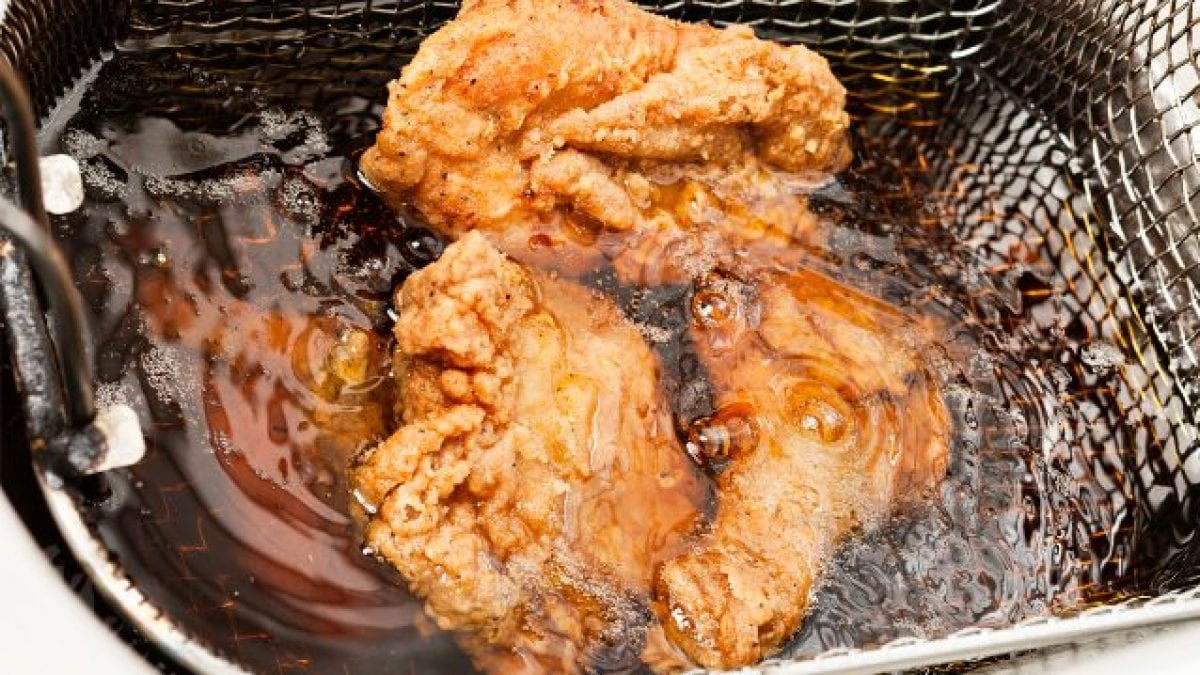
Making homemade fried chicken is a culinary tightrope walk. On one side, you risk a gorgeous, golden-brown crust wrapped around a shockingly raw, bloody center near the bone. On the other side, you fry the chicken long enough to safely cook it through, only to end up with a dark, bitter, burnt exterior and bone-dry meat. It is a stressful, high-stakes game that makes many home cooks surrender and head straight to the nearest drive-thru.
But it doesn't have to be a guessing game. The secret to restaurant-quality fried chicken doesn’t lie in a heavily guarded blend of secret herbs and spices; it lies in smart food science. By combining two revolutionary, editor-approved techniques—the "flour-drizzle" crust builder and the "twice-cooked" par-cooking method—you can eliminate fryer anxiety entirely. Here is how to achieve a shatteringly crisp crunch and perfectly juicy meat every single time.
Hack 1: The Flour-Drizzle Trick for Ultimate "Crags"
Have you ever wondered how fast-food chains get those massive, ultra-crispy, undulating ridges on their chicken? If you simply dip wet chicken into smooth, dry flour, you get a flat, uniform coating that can easily turn leathery. To get those deeply satisfying texture pockets, you need to create "crags." The hack is beautifully simple: before you even touch a piece of chicken, take two to three tablespoons of your wet buttermilk marinade or liquid egg wash and drizzle it directly into your bowl of seasoned flour.
Using a fork or your fingertips, gently toss the flour until the liquid forms tiny, pebble-sized clumps throughout the mixture. When you press your marinated chicken into the dredge, these pre-formed flour clumps adhere to the skin. As soon as the chicken hits the hot oil, those pockets expand and fry into flaky, hyper-crunchy ridges that trap extra sauce and provide maximum structural crunch.

Hack 2: The Pre-Cook Method (Goodbye, Raw Centers)
The second, and perhaps most liberating, hack completely rethinks the traditional frying timeline. Instead of dropping raw, ice-cold chicken into a pot of screaming hot grease, you precook the meat before it ever touches the flour. Frying is an incredibly inefficient way to cook meat to the bone, but it is an excellent way to crisp up a surface. By separating these two objectives, you guarantee a perfect result.
Season or brine your chicken as you normally would, then place the naked pieces on a baking sheet. Pop them into a 350°F oven for about 30 to 40 minutes, or until the internal temperature hits a safe 165°F. Remove the chicken from the oven and let it cool completely. You can even do this step a day or two in advance, storing the fully cooked pieces in the refrigerator. When you are ready to serve, treat the cold, cooked chicken exactly like raw meat—dip it in your buttermilk, dredge it in your craggy flour mix, and drop it into the oil. Because the interior is already fully cooked and safely locked in with juices, you only need to fry the chicken for roughly 3 to 5 minutes—just long enough to turn the outer batter into a deep, golden-brown masterpiece.

The Science of a Cleaner, Faster Fry
Beyond saving your sanity, precooking your chicken delivers a massive hidden benefit to your kitchen environment. When you fry raw chicken, the meat releases a substantial amount of water into the oil as it cooks. This moisture causes the oil to violently pop, violently splattering your stovetop and dropping the overall temperature of your fryer.
By baking the chicken first, the excess surface moisture is evaporated cleanly in the oven. When the par-cooked chicken hits the oil, the frying process is remarkably quiet, incredibly fast, and absorbs significantly less grease, leaving you with a light, clean, and impossibly crunchy crust.
;Resize,width=767;)
