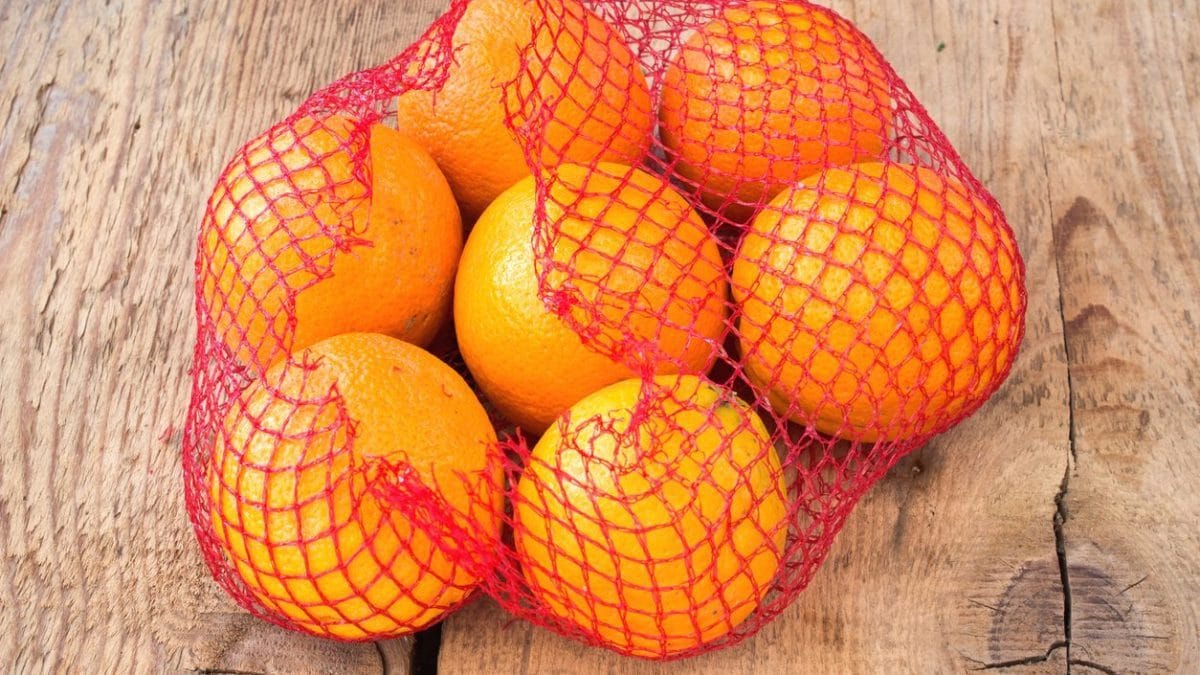
It's quite common for produce like oranges, lemons, potatoes, or garlic to be sold in predetermined quantities inside special, colored, bag-like nets, usually based on the type of food they contain, to make them more appealing to consumers. Once you've opened fruit and vegetable packages, your first instinct is to throw the nets away, but they're actually just one of many items that can be reused in a variety of useful and creative ways. If you take care to open the nets without tearing them, and after washing them thoroughly to remove any residue, you can recycle them, giving them a new lease of life. All it takes is a little imagination, but if you're lacking inspiration, here are 6 original ideas for reusing fruit and vegetable nets and turning them into useful objects.
1. Scrub Holder for Deep Cleaning
Cut into smaller pieces, filled with the appropriate ingredients, and tied with a ribbon, the net becomes a bag to be used as a scrub bag for more thorough cleaning. For example, you probably know that rubbing a lemon cut in half on various surfaces is an effective natural cleaning method, useful for degreasing steel stovetops, cutting boards, and ovens, and removing unpleasant odors from hands and the refrigerator. Why scrub it by hand when you can put it in a pre-drilled bag? Place half a lemon in the bag you created with the leftover nets, hold it by the closure, and use your natural scrub to clean with ease.
2. Scouring Pads or Sponges for Washing Dishes
The mesh pads are easy to wash and dry, making them reusable for a longer time: simply cut the pads into smaller pieces, insert them into each other, and tie them together to form a perfect abrasive sponge for the most difficult surfaces. And if you really want to take recycling to the next level, cut the pad into two equal parts, fill one half with leftover mesh scraps or a small piece of porous material like that used for hood filters (it offers good structure and dries quickly), and sew them together: you've got yourself a perfect recycled sponge.
3. Sink Drain Filter
Screens are practically natural filters due to their mesh structure: if you cut a piece and place it over the kitchen sink drain (or even the bathroom sink, shower, or bathtub), the mesh, especially if narrow, becomes a perfect filter for trapping food debris or other debris, preventing them from flowing down the pipes and clogging them. Be careful, though, because over time the mesh will begin to fray; it's therefore a temporary solution.

4. Treat Bags
Have you made some homemade cookies or sweets, want to give them as gifts or store them in portions, and don't know how? Fruit and vegetable nets are also useful in this case: divide the net into several squares, overlap with a sheet of parchment paper of the same size, and place the cookies or sweets inside. Then, close the bag with a piece of string or a colored ribbon, and you're done: the bags full of sweets are ready to be given as gifts or placed in tins for storage.
5. Bag for Bags/Food Containers
More than just bags: nets can become incredibly convenient multipurpose bags, which you can hang in the kitchen to store other bags and pouches, or you can use them as food storage for fruit and vegetables. How? Simply cut the nets to the same size, add a piece of fabric to the center for the base, and sew or tie everything together. Simply add two strips of netting or ribbon for handles and hang the bag, or use a rubber band to close the bag and store it in the pantry.
6. Support for Aromatic Plants
Fruit and vegetable nets are also very useful in gardening, especially as support for potted aromatic plants on the windowsill or balcony. How are they used in this context? You have two options: inside a pot (whether for aromatic herbs or flowers), the nets can act as a trellis to support small climbing plants or herbs, but you can also place the nets over the plants to protect them from insects or birds.
;Resize,width=767;)
