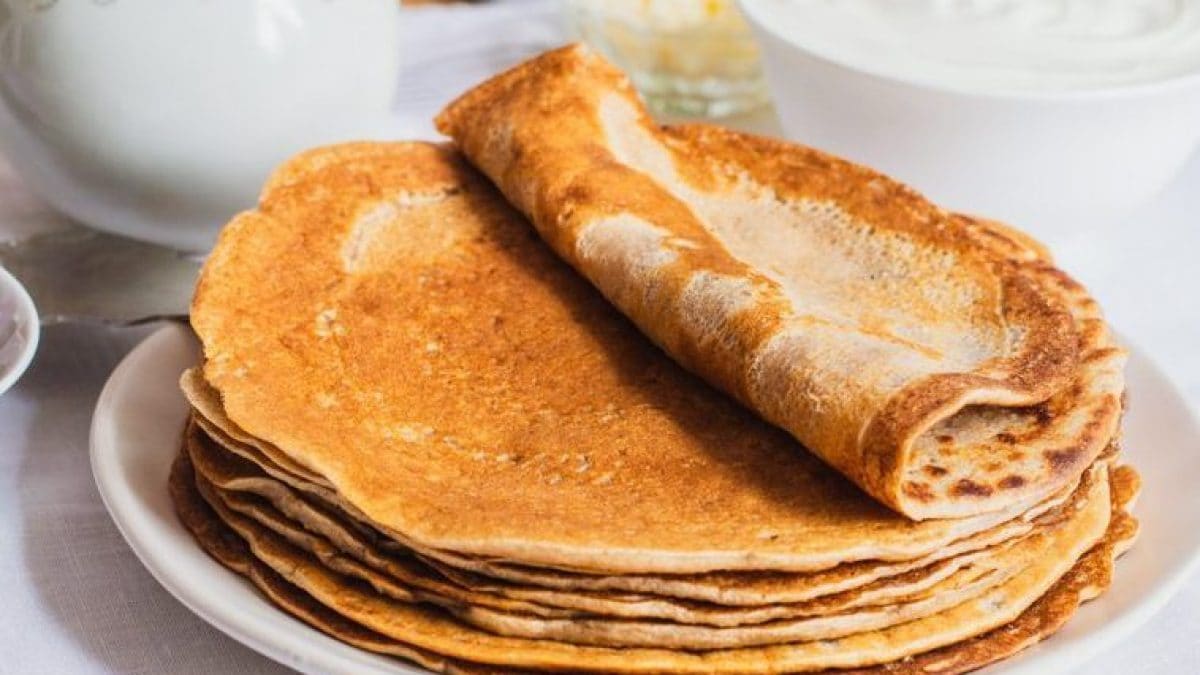
Crêpes are a very delicious preparation: a mixture of eggs, milk, and flour (with a pinch of salt) that is cooked briefly in a pan, resulting in a smooth and elastic dough, perfect for being enriched with creams or jams, fruit, in a sweet version, or savory, with ham, cheese, shrimp, béchamel sauce, or vegetables. The batter can be prepared in advance and stored in the refrigerator for a couple of days, as can the pre-cooked crêpes, without filling, convenient and practical, to show off on many occasions. At the same time, the result you get is not always as expected: the crêpes break, are thick, lumpy, and resemble omelettes in appearance and flavor. Probably, during the preparation of the crêpes, some mistakes were made: following our classic recipe, here are the most common mistakes, how to avoid them and, good news, how to fix them.
1. Underestimating The Batter

Let's start with one of the most common mistakes: paying too little attention to the ingredients that make up the batter. The best way to avoid making mistakes is to follow the recipe you're using as a reference, without changing the proportions of eggs, flour, and cow's or plant-based milk, or water, for lighter variations. Adding too much egg or adding too much liquid risks making the mixture too dense, resulting in an omelette, or too runny, failing to firm up during baking. Yeast is also unnecessary, because the dough doesn't need to rise in volume; it just needs to be a few millimeters thick and elastic. And the sugar? You can omit that too, for a neutral and versatile base. Our advice is to beat the eggs well first, then gradually add the milk, continuing to mix with a whisk, and finally, the flour.
2. Not Sifting The Flour

What type of flour should you use? Opt for all-purpose flour, which should be sifted: a step that's often skipped, but it can make a difference in reducing the risk of lumps, as it incorporates better and the batter will have a more uniform texture. Don't worry, though, if lumps still form: you can pass the entire mixture through a sieve or blend it with a hand blender.
3. Getting the Batter Consistency Wrong

At this point, evaluate the final consistency of the batter, as it's crucial to the success of the crêpes: it should be fluid, smooth, not excessively runny or, conversely, creamy. If it seems too thick, you can add a little milk; if it needs more body, add a little sifted flour at a time.
4. Using an Unsuitable Pan

Let's move on to the cooking phase. First, it's important to choose the right pan: to be on the safe side, you can easily find crepe makers on the market, both stove-top and electric ones, usually 28 to 35 cm in diameter. They're a great purchase if you make crepes often. If, however, you only make them occasionally, a non-stick pan with a flat bottom and a diameter of 20 cm will suffice, as it's easier to handle: remember to grease it with a knob of butter and wait until it's very hot before pouring in the batter, which will begin to thicken immediately.
5. Pouring Too Much Batter

We know that crêpes need to be thin: pouring too much batter could result in a sort of unsuccessful pancake. Therefore, adjust the amount based on the size of the pan, as the batter must cover the entire surface like a veil, evenly: to do this, simply rotate the pan as soon as you pour the batter.
6. Turning Them at The Wrong Time

A crêpe takes a very short time to cook: if it's left in contact with the heat for too long, the batter tends to dry out. You'll know it's time to flip it when the edges begin to curl up, separating from the pan: slide the spatula under the disc and flip it over with a firm motion.
7. Not Stacking Them on Top of Each Other Immediately After Cooking

As they're ready, the crêpes are stacked on top of each other. The reason is simple: this way they retain heat and moisture, so they don't dry out and stay soft. Leaving them separate, perhaps placing them on different plates depending on the number of diners, helps them cool: they lose flexibility and become more difficult to fill and fold.
;Resize,width=767;)
