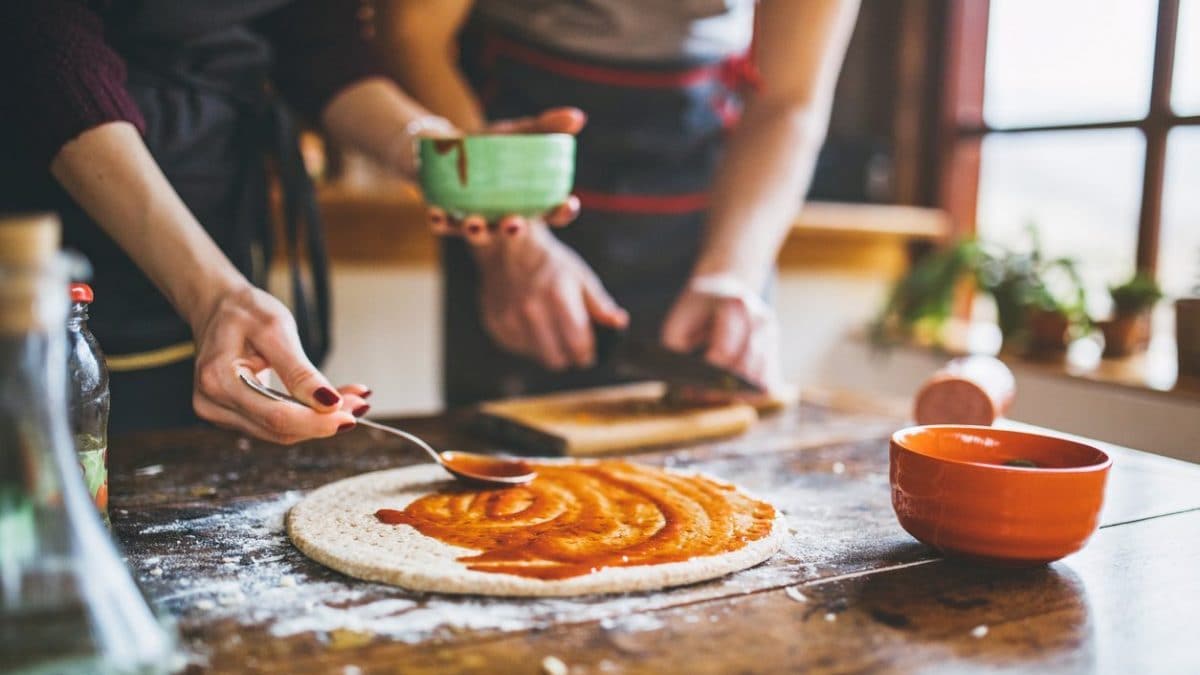
We're always searching for the perfect recipe for our homemade pizza: sometimes it turns out thin, sometimes soft, sometimes under-risen, or too hard. The secret to a truly flawless pizza, however, lies not only in the recipe, but in a series of tricks and small details that, when combined, make all the difference.
Making pizza isn't simply a matter of mixing flour and water and letting the dough rise for an indefinite number of hours: it requires patience, care, and attention to achieve a perfectly crafted product. That's why Molino Moras, a historic mill, has compiled some essential tips you shouldn't forget. These tips are provided below and will help you make a truly worthy pizza.
1. Not Choosing the Right Flour For Your Goal

A perfect pizza—thick, soft, and light—isn't a matter of chance, but the result of proper dough-making. One of the secrets to achieving this lies in the choice of flour, which, as we know, varies based on its strength: if you need a very long dough-making time (48/72 hours), we recommend using a strong flour; while you can opt for a medium-strength flour if you have less time available. In any case, the choice of flour significantly impacts the final result: so take your time and make an informed choice based on what you want to achieve.
2. Not Paying Attention to The Order In Which You Add The Ingredients

It may seem like an irrelevant detail to some, but the order of ingredients really matters in dough, both for proper liquid absorption and optimal development of the gluten network. Always start with flour and yeast, then add water little by little—so that the flour can gradually hydrate—and finish with salt and any fats, such as oil. This way, you'll obtain a dough in which the gluten will be properly structured and the salt will not inhibit the yeast's ability to work properly.
3. Not Managing Proper Hydration

It's true that a dough with more water creates a softer, more airy result, but that doesn't mean the more water we add the better. In fact, each flour absorbs liquid differently, and therefore, proper hydration depends on many factors, including: the type and strength of the flour, the ambient temperature, the external climate, and the humidity in the surrounding air and in the flour itself. The advice is to add water gradually and observe how the dough responds. The best way to evaluate it is always to rely on touch: if it feels elastic, soft, and not sticky, it means it has reached the right consistency.
4. Not Seeing The Fridge as An Ally for Maturation

Letting the dough ripen in the refrigerator allows for a longer and more controlled fermentation, which improves the digestibility, flavor, and structure of the final product. This isn't a makeshift solution, but a genuine technique, especially useful for those who don't want to spend hours kneading dough. This way, you can also prepare your pizza dough the night before or even a few days in advance, let it ripen in the refrigerator, and have it perfectly ready and easy to work with on the day you choose.
5. Underestimating the Pan When it Comes to Cooking

Very (too) often, we don't give the right weight to the pan we're using to cook our pizza. In reality, however, the support is essential, and the best choice is a lightweight pan, capable of conducting heat well and ensuring a crispier base. A refractory stone is also an excellent solution, as it can accumulate heat and distribute it rapidly, resulting in a well-structured pizza. However, the baking tray supplied with the oven should be avoided, as it struggles to transmit heat effectively and can leave the pizza rubbery or undercooked.
6. Not Being Delicate When Stretching Your Dough

Dough is made, among other things, of air, which is essential for achieving the thick, airy pizza we so desire. It's therefore absolutely essential to retain the leavening gases and prevent them from escaping, which could happen if we press the pizza too hard when rolling it out. The dough should be rolled out slowly and gently, using your hands and working it from the center outward —although the technique may vary depending on the desired result.
7. Not Using The Highest Temperature and Putting Toppings Early

Once we've completed all the previous steps correctly, we come to the final step: baking. For perfect results, it's essential to preheat the oven to maximum power and let it heat up for at least 20-30 minutes before baking. Never, and we mean never, put the pizza in a cold oven: the high temperature ensures rapid baking, allowing the gases to expand optimally, resulting in a tall, fluffy product.
As for the toppings, however, it's best not to add all the ingredients at once, both because the pizza could become heavy and unable to rise, and because more delicate ingredients—like mozzarella —could overcook, given that cooking times in a home oven are longer than in a professional one. The advice, therefore, is to start with just the oil, in the case of a white pizza, or with tomato puree for a red one, so as not to dry out the crust, and add the rest of the ingredients halfway through cooking.
;Resize,width=767;)
