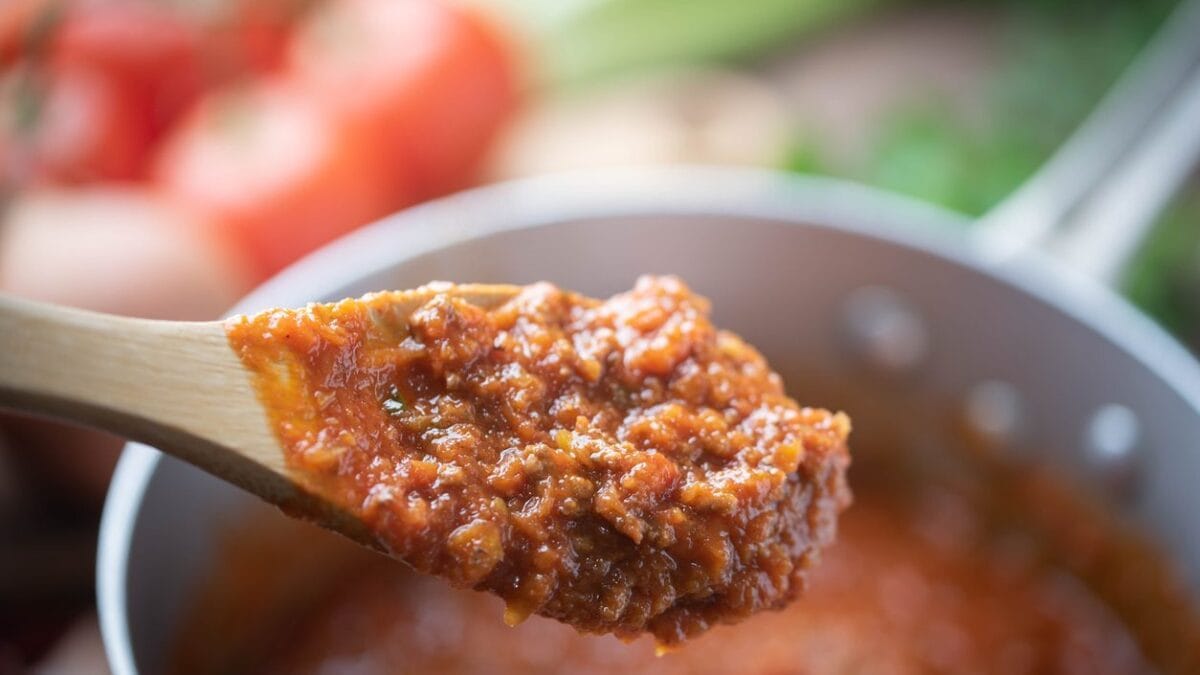
One of the dishes most closely tied to Italian-American gastronomic tradition is ragù: the classic condiment par excellence when it comes to pasta, including tagliatelle, pappardelle, ziti, macaroni, lasagna, baked pasta, gnocchi, but also timbales and arancini. Although there are codified recipes, such as that of ragù alla Bolognese, and closely linked to regional traditions, such as Neapolitan or Tuscan ragù, this rustic dish is actually one of the greatest expressions of home cooking, often evoking memories and the atmosphere of family reunions for Sunday lunch or for special occasions, including holidays.
We could say, in fact, that everyone has their own way of understanding what the perfect ragù is (starting with the presence or absence of tomato, for example), with the secrets of grandmothers, mothers, or other relatives who have gone down in history for their ability to make it expertly. Ragù is a banner of freedom within the home, in an outside world that tries to label it "original," dividing good ragùs from bad ones. The intent here is to point out those errors, especially technical ones, that can ruin the final result of even the best chef's most popular ragù, featuring minced meat as the main ingredient, resulting in a dish that is bland, watery, and disconnected from its components.
1. Choosing The Wrong Meat

When buying meat for ragù, immediately think about its full-bodied appearance: such a structured sauce is rarely achieved with entirely lean cuts. The base is usually beef (veal or beef), using coarsely ground meat from those parts of the animal rich in collagen, which melts during cooking and adds flavor and texture. For example, the traditional Bolognese recipe used the diaphragm (also called cartella), but this is now hard to find and replaced by muscle, shoulder, shoulder, belly, and brisket. You can use a single cut, mix it up, or even add ground pork (loin and capocollo are excellent), sausage, and pancetta. Pork provides fattiness and a rich flavor, so the proportions depend on your personal preference. A balanced, safe ratio is 60% minced beef and 40% pork.
2. Blending the Soffritto

The base of the ragù is a soffritto made with celery, carrots, and onions, which must be sautéed in the pan until soft, without burning (the onion is dangerous in this regard). Use a large saucepan with a thick bottom, which retains heat well. Dice the vegetables into small cubes: they should almost disappear, not appear as chunks that stick to your teeth. From this point of view, don't be tempted to use a blender: the puree will create a mixture that's too watery, whether you add butter or extra virgin olive oil as a base.
3. Cooking Meat and Vegetables Together

Meat and vegetables are both essential components that provide the main flavors of ragù: they must be cooked separately. For example, in Bolognese ragù, first brown diced fresh pancetta, then add celery, carrots, and onions and let them wilt, and finally add the ground beef. If you have a mix of ground beef and pork, cook the soffritto initially over medium-low heat and then, when it's ready, add the meat. There are also methods that call for browning the meat in a separate pan and then adding it to the soffritto. What's important, however, is that they never need to be cooked together, as the two elements require different temperatures: the vegetables wilt over medium-low heat, while the meat sizzles thanks to the high heat of the searing.
4. Not Letting the Wine Evaporate Well

Once the meat and soffritto have been combined and this first phase is complete, there's a sort of interlude that precedes the long, sweet cooking phase: the deglazing with wine. It's a mistake to think that it doesn't affect the final result: the alcohol must be completely evaporated (so no lid) so that only the most sugary and aromatic part of the wine remains. Therefore, choose a dry wine (fruity notes clash with the rest of the recipe) and of a good quality, one you'd happily drink a glass of: white wine is best for meats like beef, but there's nothing stopping you from using red wine for ground pork, sausage, and bacon. Typically, one glass (or even half a glass) is sufficient for 600-700 grams of meat.
5. Getting the Wrong Quantity of Tomatoes

Some people like ragù red, others very red, as in the classic Bolognese recipe, or, conversely, white. This means you can add passata, tomato paste, both together, or neither: there are no hard and fast rules, so it's the tomato that defines the value of this sauce. What should you really pay attention to? The hydration of your sauce, which should be neither too runny nor dry and lumpy. Here are some tips:
- If you use a generous amount of passata, such as a little less than the amount of meat in total, as in our recipe, this will be enough to ensure that the sauce stays moist throughout cooking, without adding anything else.
- If you want a ragù with less tomato, the quantities indicated in the Bolognese version registered with the Chamber of Commerce are 200 g of passata and 1 tablespoon of double concentrate (for 550 g of meat), but during cooking, hydration is achieved through a few ladles of meat (or vegetable) broth, added as needed, or when the sauce begins to reduce too much compared to the expected cooking time. In this case and the previous one, towards the end you can incorporate a glass of whole milk, which gives a rich texture.
- Finally, if you love ragù without tomato, your ally is broth: the suggestion is to pour it in part as soon as the wine has evaporated, so as to create a creamy base, then add it before putting the lid on and continuing cooking.
6. Overdoing the Flavorings

Rosemary, bay leaves, cloves, nutmeg, and cinnamon are all aromas that appear in ragù. Aromatic herbs and spices, however, must be used carefully, as they must act as a pleasant background, adding depth and not overpowering the overall flavor of the ragù. You can adjust the amount by adding small bunches of herbs while the sauce is cooking, rather than chopping them, as they are easy to remove. For cinnamon and nutmeg, use the proverbial "pinch": for cloves, just like with broth, count 2-3, and don't go overboard.
7. Putting Salt at The Beginning

As with many recipes, the question arises spontaneously here: when should you add salt? Salt should never be added at the beginning of a ragù: nothing in the soffritto, nothing while browning the meat, as prolonged cooking on the heat and subsequent resting concentrate the flavors, risking an overly salty dish. You can add a little salt when you add the tomato sauce and adjust the seasoning at the end, just before turning off the heat.
8. Being in a Hurry

It's pretty clear that ragù falls into the category of slow recipes: it's no coincidence that many of the "bucolic" representations that are made of it involve mothers who wake up very early and children who get up late, with the house invaded by the unmistakable aroma of sauce. In fact, for the meat to release juices and collagen, the cooking time is no less than 2 hours on the stove, with the pot covered: the average is 3-4 hours because the longer the ragù cooks, the better. Furthermore, don't be in a hurry to eat it: once ready, ragù needs to settle. It's no coincidence, in fact, that it's a perfect preparation to make in advance (the day before and then keep in the refrigerator), or ideal for recycling when you have leftovers: make a polenta pasticciata, a gateau, stuffed vegetables and nothing will go to waste.
What About Milk?

Milk in ragù is one of those controversial ingredients: some would never include it, while others consider it essential for a smooth, enveloping sauce. Yet, it's not an extravagant addition: whole milk is also included in the official recipe for ragù alla Bolognese, updated and registered in 2023 with the Bologna Chamber of Commerce, where it appears as an optional ingredient. What does it do? It helps mellow the flavor of the tomato, reducing its perceived acidity, and makes the ragù more delicate and creamy. The advice is to add it towards the end of cooking, a little at a time, letting it blend with the sauce. Therefore, it's not a mandatory ingredient, nor is it a mistake to omit it: it depends on the result you're aiming for and, of course, on your family recipe.

