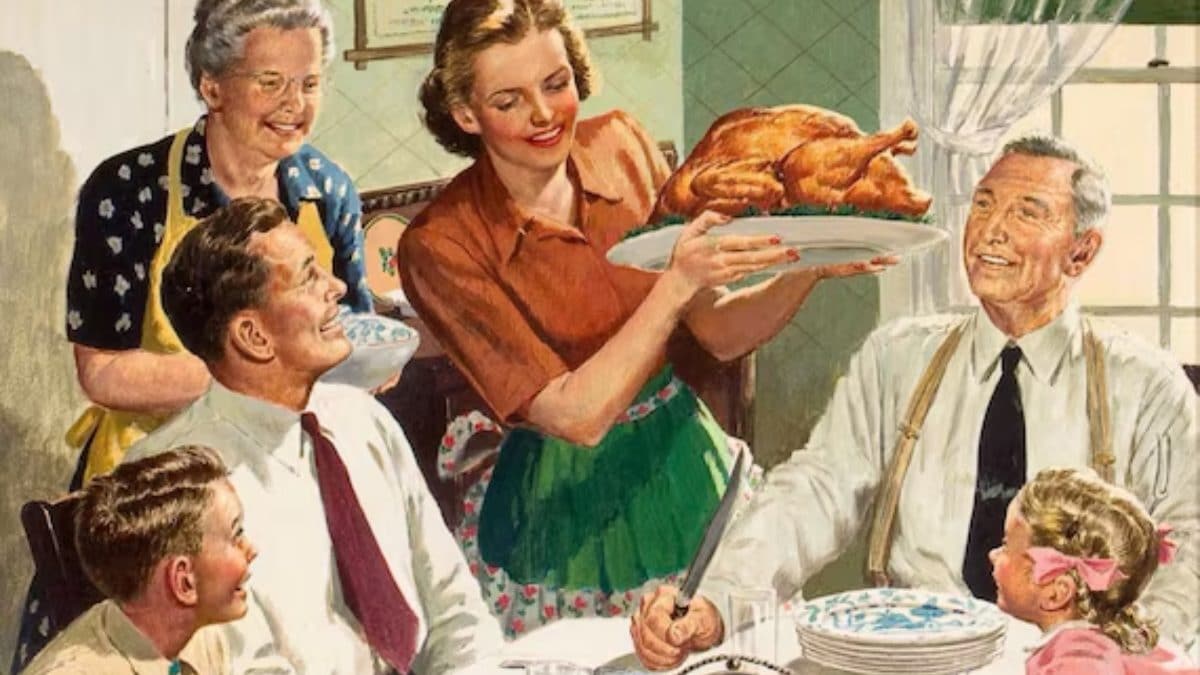
Modern Thanksgiving menus often feel carved in stone: roast turkey, mashed potatoes, stuffing, green bean casserole, and pumpkin pie. Yet culinary history shows that the holiday table has evolved dramatically over the past century.
Between the late 1800s and the 1970s, dozens of beloved starters, sides, and desserts were considered non-negotiable holiday fixtures—only to quietly disappear as kitchen conveniences, grocery store offerings, and American palates shifted. Here are eight vintage Thanksgiving dishes that used to rule the table, along with the reasons they faded away.
1. The Relish Tray

Decades before elaborate charcuterie boards covered in brie, prosciutto, and fig jam became the standard pre-dinner appetizer, mid-century hosts welcomed guests with a relish tray.
Typically served in a divided glass dish, this cold starter featured crisp celery stalks stuffed with pimento or blue cheese, pitted black olives (famously worn on children's fingertips before being eaten), sweet gherkins, radish roses, and pickled watermelon rind or spiced crabapples. It offered a bright, acidic palate opener before the heavy meal, though it eventually lost its spot to more modern grazing boards.
2. Oyster Stuffing

To modern diners, combining briny shellfish with roast poultry can sound unusual, yet oyster dressing was a Thanksgiving staple from the 19th century well into the mid-20th century.
During the 1800s, oysters were so abundant and inexpensive along the East and Gulf Coasts that they were considered an everyday protein, and November marked peak oyster-harvesting season. Cooks folded chopped, shucked oysters and their briny liquor into seasoned bread cubes, celery, onions, and butter. As oyster populations declined and prices rose, the dish retreated to a handful of coastal pockets in New England and the South.
3. Creamed Pearl Onions

A fixture on holiday menus throughout the 1940s, '50s, and '60s, creamed pearl onions consisted of tiny, sweet white onions boiled until tender and smothered in a rich, velvety béchamel sauce—sometimes topped with buttered breadcrumbs or grated nutmeg.
While the flavor pairs naturally with roast turkey and gravy, the dish fell victim to two major shifts: home cooks grew tired of the tedious task of peeling dozens of marble-sized onions by hand, and modern menus began favoring lighter, roasted vegetables over heavy white cream sauces.
4. Savory Aspics and Molded Jell-O "Salads"

During the golden age of mid-century convenience cooking, gelatin molds were viewed as the height of culinary sophistication. Thanksgiving tables regularly showcased elaborate ring-shaped Jell-O salads suspended with shredded carrots, crushed pineapple, cottage cheese, marshmallows, or walnuts.
Even more daring were savory aspics—unflavored gelatin set with seasoned broth, tomato juice, or vinegar, encasing shrimp, diced vegetables, or shredded turkey. As fresh produce became available year-round and tastes moved away from wobbly, chilled centerpieces, molded salads largely vanished from holiday spreads.
5. True Giblet Gravy

Almost every whole turkey still comes with a small paper bag tucked inside the cavity containing the neck, heart, liver, and gizzard. While most modern cooks discard the packet or save it strictly for stock, previous generations relied on it to make chunky giblet gravy.
Traditional cooks simmered the giblets until tender, finely minced the organ meats, and stirred them directly into rich pan-dripping gravy—often alongside chopped hard-boiled eggs. Growing squeamishness around organ meats, combined with the rise of pre-made gravies and boneless turkey breasts, pushed true giblet gravy off most tables.
6. Mincemeat Pie

For generations, the classic Thanksgiving dessert lineup wasn't pumpkin, pecan, and apple—it was pumpkin, apple, and mincemeat.
Dating back to medieval European recipes that preserved meat with dried fruit and warming spices, early American mincemeat pies actually contained finely chopped beef or venison and beef suet. By the 20th century, most recipes dropped the meat in favor of raisins, currants, apples, citrus peel, cloves, nutmeg, and a splash of brandy or rum. Despite its deeply spiced, festive flavor profile, mincemeat gradually lost out to sweeter crowd-pleasers like pecan pie.
7. Mashed Turnips (and Rutabagas)

Before sweet potato casserole topped with toasted marshmallows became a national obsession, mashed turnips or rutabagas were a staple root-vegetable side across New England and the Midwest.
Boiled and whipped with plenty of butter, black pepper, and occasionally folded directly into mashed white potatoes, turnips offered an earthy, slightly peppery counterpoint to sweet cranberry sauce and rich gravy. Today, they rarely appear outside of families fiercely dedicated to heirloom recipes.
8. Chestnut Stuffing

Walk through any holiday market in November and you'll still see bags of raw chestnuts, yet chestnut stuffing has largely faded from everyday American kitchens.
Prior to the devastating chestnut blight of the early 20th century, American chestnut trees were prolific, and their sweet, nutty harvest was a quintessential autumn ingredient. Cooks roasted, peeled, and crumbled chestnuts into buttery herb bread stuffing, giving it a rich, meaty texture. Because peeling fresh chestnuts is notoriously labor-intensive, most modern cooks eventually swapped them out for simpler sausage or cornbread dressings.

