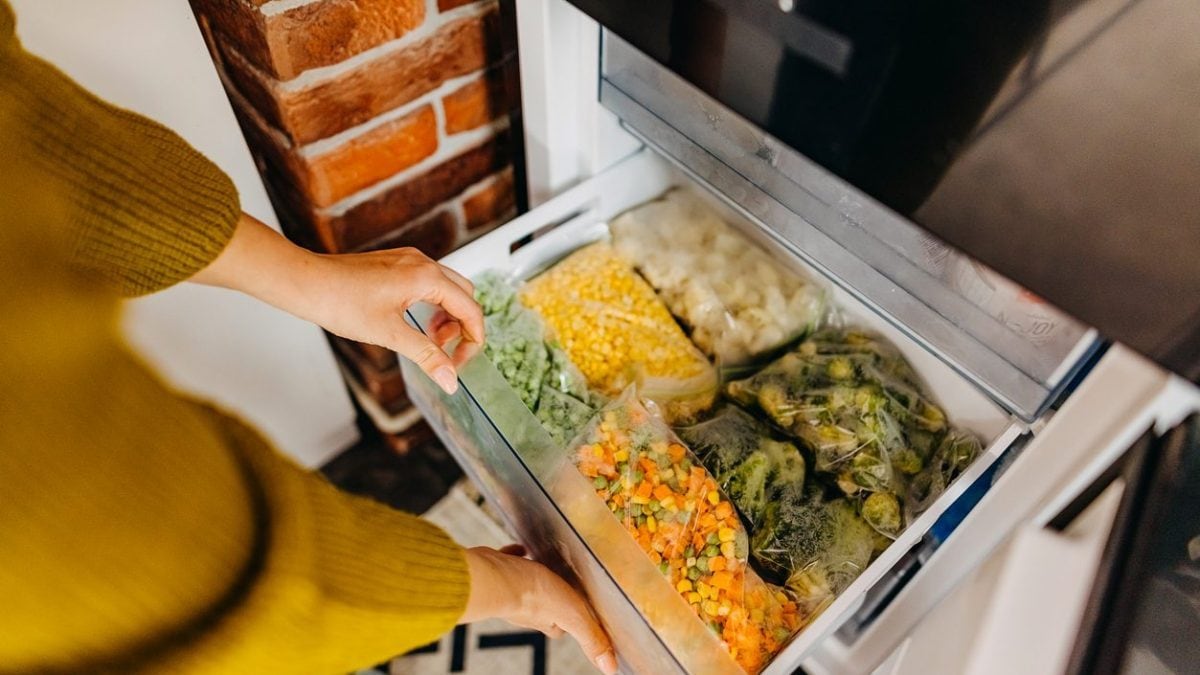
Among the appliances we can hardly do without is the freezer: it's hard to imagine what it would be like to live without it. Whether small or large, with a single compartment or multiple drawers, the freezer allows you to preserve food much longer than the refrigerator, even up to 12 months. The advantage is that it can accommodate a wide variety of foods, both raw and cooked, from fish to cheese, vegetables and meat. Of course, there are exceptions: since freezer space is limited, it's a good idea to be selective at the entrance, to avoid achieving the opposite result, ruining certain foods instead of preserving them over time.
What Happens to Food in The Freezer?
When we store food in the freezer at home, we are freezing it. What does this mean? That the food, over a fairly long period of time (about 24 hours), reaches a temperature of around -0.4°F/-18°C, which is the temperature usually set on the appliance. During this period, large ice crystals form within the cellular structure of the food, which is broken and, consequently, modified compared to the original. Precisely for this reason, some foods lend themselves better to freezing, while others, however, suffer from it, especially those products rich in water and fat, because after being thawed they will have a yielding, soft, less compact consistency, becoming unusable or only partially usable. Freezing is not synonymous with deep-freezing: the frozen foods we find in the supermarket, in fact, undergo a different – faster – process that allows (almost) all of their properties to be preserved. Foods are brought to very low temperatures (from -0.4°F/-18°C to -40°F/-40°C) very quickly, by law no longer than 4 hours: in this way, only microcrystals develop, which do not cause damage. This preservation method is not possible at home: therefore, although most foods can be frozen, it is important to be careful when choosing, also to avoid taking up useful space and creating waste.
Let's start by considering those foods that would be best never frozen because their quality would drastically reduce: it's better to consume them immediately, or preserve them in different ways.
1. Cured Meats, Sausages and Hams

Ham, mortadella, and salami are processed meats characterized by a good amount of fat, which can lose consistency and develop oxidized notes. Depending on the type and condition (already sliced, whole, etc.), the refrigerator or cellar are best, with vacuum packing often being an excellent ally for preserving them longer.
2. Fresh Cheeses

Soft and stretched-curd cheeses like stracchino, crescenza, ricotta, and mozzarella change their consistency. Once thawed, the watery and fatty components tend to separate, with the risk of whey leaking out, resulting in a grainy, crumbly texture that no longer feels creamy.
3. Green Leafy Vegetables

Some leafy greens like lettuce or arugula are too delicate and watery to tolerate such low temperatures. In some cases, like spinach and chard, you can freeze them after lightly blanching them. For everything else, we recommend avoiding this, as both their flavor and nutritional value would be lost.
4. Vegetables Rich in Water

The same reason as above is also valid for zucchini, cucumbers, tomatoes, eggplants and onions which, if frozen raw, can lose their consistency and flavor.
5. Fruits Rich in Water

Even in this case, the unique characteristics for which these fruits are appreciated would be penalized. Do not put melon slices, watermelon slices, pineapples, or strawberries in the freezer.
6. Sauces and Emulsions

The advice is to especially avoid egg-based preparations (such as mayonnaise), as they combine elements that do not bind perfectly together, thus being unstable and not recoverable after being thawed.
Foods That Can Be Frozen, But With Some Precautions
There are some foods that you may buy in abundance and have some doubts about whether to freeze them or not. For example, we know that the best place to keep potatoes is neither the fridge nor the freezer, but the pantry: if, by chance, you have peeled too many, then you can put them in the freezer only after having cut them and cooked them (3-5 minutes of blanching is enough), so as to slow down oxidation. Eggs are also special considerations: do not freeze them whole, raw and in their shell: the internal liquid, in fact, would expand with the cold and cause them to burst. In this case, it is better to beat them, preferably separating the yolk and the white as they have a different distribution of fats and proteins, and stabilizing with a pinch of sugar or salt; or cooked, scrambled or in an omelette, without adding seasoning. Be careful with meat and fish too: raw meat and fish must be frozen when they are still very fresh and not spoiling, as the freezer does not improve an already compromised structure nor does it eliminate the risk of contamination if this has already occurred.

Mistakes to Avoid and Some Useful Advice
The freezer often shares the same fate as the refrigerator: that of stuffing tons of products in and then forgetting about them. One of the first mistakes is believing that frozen foods are eternal: generally, the guaranteed shelf life is around three months, but each food has different indications to follow. To avoid waste, equip yourself with the right containers (from bags to plastic or glass trays) and divide them into small portions, so you can thaw only what you need: always write down the contents and the date of freezing. When consuming, give priority to the food that lasts the least. As mentioned above, avoid storing foods that are about to expire or have already expired in the freezer, as there could be a risk of food poisoning: choose products in excellent condition, not dented or damaged. Cooked foods have fewer restrictions than raw ones, so much so that many ready-made meals can be safely frozen: just make sure they're completely cooled before storing. Final recommendations:
- Never refreeze food that you have thawed, unless you are cooking it.
- Don't cram too many products into the freezer because you could hinder the passage of cold air and therefore the entire freezing process, encouraging the proliferation of bacteria.
- Perform proper maintenance of the appliance, which needs to be cleaned and defrosted, to ensure proper functioning.
;Resize,width=767;)
