The Michelin Guide is retiring the Green Star after just six years. A project born to certify the sustainability of restaurants, it never truly gained credibility: unclear criteria, verification methods never fully explained, and an evaluation often perceived as an image-boosting exercise rather than an authoritative standard. Starting June 1, 2026, the award will be abolished and replaced by "Mindful Voices," a new editorial platform through which Michelin will showcase "virtuous" chefs, hoteliers, and winemakers. Meanwhile, the Keys for hotels are gaining momentum and the Grapes for wine are making their debut.
More than just a graphical update, it's a very clear shift in strategy: Michelin is stopping adding symbols and transforming the guide into a global ecosystem of content, hospitality, and lifestyle. And the end of the Green Star seems to be saying something specific: sustainability, at least in the Michelin model, has never found a truly transparent and shared evaluation system.
The End of The Green Stars
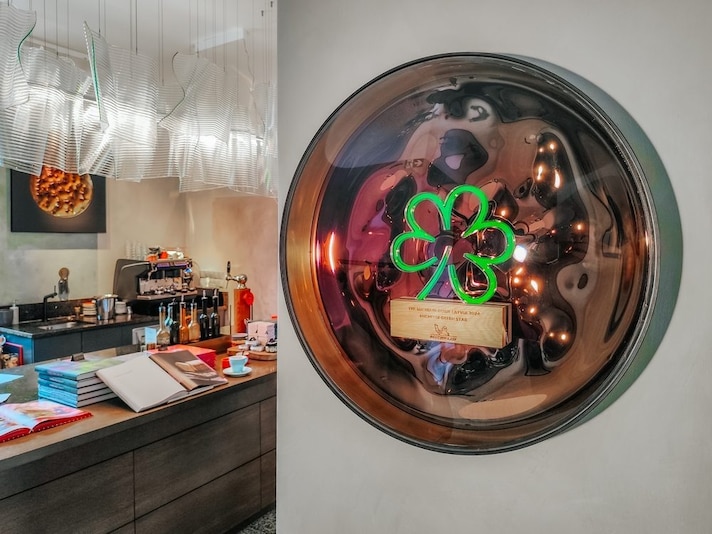
The most important news is this: the Green Stars are disappearing from the Michelin Guide. Introduced in 2020, they were meant to represent Michelin's major leap forward in sustainability. The goal was to reward restaurants that leverage short supply chains, reduce waste, produce their own food, conserve energy, and manage ingredients ethically.
Something, however, went wrong: in six years, the Green Star never managed to become a truly authoritative recognition. Unlike traditional stars, it didn't impact bookings, it didn't change the balance of the restaurant industry, and it was never perceived as a true achievement by chefs.
The main problem was probably the lack of clear and universally understandable criteria: Michelin spoke generically about sustainability, but without building a transparent and verifiable system. Thus, the recognition remained suspended somewhere between an ethical award, an image campaign, and green marketing. The public, too, has always had difficulty interpreting it: a Green Star didn't really indicate how sustainable a restaurant was, nor according to which parameters.
"Mindful Voices" Are Here
In place of the Green Star, Michelin launched "Mindful Voices," billed as a new international editorial project: it's not a symbol assigned to restaurants, but a storytelling platform that will showcase people, ideas, and innovative practices in the world of gastronomy, hospitality, and wine. Michelin calls these "voices rewriting the rules." In short: less evaluation and more storytelling.
The content will be published on the website, app, social media, and the guide's official magazine, featuring articles, insights, interviews, and reports. And this is where the real shift in direction emerges: Michelin seems to have understood that sustainability works better as a narrative than as a standalone award. But there's also a clear ambiguity: when a guide becomes more and more of a publisher and less of a referee, the line between criticism and branding risks becoming very thin.
The Michelin Keys for Hotels
Michelin's transformation had already begun with the arrival of the Michelin Keys for hotels. The system replicates that of the stars: one to three Keys are awarded to establishments considered excellent for the quality of the experience, design, service, and personality. Unlike the Green Star, the Keys immediately had a strong impact, especially in high-end tourism. For Michelin, they represent a natural extension of its brand into the hospitality sector. And this is probably the point: today, Michelin's business no longer revolves solely around restaurants, but rather the entire premium experience of travel, accommodation, and gastronomy.
The "Grapes" For Wine Also Debuted
The second major innovation concerns wine: Michelin has introduced "Grapes," a new rating system for wineries and wine tourism. Here too, the model is progressive, with one, two, or three Grappoli awarded to those considered most outstanding for quality, territorial identity, and experience value.
It's an ambitious move because the wine industry already has well-established guides, rankings, and scoring systems. Michelin is attempting to enter this market by leveraging the international strength of its brand, but the risk is that it will multiply symbols and awards without truly establishing new, authoritative standards.
Michelin No Longer Wants to Be "Just" a Gastronomic Guide
The feeling is that Michelin is gradually shifting its identity: with hotels, wine, editorial content, and storytelling, the guide is becoming a major international hospitality and lifestyle ecosystem. In this scenario, the Green Star appears almost like a failed experiment: too weak to truly impact, too vague to become a credible benchmark. Mindful Voices is now attempting to replace judgment with storytelling. It remains to be seen whether this new formula will succeed in producing truly independent content or whether it will end up becoming yet another extension of the Michelin brand.

