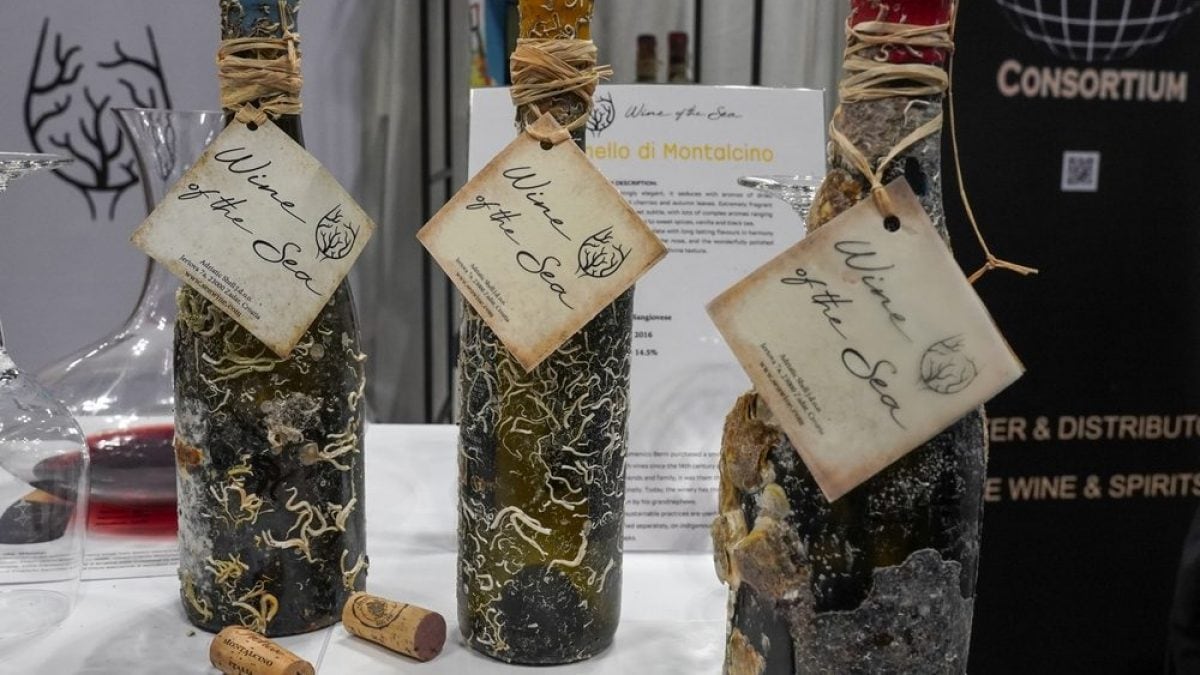
Think wine can only age on land? That's not the case: there are indeed wines aged at sea, that is, bottles that, instead of resting in the cellar, are immersed in the depths for months, or even years. It's a fascinating and still uncommon practice, which began to intrigue the wine world after the discovery, in 2010, of 168 perfectly preserved bottles of Champagne in a shipwreck that disappeared in 1840, between Sweden and Finland.
The experts who tasted the rediscovered Champagne, in addition to its excellent state of preservation, also noted that the wine exhibited a remarkable state of evolution. Since then, several producers have begun experimenting with this underwater aging technique, convinced that the sea can transform into a true "natural cellar."
But what exactly are we talking about when we talk about wines aged at sea? This method involves placing the bottled wine in baskets or cages and then submerging it at a depth that typically varies between 30 and 70 meters.
Here, the wine rests for a period that can range from a few months to over two years, in conditions considered ideal for its evolution: total darkness, constant temperature between 50/10 and 57°F/14°C and high pressure (around 1 bar for every 10 meters of depth).
These are precisely the factors that make the difference, transforming the sea into a unique environment capable of influencing the wine's organoleptic profile. But is this really an advantage? And above all: is it a sustainable method or just a marketing ploy?
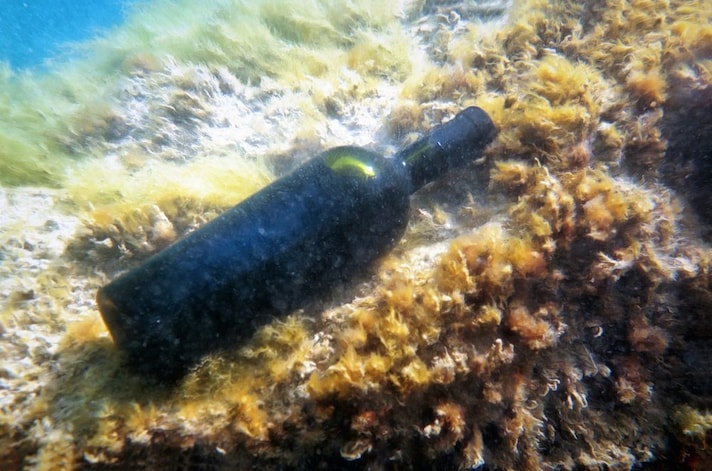
Are These Wines a Marketing Gimmick or Truly Sustainable?
Wines aged at sea are receiving growing attention not only for their sensory characteristics, but also for the supposed environmental sustainability of this innovative method. Many producers emphasize how the ocean floor acts as a "natural refrigerator," eliminating the need for artificial air conditioning, which is essential in the cellar. According to some estimates, every 1,000 bottles produced would prevent the emission of approximately 680 kg of CO₂. In other words, aging wines at sea would reduce the use of energy-intensive cellars and infrastructure.
However, we also want to emphasize the other side of the coin: moving the bottles from the production site to the diving site involves high logistical costs and an inevitable environmental impact. Furthermore, there is a risk associated with immersion in the sea: if the bottle's seal is not perfect, it could cause leaks that are harmful to the marine ecosystem.
Ocean Aged Wines' Main Characteristics
What makes wines aged at sea so fascinating is the combination of unique factors that the sea naturally offers: total darkness, a constant temperature between 50/10 and 57°F/14°C, high pressure, and the constant movement of the water. All these elements contribute to transforming the wine in a unique way.
The experiments conducted so far often show bottles with a superior freshness and liveliness, attributable to a higher acidity and, especially in sparkling wines, mineral and saline notes that are difficult to find with the same intensity in cellar-aged wines.
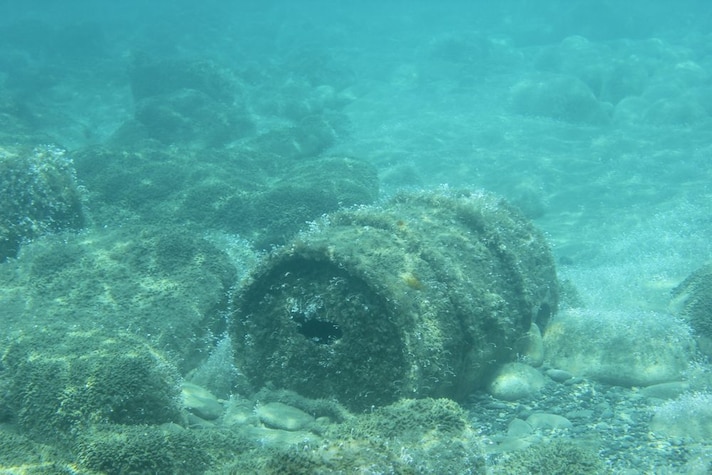
The bubbles in Classic Method wines (i.e., sparkling wines produced with a second fermentation in the bottle, like Champagne) are often finer and more integrated. Furthermore, the stable conditions and pressure accelerate the evolution: what takes years in the cellar can happen underwater in just a few months.
Ocean Aged Wines Vs. Traditionally Aged Wines
Wines aged at sea differ from traditional wines primarily in the environment in which they mature. While cellar-aged wines develop under controlled temperatures and humidity, underwater wines are lulled by the natural conditions of the seabed: constant cold, total darkness, and water pressure. This influences their development, making it more rapid and dynamic, and their flavor profile, which can be fresher, more complex, and with mineral and saline accents.
From an environmental standpoint, the sea can replace refrigeration systems, reducing energy consumption, but organizing periodic scuba diving trips (which monitor the health of the submerged bottles) and maintenance are significant costs. Price and availability also tell a different story: while traditional wines are readily available and cover all price ranges, underwater wines remain an exclusive niche.
Despite the fascination with sea-aged wines, it's still too early to tell whether they truly deliver a different and unique profile compared to traditionally aged wines: more experiments and time will be needed to understand whether sea-aged wines are a sensory revolution or simply an intriguing stylistic experiment.
;Resize,width=767;)
