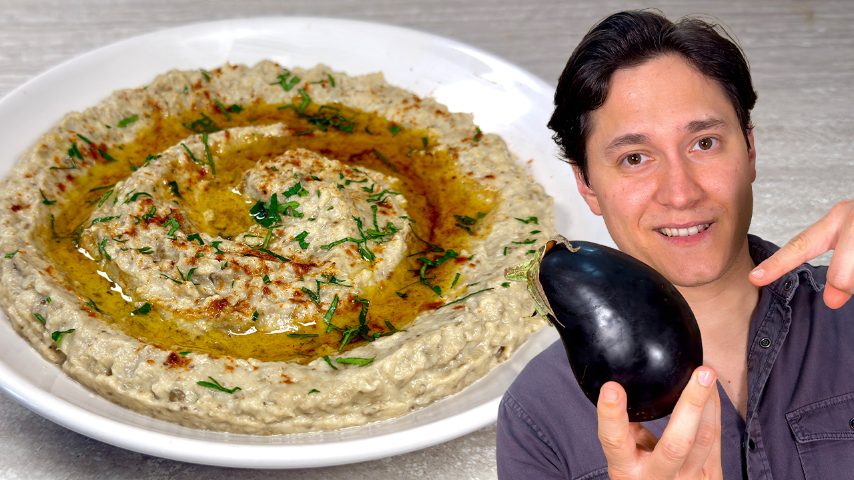
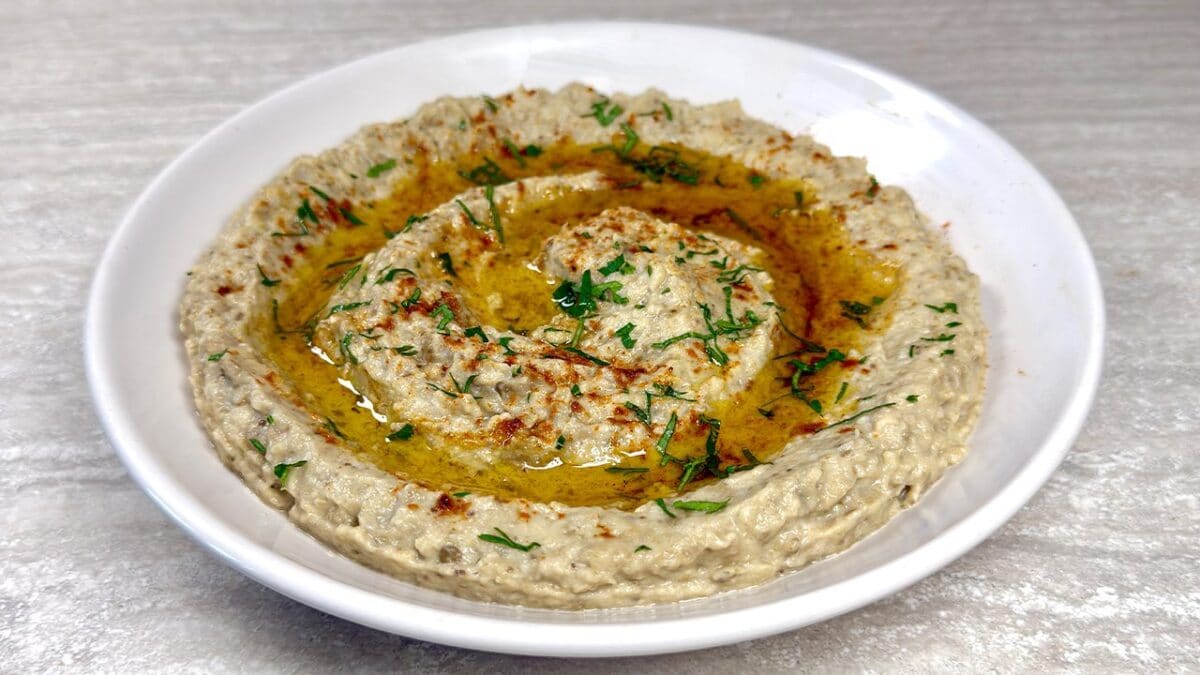
Smoky, creamy, and full of flavor, this baba ganoush recipe transforms roasted eggplant into an irresistible Middle Eastern dip. Made with tahini, fresh lemon juice, garlic, and a pinch of salt, it's rich and velvety without needing cream or dairy.
The secret is roasting the eggplant until its flesh becomes exceptionally soft, then draining away the excess moisture before mixing it with the other ingredients.
Unlike completely smooth puréed dips, this homemade roasted eggplant dip keeps a slightly rustic texture, with tender pieces of eggplant in every bite.
Finish it with a generous drizzle of extra-virgin olive oil, fresh parsley, and a sprinkle of sumac or paprika. Serve with warm pita bread, crunchy vegetables, or as part of a Mediterranean appetizer spread.
What Is Baba Ganoush?
Baba ganoush is a traditional eggplant-based dish from the Levant, popular in countries such as Lebanon, Syria, and neighboring regions.
Recipes and names vary across the Middle East, but the version familiar to many American readers combines cooked eggplant with tahini, lemon juice, garlic, and salt.
It's often served as part of a mezze spread, alongside other small dishes such as hummus, olives, flatbread, and fresh vegetables.
Baba ganoush is sometimes compared to hummus, but the two are quite different. Hummus is made primarily from chickpeas, while baba ganoush uses eggplant as its main ingredient.
The eggplant gives the dip a lighter, softer consistency, while tahini adds body and richness.
Traditionally, eggplants may be cooked over an open flame to develop a pronounced smoky flavor. This version uses the oven for a simpler, convenient preparation, producing tender roasted eggplant with a delicate flavor.
Why Everyone Will Love This Recipe
Baba ganoush delivers an incredible amount of flavor with just a few simple ingredients.
Roasted eggplant gives the dip its soft, creamy base, while tahini adds richness and a delicate nutty taste. Lemon juice brightens everything, and garlic provides a savory kick.
It's also naturally vegan and dairy-free, making it a versatile choice for gatherings and appetizer platters.
Another advantage is that it can be prepared ahead of time. Once the eggplant is roasted and cooled, the remaining preparation takes only a few minutes.
And there's no need for a food processor. Chopping the eggplant by hand helps preserve the traditional rustic texture.
Tips for the Best Baba Ganoush
- Roast the eggplant until completely tender. The flesh should be soft enough to scoop out easily with a spoon.
- Drain the roasted eggplant well. Removing excess liquid prevents the dip from becoming watery and helps create a creamier consistency.
- Chop the eggplant by hand. A knife preserves some texture and prevents the mixture from becoming overly smooth.
- Adjust the lemon and garlic gradually. Both ingredients can vary in intensity, so taste the dip before adding more.
Frequently Asked Questions
What Does Baba Ganoush Taste Like?
Baba ganoush has a creamy, slightly nutty flavor with bright lemon and savory garlic notes. When the eggplant is cooked over a flame, the dip also develops a distinctive smoky taste. Oven-roasted versions tend to have a milder roasted flavor.
Is Baba Ganoush the Same as Hummus?
No. Although both are popular Middle Eastern dips that often contain tahini, hummus is made with chickpeas, while baba ganoush is made with cooked eggplant.
Do You Have to Peel Eggplant for Baba Ganoush?
There's no need to peel the eggplant before roasting. Once cooked, the flesh can be scooped directly from the skin with a spoon.
Can Baba Ganoush Be Made Without Tahini?
Yes, although the flavor and consistency will be different. Tahini gives this version its characteristic nutty richness. Without it, the result is closer to a simple roasted eggplant dip.
Why Is My Baba Ganoush Watery?
Eggplant contains a considerable amount of moisture. If the cooked flesh isn't drained before mixing, the finished dip may become too loose. Letting the roasted eggplant sit in a strainer helps remove excess liquid.
What Can You Eat With Baba Ganoush?
Baba ganoush is delicious with warm pita bread, pita chips, crackers, and fresh vegetables such as cucumber, carrots, and bell peppers.
It also works as a spread for sandwiches and wraps or as an accompaniment to grilled vegetables and roasted meats.
How to Store
Transfer the finished baba ganoush to an airtight container and refrigerate promptly.
It will keep for approximately 3 to 4 days in the refrigerator. Stir it gently before serving, as a little liquid may separate during storage.
For the best presentation, add the olive oil, parsley, and sumac or paprika just before serving.
Avoid leaving the dip at room temperature for more than 2 hours.
How to Freeze
Baba ganoush can be frozen, although the texture may change slightly after thawing because roasted eggplant contains a lot of moisture.
For the best quality, transfer the dip to a freezer-safe airtight container, leaving a little room for expansion, and freeze for up to 2 months.
Thaw overnight in the refrigerator and stir thoroughly before serving. If the mixture has released excess liquid, drain it carefully.
Add a fresh drizzle of olive oil and the parsley and spice garnish after thawing.
Ingredients
How to make Baba Ganoush

Preheat the conventional oven to 425°F (220°C).
Wash the eggplants and cut them in half lengthwise.
Using a sharp knife, lightly score the flesh in a crisscross pattern, being careful not to cut through the skin.
Preheat the conventional oven to 425°F (220°C).
Wash the eggplants and cut them in half lengthwise.
Using a sharp knife, lightly score the flesh in a crisscross pattern, being careful not to cut through the skin.

Transfer to the preheated oven and roast for approximately 30–40 minutes, or until the eggplant flesh is completely tender and the skin begins to wrinkle.
Transfer to the preheated oven and roast for approximately 30–40 minutes, or until the eggplant flesh is completely tender and the skin begins to wrinkle.

Using a spoon, carefully scoop the soft roasted flesh away from the skins. Discard the skins and transfer the flesh to a fine-mesh strainer.
Let the eggplant drain to remove excess moisture. This step helps ensure that the finished baba ganoush is creamy rather than watery.
Using a spoon, carefully scoop the soft roasted flesh away from the skins. Discard the skins and transfer the flesh to a fine-mesh strainer.
Let the eggplant drain to remove excess moisture. This step helps ensure that the finished baba ganoush is creamy rather than watery.

Transfer the drained eggplant to a cutting board and roughly chop it with a knife until it reaches a soft, rustic consistency. Avoid turning it into a completely smooth purée.
Transfer the drained eggplant to a cutting board and roughly chop it with a knife until it reaches a soft, rustic consistency. Avoid turning it into a completely smooth purée.

Place the chopped eggplant in a large mixing bowl. Add the tahini, minced garlic, fresh lemon juice, and salt.
Mix vigorously with a spoon until the ingredients are thoroughly combined and the mixture becomes creamy, while still retaining a little texture.
Place the chopped eggplant in a large mixing bowl. Add the tahini, minced garlic, fresh lemon juice, and salt.
Mix vigorously with a spoon until the ingredients are thoroughly combined and the mixture becomes creamy, while still retaining a little texture.

Transfer the creamy roasted eggplant dip to a shallow serving plate or bowl.
Finish with a generous drizzle of extra-virgin olive oil, freshly chopped parsley, and a sprinkle of sumac or paprika.
Transfer the creamy roasted eggplant dip to a shallow serving plate or bowl.
Finish with a generous drizzle of extra-virgin olive oil, freshly chopped parsley, and a sprinkle of sumac or paprika.

Serve the homemade baba ganoush with warm pita bread, crunchy vegetables, or your favorite Mediterranean appetizers.
Serve the homemade baba ganoush with warm pita bread, crunchy vegetables, or your favorite Mediterranean appetizers.
;Resize,width=767;)
