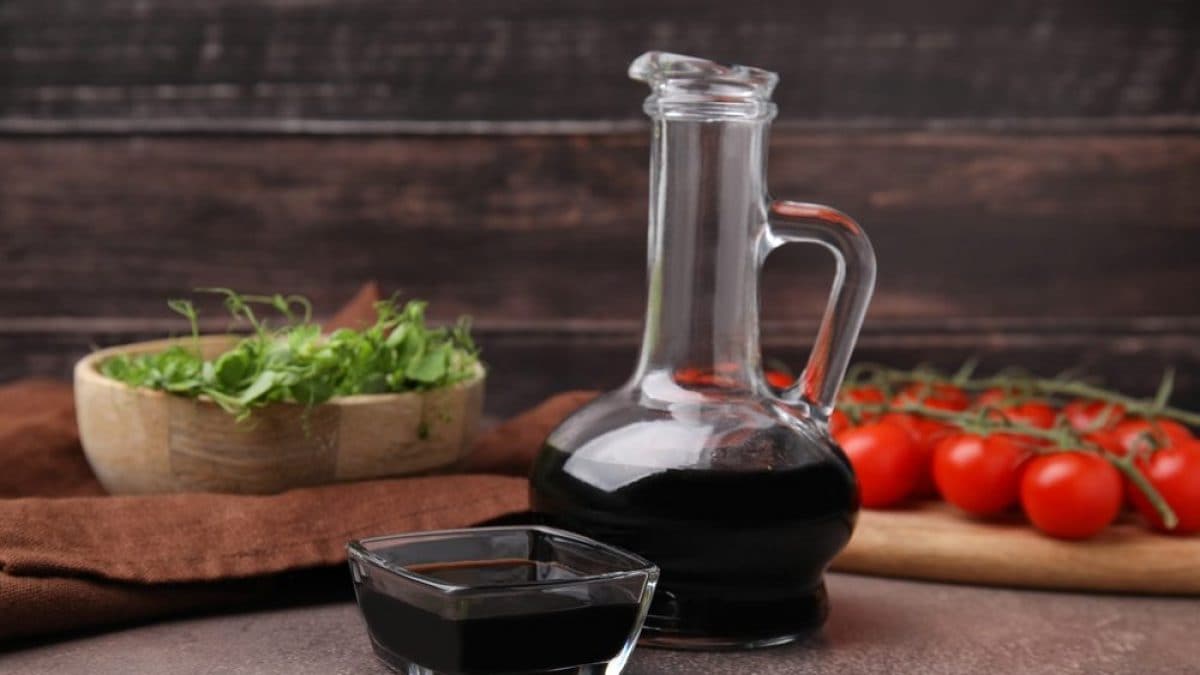
Balsamic vinegar is one of the iconic products of Italian gastronomy, appreciated for its complex aromatic notes and culinary versatility. However, it is often confused with balsamic glaze, which, despite having a similar origin, has different characteristics and uses. Some examples? Traditional balsamic vinegar is the result of a long aging of cooked grape must, which enriches its flavor and structure. Glaze is a more viscous and sweet reduction, usually obtained with the addition of sugars and thickeners. The former is more refined, while the latter is ideal as a topping for creative purposes.
What is Balsamic Vinegar and How Is It Produced?
When it comes to condiments made in Italy, balsamic vinegar is undoubtedly one of the most popular, used to flavor various dishes, from salads to meats, fruit and ice cream. It is a specialty that finds its lands of choice in the provinces of Modena and Reggio Emilia and is divided into Traditional Balsamic Vinegar of Modena DOP, Traditional Balsamic Vinegar of Reggio Emilia DOP and Balsamic Vinegar of Modena IGP, whose production is regulated by specifications and protected by the respective consortia.
The raw material is grapes, sourced exclusively from seven typical varieties: Lambrusco, Sangiovese, Trebbiano, Albana, Ancellotta, Fortana, and Montuni, from which the must is obtained, although the processing methods differ. The traditional version, a true excellence, sees the grapes delicately pressed and then cooked: the cooked must is transferred to wooden barrels (oak, chestnut, mulberry, juniper) which impart its particular organoleptic characteristics, and it ages for a minimum of 12 years. In the vinegar factories, the extra-old version is aged for over 25 years.
The second, the PGI, is made from partially fermented and/or cooked and/or concentrated grape musts, to which wine vinegar (minimum 10%) and a portion of aged vinegar aged at least 10 years are added: according to the regulations, the minimum percentage of grape must is 20% of the total quantity of product to be processed. The basic refinement period is 60 days and it may undergo an aging phase: if this lasts more than 3 years, the vinegar can be classified as "aged."

What is Balsamic Glaze?
A condiment equally prized for its glossy appearance, dense consistency, and sweet and sour flavor, which makes it delicious, glaze is very simply a reduction of PGI balsamic vinegar. Depending on the producer, it can be made with the addition of cooked grape must alone, or with the combination of sugars, thickeners (such as corn starch), and colorings (particularly caramel E150d, a food additive that enhances brown tones). These preparations are both industrial and artisanal, and can also be made at home, as in the old days: they range from basic recipes, where balsamic vinegar, water, and a little potato starch are enough, to slightly more elaborate ones, to create greater sweetness and aroma, using cane sugar, honey, and red wine. The whole thing is cooked gently in a saucepan, waiting for the mixture to reach a smooth, viscous texture.

Differences Between Balsamic Vinegar and Glaze
After looking at balsamic vinegar and glaze, it's clear they're two different products. Let's summarize the main differences below.
Consistency
Let's start immediately with consistency, since appearance is one of the most confusing elements. Although the adjective "thick" is often used for both, in reality, glaze is viscous, while balsamic vinegar tends to be more fluid: on the market, depending on the aging, you can find more liquid and more full-bodied versions. An aged traditional balsamic vinegar DOP may resemble a glaze, but its density is the result of a "natural process," without further cooking or the use of thickeners.
Aging
We've just mentioned aging: as specified in the specifications, Traditional Balsamic Vinegar DOP must age for at least 12 years before being consumed, while Balsamic Vinegar of Modena IGP only needs 60 days. The glaze, on the other hand, is ready for use immediately.

Production Rules
DOP and IGP balsamic vinegar are characterized by production rules dictated by European quality labels: their authenticity is safeguarded by protection consortia. There are no regulations for the glaze: anyone can make it, even outside the Modena and Reggio Emilia regions.
Taste
Balsamic vinegar has a balanced flavor between sweetness and acidity, with more complex, intense, and persistent notes as it ages. The glaze, on the other hand, is more reminiscent of caramel and has more pronounced sweet and sour notes.
Kitchen Uses
Even here, some differences can be noted. Balsamic vinegar is a versatile condiment that can also be used as an ingredient in recipes, for example when cooking an elegant fillet, although some types should only be used raw. Typically, however, the glaze, to best enhance it, would serve only as a topping, resulting in a perfect decorative addition to both savory and sweet dishes.
Price
Finally, it's also a question of cost: balsamic glaze is a significantly more affordable product than balsamic vinegar, ranging between 4 and 10 euros. Regarding the latter, however, depending on the quality, the prices vary considerably, even reaching more than 100 euros for 100 ml when dealing, for example, with a traditional balsamic vinegar that's more than 25 years old.
;Resize,width=767;)
