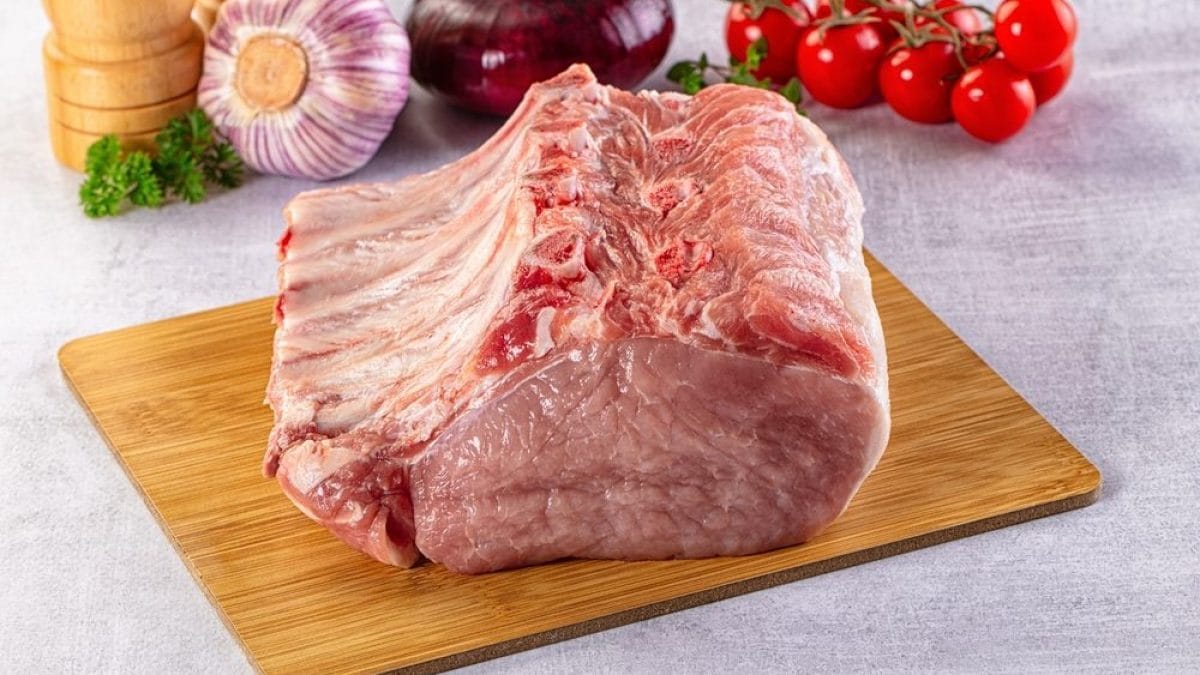
Smooth, versatile, and suitable for many preparations, bone-in pork loin is one of the most balanced cuts of the pork's back. Tender but not fragile, lean but not dry, it lends itself to quick cooking as well as roasts and more complex preparations, proving a reliable choice for both home and professional kitchens.
Pork loin is one of the most recognizable and widely used cuts in American butchering. It comes from the central back and includes the loin with the ribs, which are used to make chops, ribs, and bone-in roasts. Its popularity is linked to a rare combination: an even structure, good natural tenderness, and consistent cooking performance.
Compared to other pork cuts, the loin represents a balance: it's more tender and "clean" than the shoulder and neck, but less dry than the tenderloin; more elegant than the pancetta, but more manageable in portioning than fatty or irregular cuts. For this reason, it's often considered a versatile cut, capable of adapting to different techniques and contexts without losing its identity.
What is Pork Loin and Where is It Found
Pork loin comes from the dorsal part of the pig, along the back, and is made from the loin with the ribs still attached. It's the same anatomical area used to obtain loin and chops, but in the loin, the cut is kept whole, with the bone, to ensure greater juiciness and protection during cooking.
The meat is light pink in color, with a fine, compact grain. The intramuscular fat content is moderate, while a thin covering of external fat may be present, which, if left partially, helps keep the meat tender and aromatic. The bone plays a fundamental role: it slows heat dispersion and helps preserve the internal juices, improving the final yield.
From the whole rack, different cuts can be obtained:
- Chops, if sliced;
- Roast loin, whether cooked whole or in slices.
- Pork loin (with bone)/roast (without bone), in the terminology.
Loin, rack, and sirloin all come from the same part of the pig —the back—but they are distinguished by the presence of the bone and the use of the term. This often leads to confusion:
- The loin is the boneless back muscle and is the basic cut.
- The bone-in loin is the loin with the ribs attached, therefore a cut with bone, from which chops and roasts are obtained.
- The roast is not a different anatomical cut: it is the traditional name given to the loin intended for roasting, generally with the bone, especially in butchering usage. For this reason, in practice, roast and loin are often considered almost synonymous, while the loin is distinguished because it is always boneless.

A Central Back Cut, Between Tenderness and Structure
The loin is considered a premium cut, thanks to its anatomical position, which is relatively undisturbed by the animal's movement. This results in tender, yet not fragile, meat with a distinct, pleasant chew.
Compared to pork tenderloin, which is extremely lean and delicate, pork loin offers greater structure and better cooking tolerance. It's not a cut that "melts" immediately, but maintains its consistency and juiciness even at high temperatures or slightly longer cooking times. This stability makes it ideal for those seeking reliable results without having to resort to complex techniques.
Nutritionally, pork loin provides high-quality protein, B vitamins, and a moderate fat content. It's lower in calories than pork belly and neck, but more balanced than extremely lean cuts, making it suitable for regular consumption as part of a varied diet.
Rack Vs. Loin Vs. Tenderloin Vs. Ribs
The most obvious comparison is with the loin, which comes from the same muscle but is deboned. The loin is leaner and more delicate, but also more susceptible to cooking errors; the rack, thanks to the bone, is more protected and juicy.

Compared to pork tenderloin, pork loin is less tender but decidedly tastier and more versatile: fillet is suitable for very quick cooking and small portions, while pork loin lends itself to more structured preparations.
Finally, the ribs come from the same area but include a greater quantity of bone and connective tissue: they are fattier and more rustic, ideal for grilling and informal cooking, while the rack maintains a more balanced and elegant profile.
How to Use Bone-In Pork Loin in The Kitchen
The loin is one of the most versatile cuts of pork, but it is best when cooked in a well-balanced manner that respects its relatively lean nature.
1. Roast Rack

Oven roasting is one of the most traditional uses of bone-in pork loin. Cooked whole or in large pieces, it allows for even heat distribution and enhances the presence of the bone. Roast pork loin with aromatic herbs is a classic: initial browning, moderate cooking, and final resting are essential for obtaining juicy, well-bonded meat.
2. Grilled or Pan-Fried Ribs and Chops

Sliced, the rack becomes the basis of classic pork chops. The presence of the bone protects the meat during direct cooking, making it ideal for grilling and griddling. The Maillard reaction develops intense aromas, while the interior remains tender if cooked carefully. In the pan, rack chops allow for more precise control of heat and flavoring, such as with butter, sage, or rosemary.
3. Pan-Fried and Oven-Roasted Rack

A popular intermediate technique in professional cooking involves quickly browning in a pan, followed by finishing in the oven. This method achieves a well-browned surface and even cooking throughout, reducing the risk of drying out the meat.
4. Stuffed Preparations

The rack can be carved and stuffed with aromatic or slightly fatty ingredients, such as bacon, herbs, cheeses, or dried fruit. The stuffing helps compensate for the relative leanness of the cut and adds aromatic complexity, making the rack suitable for even more elaborate preparations.
How to Choose a Good Bone-In Pork Loin
When buying a bone-in pork loin, it is important to look at some details that reveal its quality.
- The meat should be a uniform, light pink in color. Too dark or grayish tones may indicate less fresh or lower-quality meat.
- The grain should appear firm and regular: this is a good sign of freshness and ensures a tender consistency after cooking.
- Fat is another element to carefully evaluate. It should be white and firm, never yellowed, as a yellow color can indicate an old or poorly stored product.
- Finally, the bone must be clean and well-sectioned: a dark or splintered bone is often an indication of poor craftsmanship.
The type of cut must also be chosen based on the preparation:
- For roasts and oven cooking it is better to opt for a whole rack or divided into thick slices, which remain juicier.
- For the grill or pan, however, ribs that are at least 2 cm thick are ideal, because they cook more evenly and retain their tenderness better.

Choose Bone-In Pork Loin If…
- You want a versatile cut, suitable for many cooking techniques;
- you are looking for tender meat but with a good structure;
- you want reliable performance even without advanced techniques;
- you appreciate a balance between lean and flavor;
- you want a cut suitable for both home and professional cooking.
Don't Choose Bone-In Pork Loin If…
- You are looking for very fatty and intensely marbled meat;
- plan for long, moist cooking methods such as stews or braises;
- you want the maximum possible softness, typical of the fillet;
- you prefer economical cuts for long rustic preparations.

