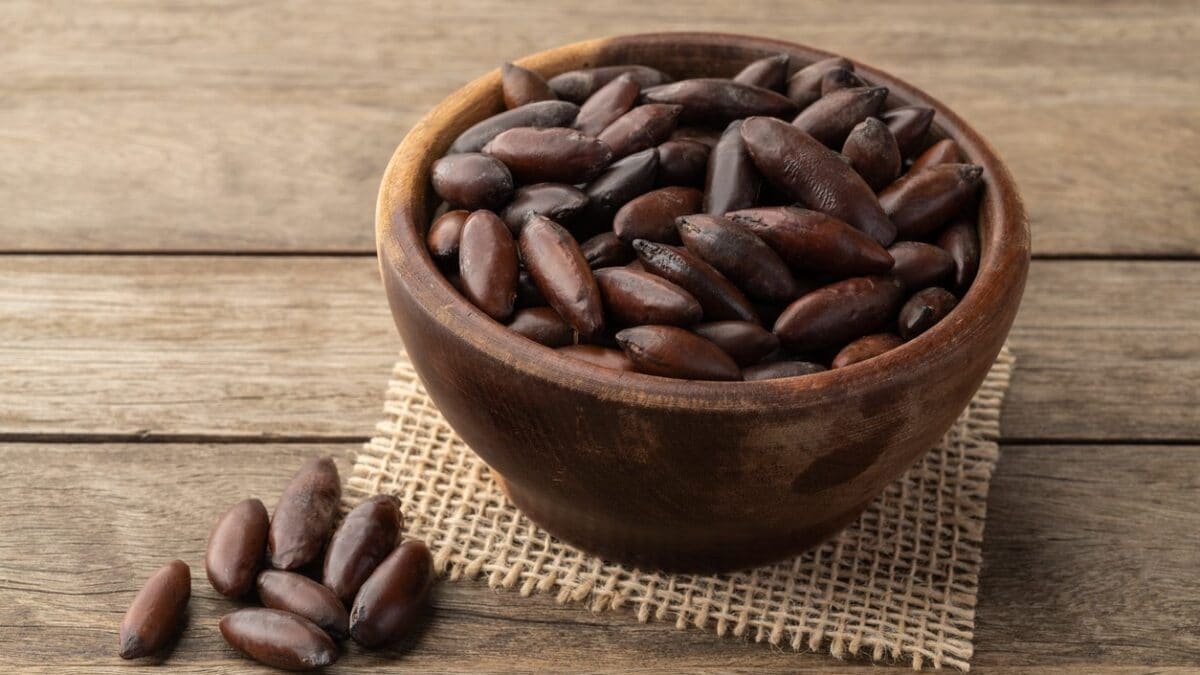
It comes from the Brazilian Cerrado, the largest and richest tropical savannah in the world, and is already starting to make people talk about it: the Barù nut, or castanha de baru, is the edible seed of the Dipteryx alata, an imposing tree belonging to the Fabaceae family (the same as legumes) with very interesting nutritional qualities and a decidedly unique organoleptic profile.
Its light brown fruits conceal a sweet, fragrant almond-like pulp, traditionally roasted in a pan over a wood-burning stove, giving it delicate, woody, nutty notes. Similar in appearance and flavor to traditional dried fruit, with a subtle toasted note, it boasts an excellent lipid profile and is a powerhouse of protein, fiber, and antioxidants: in short, a true superfood that is gradually conquering the U.S..
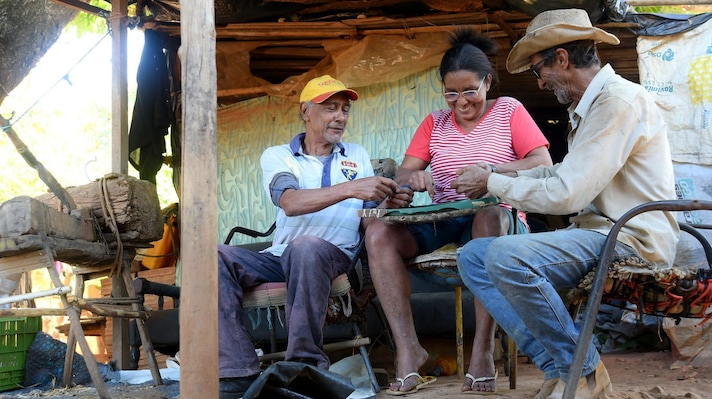
Although the plant has always been present in the area, the harvesting of the nut has gradually spread in the last little over 10 years: initially intended only for domestic consumption, today, thanks to the commitment of local farmers' cooperatives, it is one of the most important economic activities in Brazil (so much so that it has also been included among the 20 Slow Food Presidia in the country).
With the help of our trusted expert, biologist and nutritionist Simone Gabrielli, we'll learn about this food, its nutritional values, and its main health benefits, and discover how to use it in the kitchen to make the most of its virtues.
Where Does the Barù Nut Come From and What It Is
Native to central Brazil, the Barú nut is a unique botanical and food resource. An edible seed of the Dipteryx alata, a majestic tree that grows wild in the Brazilian Cerrado ecosystem, the world's most biodiverse tropical savannah, it belongs botanically to the Fabaceae family (the same as legumes).
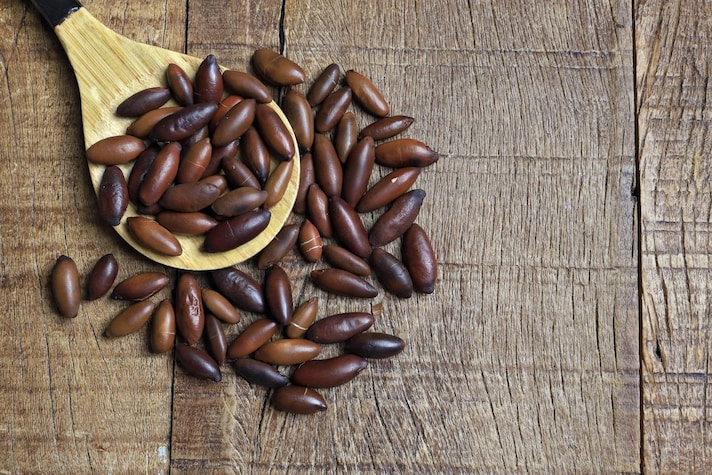
The Barú fruit, which ripens between September and October, is characterized by a woody, fibrous pulp containing a single, elongated seed covered by a thin brown film. Harvesting traditionally occurs by the natural fall of the fruit, supporting the protection and reforestation of the Cerrado from the advance of extensive monocultures. The hard shell is cracked with a sickle (an adapted machete).
From a biochemical point of view, the Barù nut is a sort of mix between a legume, an oilseed and a dried fruit: rich in unsaturated fatty acids (particularly oleic and linoleic acid), it is characterised by an excellent content of proteins with a high biological value, insoluble and soluble fibres, and a high concentration of mineral salts (iron, zinc, magnesium, potassium and calcium) and antioxidant phenolic compounds.
A fundamental golden rule to keep in mind: Barù nuts should never be eaten raw. "The raw seed contains antinutritional factors (such as trypsin inhibitors) that can interfere with protein digestion and cause gastric discomfort," explains Gabrielli.
Roasting is mandatory because it completely inactivates these substances and makes the nutrients fully absorbable. "In Europe, they don't even have to worry about this because the nuts are already roasted, but if you happen to travel to Brazil, you have to be very careful," the expert points out.
Pleasantly crunchy, it captivates the palate with its enveloping aromatic profile and a flavor reminiscent of toasted almonds or peanuts, with nuances reminiscent of cocoa.
Barù Nuts' Nutritional Values
As mentioned, botanically, it is the seed of the pod of a legume tree, but nutritionally it is much closer to traditional oilseeds and nuts. It therefore has a high energy density, equal to approximately 500-522 calories per 100g of toasted product.
This is characterised by an exceptional protein content (21.3-23.9 g), almost double that of traditional walnuts, while the fat content is approximately 31.7-41.9 g (always per 100 g of product); here monounsaturated and polyunsaturated fatty acids clearly prevail, compared to a percentage of saturated fats and total lipids that is significantly lower than in cashews or traditional walnuts.
Carbohydrates are around 15-20g, ensuring a gradual energy release. They also have a high fiber content: over 15% soluble and insoluble fiber, essential for supporting intestinal function and prolonging the feeling of satiety. Finally, they are a concentration of valuable micronutrients and a treasure trove of minerals such as iron, magnesium, zinc, potassium, and calcium, as well as providing a significant amount of vitamin E and antioxidant phenolic compounds.
Barù Nuts' Benefits
Although it is a relatively recent discovery, which the world of nutritional research has begun to study in recent years, its biochemical profile highlights several promising health benefits:
- support for lipid profile and cardiovascular health; the prevalence of oleic acid (Omega-9) and linoleic acid (Omega-6), combined with the absence of cholesterol and low content of saturated fats, contributes to the maintenance of optimal blood cholesterol levels, promoting a good ratio between HDL and LDL cholesterol;
- high protein content and satiating power: with over 20% protein and a rich content of fibre, Barù nuts have a very high satiating power; inserted in the right doses in a snack or at breakfast, they prove to be an excellent ally for managing the feeling of hunger between meals and avoiding glycemic peaks;
- antioxidant action and fight against oxidative stress: the brown film that covers the seed is particularly rich in phenolic compounds and vitamin E. These molecules work synergistically to neutralize free radicals and protect cells from the damage of oxidative stress and consequent premature aging;
- essential mineral content (especially iron and zinc): unlike other types of nuts, Barù nuts contain significantly higher concentrations of iron and zinc, proving to be a valuable support even for those following vegetarian, vegan or low-protein diets;
- lower caloric impact than other oilseeds: despite being a high energy density food (which should therefore always be quantified and included in the total daily calorie balance), it provides approximately 15-20% fewer calories than traditional walnuts or Brazil nuts, thanks to a slightly lower overall fat content.
How to Use Barù Nuts in Cooking
Although it is still not very widespread on the shelves of large-scale retail outlets, the Barù nut is a versatile ingredient that can be exploited, due to its nutritional and organoleptic characteristics, in many different ways:
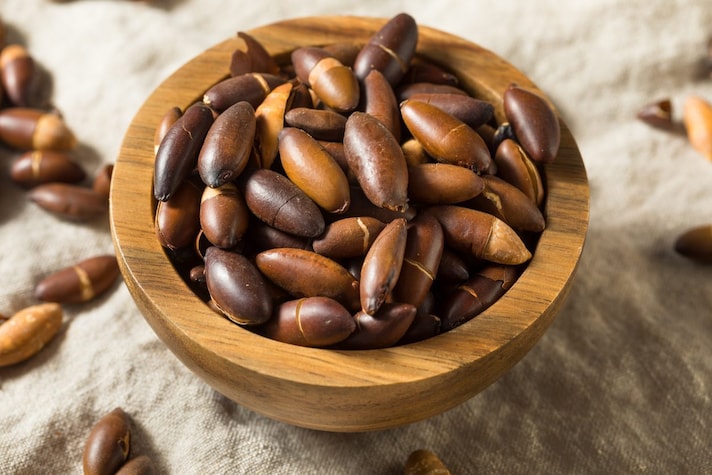
- As a hunger-busting snack: they are consumed exactly like almonds, walnuts, or hazelnuts. An ideal standard portion is approximately 20-30g (a small handful);
- in salads and savory dishes: chopped with a knife or toasted whole, it adds a crunchy note and a nutty, pleasantly toasted flavour to mixed salads, baked vegetables or whole grain dishes (such as spelt, quinoa or rice);
- pestos and sauces: it can be used to replace traditional pine nuts or walnuts in the preparation of homemade pestos with a rustic flavour and rich aroma;
- desserts, yogurt and breakfasts: chopped into small pieces, it can enrich a warm oatmeal porridge, a bowl of full-fat plain yogurt or be used as a topping for homemade muffins, cakes and plum cakes;
- Barù nut spread: by blending toasted walnuts for a long time in a powerful blender, you can obtain a 100% nut spread, perfect for spreading on wholemeal bread instead of the classic industrial alternatives rich in added oils and sugars.

