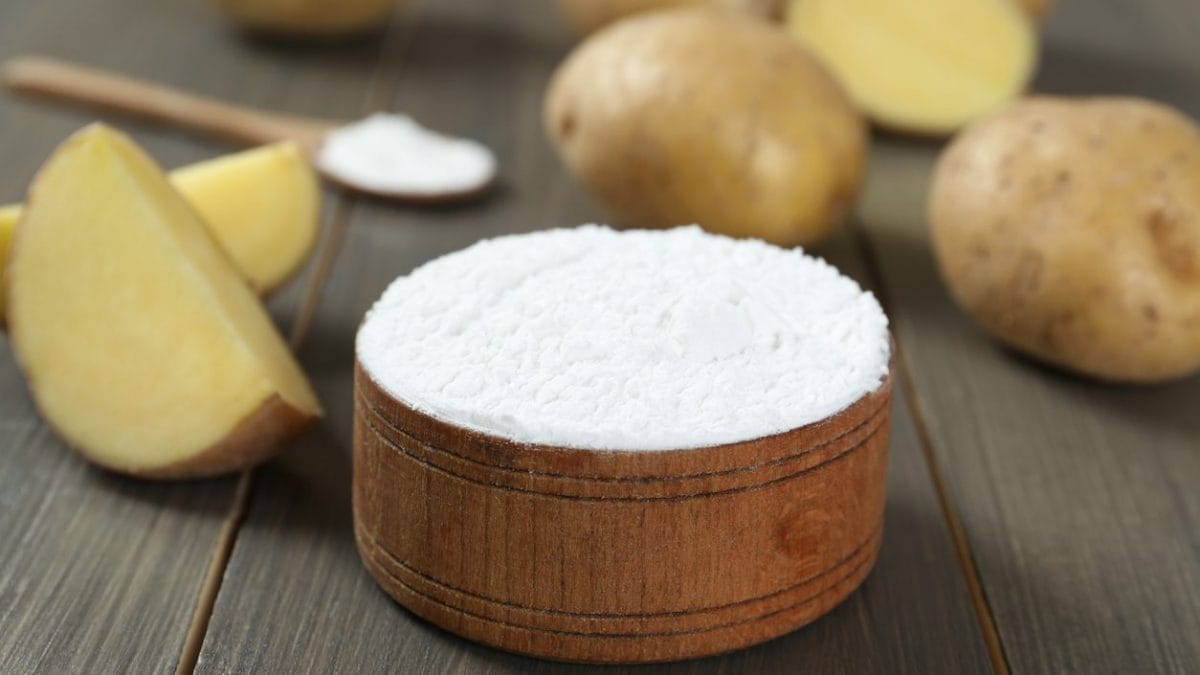
Potato starch is an increasingly popular powdered ingredient in the kitchen: if you're familiar with it, you can't do without it, and if you've never used it before, now's the time to start, because it's truly a valuable ally in many ways. The starch extracted from the tubers, which appears as a clear, impalpable, odorless, and tasteless powder, can lighten any dough, make cakes and donuts softer, and add crispiness to biscuits thanks to its ability to retain moisture. It's also an excellent natural thickener. What's more, starch is completely gluten-free and a highly versatile product. Starch is primarily known for its use in desserts and leavened products, but it can actually be useful in many other ways: let's discover what they are and all the characteristics of this precious ingredient.
What is Potato Starch and What Is It Used For?
Starch is the main reserve carbohydrate of plants: it is formed in the green parts of plants through photosynthesis from water and carbon dioxide and accumulates in the form of granules in roots, tubers, and seeds. The refining process that leads to the production of starch involves grinding the cereals selected for production (potatoes, on the other hand, are scraped). The resulting flour is then immersed in water and left to settle so that the heavier starch granules separate from the other constituents of plant cells. Among the types of starch best known for human consumption are corn (maizena), wheat, cassava (tapioca), and rice, as well as potato starch, extracted directly from the tuber.
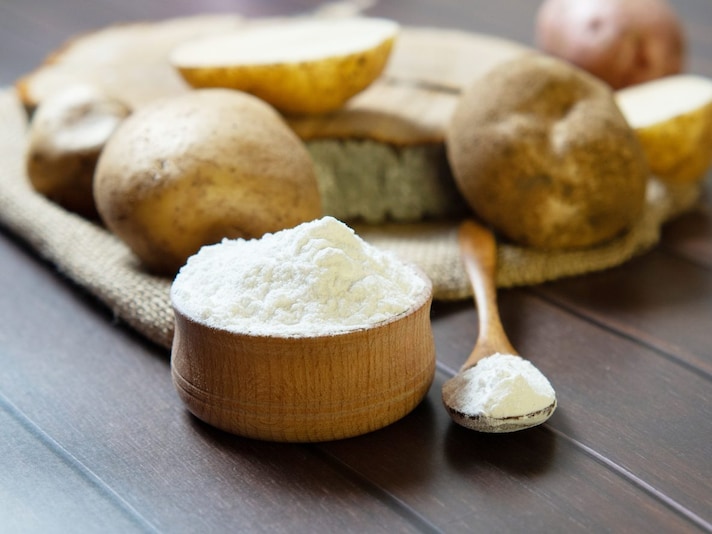
Potato starch is a starch obtained from the processing of tubers: the starch granules are extracted, dried, and then reduced to a very fine white powder that is completely odorless and tasteless. Its starchy nature and flavor make it a great ally in the kitchen, where it is primarily used as a natural thickener for creams, soups, sauces, and puddings, and to soften dough, which becomes softer and fluffier with the use of starch. Being gluten-free, it can be considered an alternative to flour, although it does not completely replace it; it is also a great ally in a vegan diet because, precisely because of its thickening properties, it can be used in place of eggs, using a dosage of about two tablespoons of starch for each egg. Ideal for keeping in the pantry because it keeps for a long time, provided it is protected from sources of humidity (it easily absorbs liquids, so it could easily form lumps in a humid environment), potato starch is not only suitable for culinary use but is also an excellent ally for skin care on the face and hands and often appears in the formulations of products for shine and softness of hair.
Potato Starch's Properties and Benefits
Potato starch is essentially pure starch extracted from the tubers of Solanum tuberosum. It consists almost entirely of carbohydrates, with negligible amounts of protein, fat, and dietary fiber. It is gluten-free, making it suitable for use in gluten-free products or for celiac disease sufferers, and has a calorie content similar to other dietary starches.
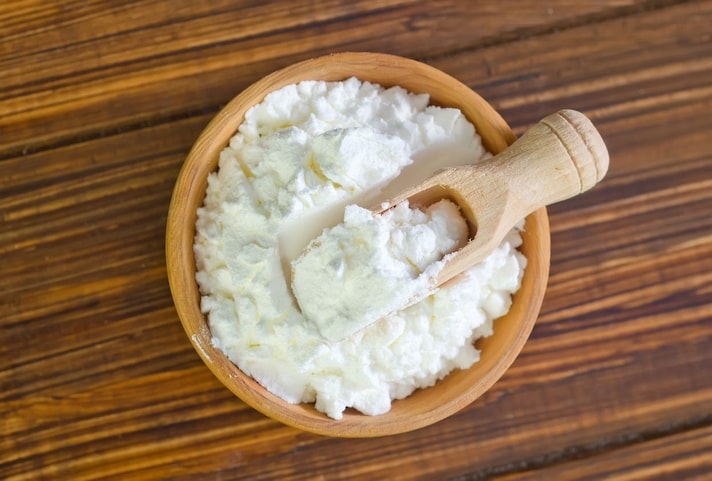
Due to its particular composition, starch provides some benefits to the body:
- It can promote gut health. Potato starch contains a portion of resistant starch, which is not completely digested and reaches the colon, where it is fermented by the intestinal flora. This process can support the microbiota and the production of beneficial substances like butyrate.
- It is suitable for those following a gluten-free diet. Potato starch is naturally gluten-free, so it can be used in preparations intended for those with celiac disease or following a gluten-free diet (provided it is certified and uncontaminated).
- It's a source of carbohydrates that can be easily used for energy. Being composed almost entirely of starch, potato starch is a quick and easily assimilated source of energy, especially useful in cooking when you want to create light and digestible dishes.
Potato Starch's Contraindications
Potato starch, while a useful ingredient in cooking and naturally gluten-free, should be consumed in moderation because it is composed almost exclusively of starch. Excessive use can contribute to a rapid increase in blood sugar levels, making it less suitable for those with diabetes or insulin resistance. Furthermore, being low in fiber, vitamins, and minerals, it provides no particular nutritional benefits and should not replace flours or more complete foods within a balanced diet.
How to Use Potato Starch in Cooking
Because of its softening properties, potato starch is primarily used in the preparation of desserts, especially those that need to be particularly soft and fluffy. It is therefore excellent for preparations such as sponge cakes, muffins, loaf cakes, and ring cakes, but also for savory leavened products like pizza. Starch is excellent used or added to recipes for biscuits, tarts, rolls—in short, any sweet or savory baked good—because in addition to the aforementioned softness, it gives the dough a pleasant crumbly texture that makes it truly delicious.
Starch powder has natural thickening properties, so it is highly recommended for preparing sweet creams, which it makes particularly creamy and frothy, but also for thickening and making creamy soups and soups: a couple of spoonfuls of starch at the end of cooking are enough to completely transform your liquid-based dish.
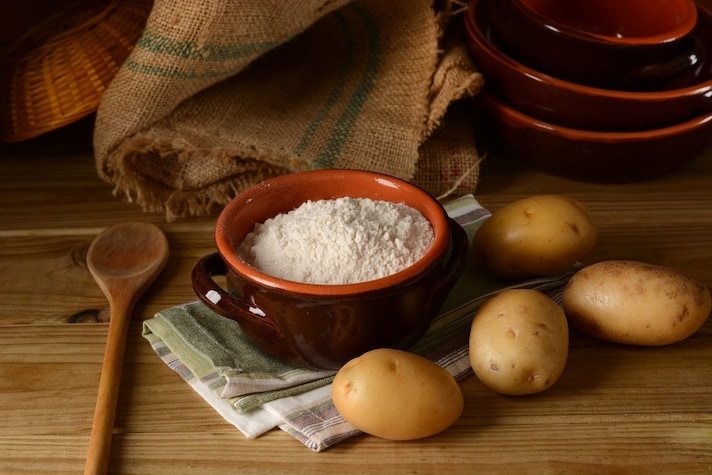
Its lighter consistency than regular wheat flour can speed up the leavening process of both sweet and savory doughs. It's also often used in recipes as an egg substitute, having the same thickening properties, or as an alternative to gelatin; this also makes it a very useful product for vegans. Be careful not to overdo it, though: too much starch could make your dough excessively dry or rubbery.
;Resize,width=767;)
