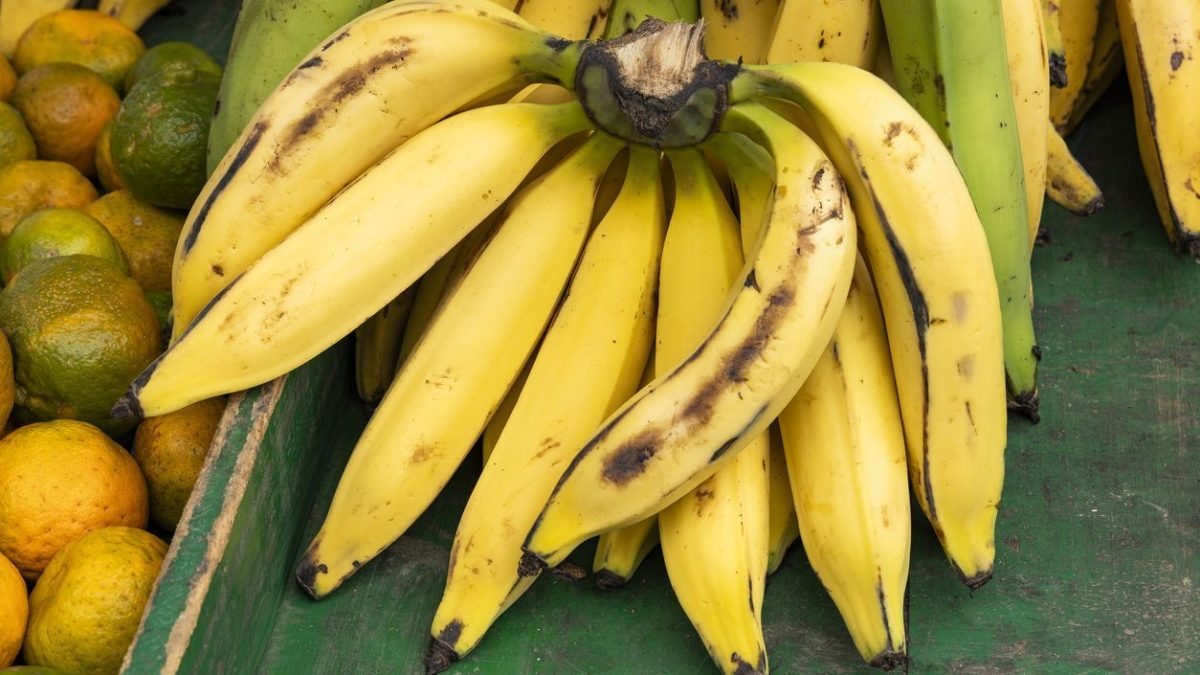
It's very easy to mistake a plantain for a banana. Externally, the two fruits are very similar, and in fact they both grow on plants of the Musa genus, but in reality, their external appearance is their only common feature. The plantain, in fact, has a very different pulp from a banana, with hard seeds and a very firm texture. It's much less sweet in taste, and, above all, it differs greatly in terms of use, as it's almost exclusively eaten cooked.
Furthermore, plantains have an even richer nutritional profile than bananas (in many parts of the world, they're essential for supplementing the diet of many poorer groups, replacing grains), while also having very few side effects. If you'd like to learn more about the world's most consumed exotic fruit, here's a complete guide to plantains, their characteristics, properties, and the best ways to use them in cooking.
What is a Plantain?
The plantain is the fruit of the plant of the same name, belonging to the Musa genus. It is thought to be a hybrid between Musa acuiminata and Musa balbisiana. Although it is an Asian fruit, it is mainly found in Africa, Central America, South America, and Australia. Since it belongs to the same family, the plantain is often confused with the banana due to their apparently similar appearance. However, a careful eye can actually spot several differences between the two fruits, even in their external appearance: the plantain is larger than the common banana, has a more tapered and slightly curved shape, and has green rather than yellow skin that is more fibrous.

The biggest differences, however, are found inside: the flesh is firm, dry, and yellowish in color when fully ripe, then quickly blackens. The flavor, then, is completely different. Plantains are called the "Caribbean potato" precisely because they taste much more like tubers than fruit, although this depends greatly on the degree of ripeness: when unripe and green, they actually taste like potatoes and are rich in starch, while when ripe (with the skin turning black), the starches convert to sugars, making them much sweeter and more similar to bananas, but with a softer, less juicy texture.

This difference in flavor between different stages of ripeness also affects how plantains are used in cooking: they can be eaten fresh, as you would a banana, only when they are at their peak ripeness, a very brief period that is therefore difficult to fully exploit. Precisely for this reason, plantains are typically eaten cooked, especially when unripe but not always, and only later used in both sweet and savory dishes.
Plantain's Benefits and Contraindications
Plantains are a precious and extraordinary food, a true resource for the countries where they are grown, due to their numerous nutritional properties, which make them a staple in the diets of local populations, especially those belonging to the poorest groups. Plantains, in fact, have an impressive nutritional profile, rich primarily in starches and carbohydrates. They are low in sugar but high in energy, containing approximately 120 calories per 100 grams. Because of this composition, they are used in practically every preparation, even as a substitute for pasta, potatoes, and cereals, or in the form of flour.

The nutritional profile of the plantain also boasts a high vitamin content, in particular it is rich in vitamin A which makes it suitable for maintaining eye health and keeping skin healthier and more radiant (there are many studies that focus on the antioxidant effects of the plantain), and in B vitamins, especially B6, which are, instead, very useful for keeping the metabolism in check. Completing the profile is a rich presence of carotenoids, useful for reducing the risk of cardiovascular disease and the formation of cancer cells, and mineral salts, in particular potassium, excellent for controlling blood pressure and counteracting hypertension, furthermore its levels of magnesium help protect the heart and strengthen bones.
All these properties make the plantain an excellent ally for health from other points of view as well:
- complex carbohydrates and simple sugars make the fruit very energetic, therefore excellent for those who practice sports or for those who need to rehabilitate after a long illness or surgery;
- its vitamin richness makes it a great ally for the immune system, as demonstrated by several scientific studies on the subject;
- fibers, especially pectin, promote intestinal regularity, help prevent constipation and act as prebiotics, nourishing the good bacteria in the intestine;

Plantain is also excellent because it has no particular contraindications, requiring only a few small precautions in the case of specific clinical conditions. The main contraindications of plantain are related to its high sugar and carbohydrate content, so excessive consumption is not recommended for those suffering from diabetes or obesity. Although uncommon, allergic reactions are also possible in predisposed individuals.
How to Use Plantain in Cooking
The nutritional profile of plantains makes it easy to understand why this fruit is a staple in the diets of the countries where it grows, where the plant's leaves are also widely used, often served as a side dish. As we've already mentioned, plantains can be eaten fresh when very ripe, but generally they're more commonly eaten cooked.

When the fruit is unripe, with a green skin and firm, slightly acidic flesh, it is very similar to potatoes and for this reason it is eaten in the same way: the most well-known recipe is plantain chips, which is the fruit cut into rounds and fried just like potato chips, but it is also very common to find it roasted, boiled, and processed into a puree. In Brazil, for example, mashed plantain is very popular and is prepared in the same way as the more traditional potato-based version. In the United States, however, we also use it to make baked potatoes, in this case baked plantain.

Plantains can be added to soups and stews, just like regular potatoes or other starchy tubers. They can also be dried and ground to make a special flour that's naturally gluten-free, rich in protein, fiber, and carbohydrates, and excellent for both savory and sweet dishes. Typically, slightly riper plantains are used for desserts: as the pulp softens and the starches convert to sugars, the flavor of the plantain becomes sweeter and more similar to that of a banana. This is the best time to use them in recipes like plantain pancakes (just follow the recipe for banana ones) and banana bread, or to eat them raw.
The plantain is a tropical fruit that grows only in areas with a particularly hot and humid climate, but today it is quite easy to buy it in ethnic food shops or in some particularly well-stocked supermarkets with a small tropical fruit counter, as well as in online tropical fruit shops.
;Resize,width=767;)
