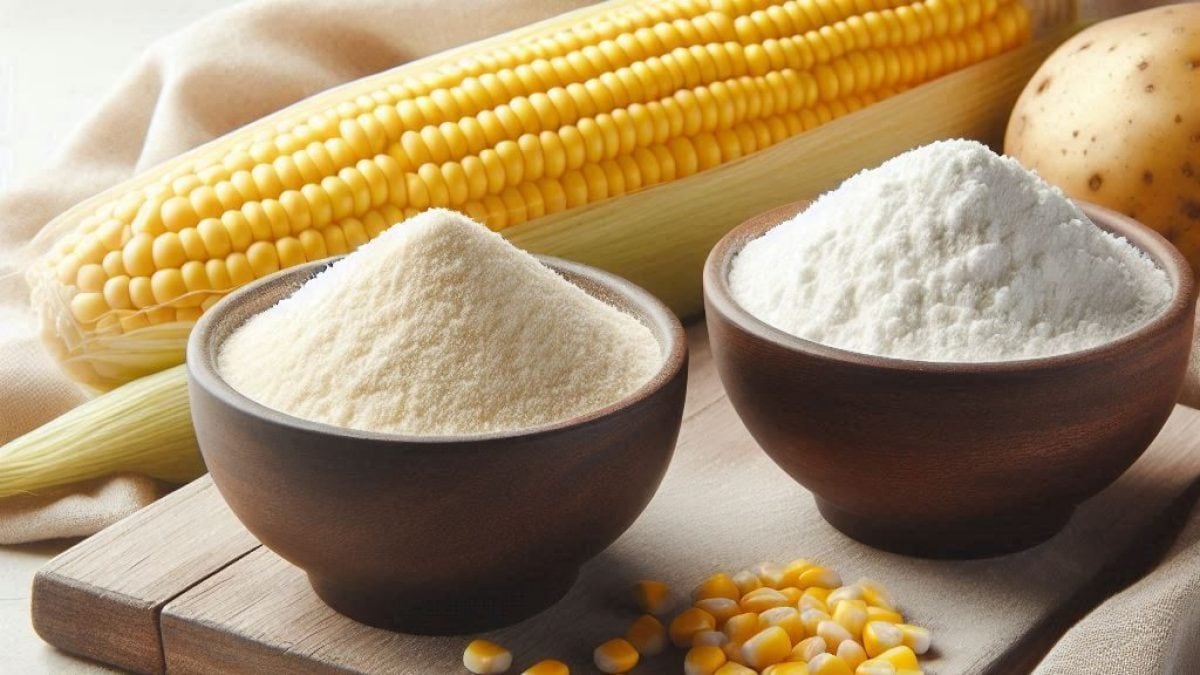
Potato starch and cornstarch are two of the most common thickeners in cooking, used in both savory and sweet recipes. Both are extremely versatile, but their different origins (the former from the tuber, the latter from the grain) result in different chemical compositions, making them interchangeable, but with the right precautions. For example, potato starch has a lighter consistency but tends to be more sticky, while cornstarch is a binder that perfectly gelatinizes puddings and gives the right structure to creams. Let's discover their characteristics and how to best use them.
What is Corn Starch and How Is It Used?
Cornstarch is a very fine white powder obtained from the endosperm of corn, the innermost part of the kernel, which is first fermented for 30-48 hours, dried, and then ground. The result is what is commonly known as cornstarch: it is composed almost entirely of carbohydrates and a smaller amount of mineral salts, including calcium, sodium, magnesium, iron, and potassium. It is gluten-free and is used as a thickener in creams, puddings (such as classic chocolate pudding), and sauces, adding consistency thanks to its gelatinization properties. It is also excellent in breading fried foods, absorbing excess liquid, drying them, and ensuring crunchiness. It is generally used by dissolving it in a liquid, stirring to avoid lumps, and then incorporating it into the recipe.

What is Potato Starch and How Is It Used?
Potato starch is obtained from the starch of the tubers, with the granules (amyloplasts) being extracted, dried, and reduced to a light, impalpable, odorless, and tasteless powder. In cooking, it is used as a thickener, especially in cream soups, thanks to its ability to absorb liquids, but it is also very popular in sweet and savory leavened products, either alongside or as a substitute for flour in dough, as its light consistency helps make the final product soft and fluffy (as in a sponge cake or a savory zucchini donut). Starch is naturally gluten-free, and its nutritional values are virtually nonexistent, while it contains 98% carbohydrates and 2% protein.

What Do They Have in Common?
From the characteristics listed above, it's clear that cornstarch and potato starch have many things in common. First of all, they are two types of starch that are both used to give structure to a specific preparation. Secondly, they are very easy to find, as they are available in all grocery stores. Secondly, they are gluten-free: this means they can be used by those with celiac disease or those particularly sensitive to this protein complex. However, it is always advisable to read the label carefully and ensure that no possible contamination is indicated. They are odorless and tasteless, so they do not alter the organoleptic properties of foods (color, aroma, taste) except, obviously, the consistency: sift them before using them, so that the texture is smooth.

What Are The Differences?
Despite being very similar, potato starch and cornstarch are not the same. Let's start with their origins, the difference that is immediately obvious: the former is processed from potatoes, therefore tubers, while the latter comes from corn, which is a cereal. This leads to variations in their chemical composition, especially in terms of the quantity and action of the starch: containing more amylose and amylopectin, potato starch tends to have a stickier consistency if used in too high a proportion. For this reason, cornstarch is preferred in creams like gluten-free béchamel or classic pastry cream. Potato starch is at its best in doughs like gnocchi, added directly without needing to be dissolved in water: being lighter than flour, it doesn't weigh down the dough, but provides the right amount of solidity.
Can You Use Them Interchangeably?
With the necessary precautions just mentioned, the answer is yes. Potato starch can be substituted for cornstarch and vice versa, with a ratio that is generally 1:1, making it a very easy replacement to put into practice.
;Resize,width=767;)
