
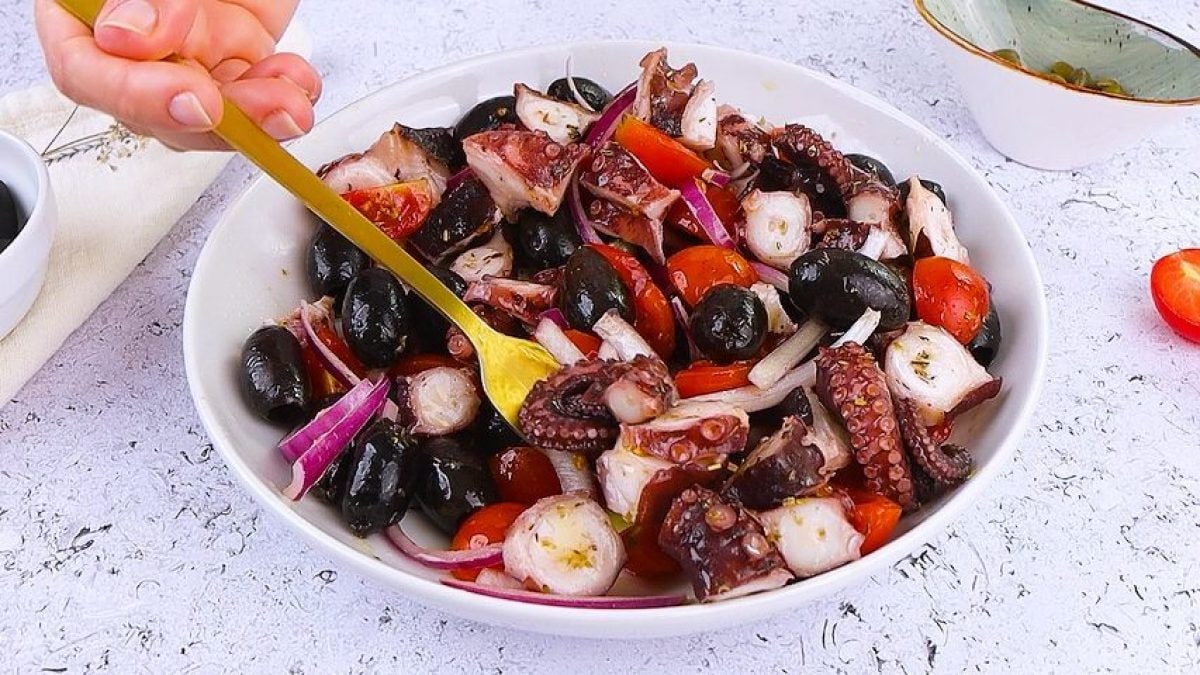
Tender octopus meets cherry tomatoes, olives, capers, and olive oil to work as a starter, a side dish, or even a main meal. The process is just as uncomplicated as the ingredient list. Cook the octopus until tender, chop everything into bite-sized pieces, toss it all together with olive oil, herbs, and seasoning, and let the flavors settle into each other.
What is Octopus Salad?
Fishermen often prepared octopus by boiling it until tender, then dressing it with whatever was on hand, which can include olive oil, herbs, citrus, olives, etc. Octopus was once considered a “humble catch” in many coastal towns, often reserved for family meals rather than restaurant menus. Today, it has flipped entirely and sits proudly on gourmet tables.
Pro Tips for the Best Octopus Salad with Olives and Capers
- Lowering the octopus into boiling water a few times before leaving it to cook helps the tentacles curl naturally and improves texture.
- Salt the water lightly and not heavily. The olives and capers already bring strong salt notes, so the cooking water should stay gentle.
- Use a sharp knife for clean cuts. This keeps the octopus pieces neat rather than shredded, which matters for texture in the final salad.
- Use good olive oil generously. This isn’t just a dressing, it’s a major flavour component that carries everything else.
Frequently Asked Questions
What type of olives work best?
Black olives are classic here because they add depth without overpowering, and avoid overly brined varieties that can dominate the dish. Pitted olives are best for ease and texture balance.
Are capers necessary?
Capers bring the signature briny spark that defines this salad, and without them, the dish feels flatter and less layered. If you must substitute, finely chopped pickles can work in small amounts.
Can I add lemon juice?
Yes, a light squeeze of lemon is great in this dish, as it lifts the seafood notes and sharpens the overall profile. But add it gradually so it doesn’t overpower the olive oil.
Why is my octopus chewy?
Most often, it’s undercooked or cooked too quickly, as octopus needs slow, steady heat to soften properly. Another cause is skipping the cooling step before slicing.
How to Store Leftovers
Store the octopus salad in an airtight container in the fridge for up to 2 days while maintaining flavor integrity. Stir gently before serving again, as the oil may settle. Avoid freezing, as the texture of the octopus and tomatoes will change significantly.
Ingredients
How to Make Octopus Salad with Olives and Capers
;Resize,width=712;)
Bring a pot of water to a boil and gently dip the octopus in and out a few times before fully submerging it. Let it cook for about 30 minutes until tender.
Bring a pot of water to a boil and gently dip the octopus in and out a few times before fully submerging it. Let it cook for about 30 minutes until tender.
;Resize,width=712;)
Remove the octopus from the water, let it cool slightly, and cut it into bite-sized pieces. Chop the cherry tomatoes into small chunks as well.
Remove the octopus from the water, let it cool slightly, and cut it into bite-sized pieces. Chop the cherry tomatoes into small chunks as well.
;Resize,width=712;)
In a bowl, combine the octopus pieces with black olives, capers, and finely sliced onion. Add olive oil, season with salt and dry oregano, then mix.
In a bowl, combine the octopus pieces with black olives, capers, and finely sliced onion. Add olive oil, season with salt and dry oregano, then mix.
;Resize,width=712;)
Add cherry tomatoes and more olive oil, and give everything one final gentle mix.
Add cherry tomatoes and more olive oil, and give everything one final gentle mix.
;Resize,width=712;)
Serve and enjoy!
Serve and enjoy!
;Resize,width=767;)
