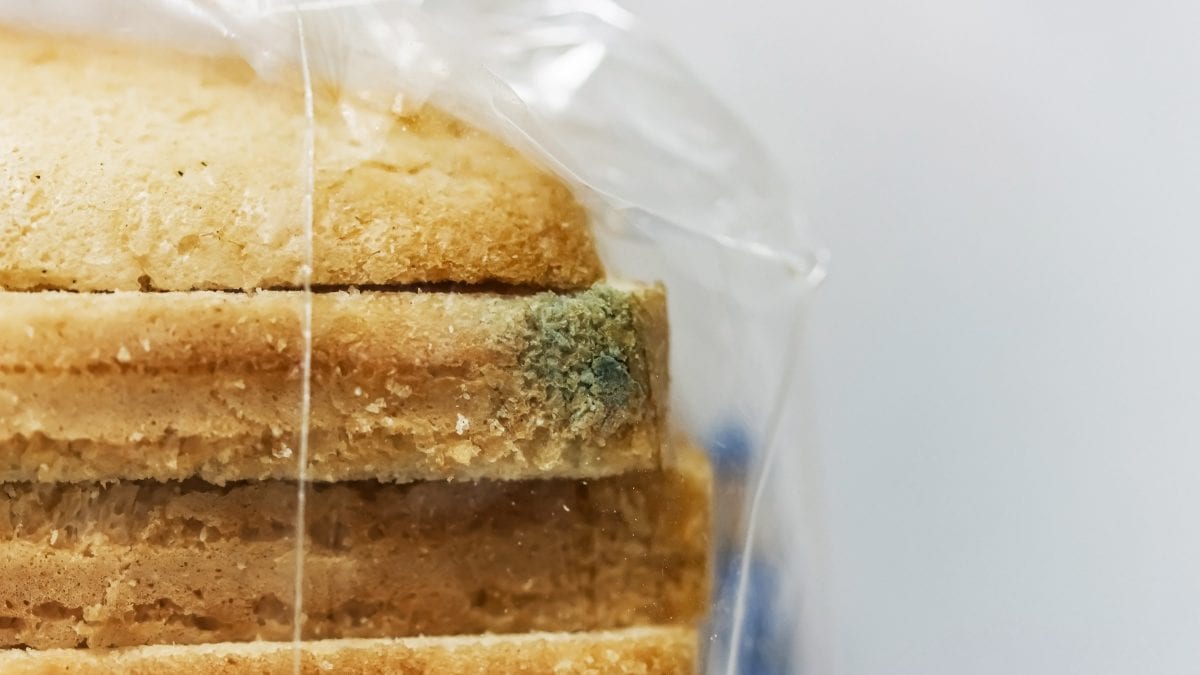
It always happens the same way — you’re making a sandwich, pull out a slice, and there it is: a fuzzy blue-green patch staring back at you. You hesitate. It’s just one corner, right? Maybe if you tear off the bad part, the rest is fine. But here’s the truth: if one spot of bread is moldy, the entire loaf is contaminated — even if you can’t see it yet.
What Exactly Is Bread Mold?
Mold is a type of fungus that grows in moist, warm environments — and bread is the perfect breeding ground. Once mold spores land on a loaf, they begin spreading microscopic roots through the interior, feeding on starch and moisture. That fuzzy patch on the surface? It’s just the tip of the iceberg. Underneath, invisible mycelium — thin, thread-like roots — extend deep into the bread’s porous structure. Cutting off the visible mold won’t remove those hidden colonies.
Bread’s soft texture and high moisture make it an easy target for fast-growing molds like Aspergillus, Penicillium, and Rhizopus. These can appear in shades of white, green, black, or even pink, depending on the species and stage of growth.
Can You Just Cut Off the Mold and Eat the Rest?
In short: no, you shouldn’t. Once mold shows up, it’s already spread beyond what you can see. Some hard cheeses and firm produce can be salvaged by cutting away mold because they’re dense and low in moisture — mold doesn’t penetrate as far. Bread, however, is spongy and porous, allowing spores to travel quickly and invisibly. Even if you cut around the moldy section, spores may have already landed on other slices. That’s why food safety experts recommend discarding the entire loaf, not just the affected piece.

What Happens If You Eat Moldy Bread?
Most healthy adults who accidentally eat a small amount of moldy bread won’t experience severe symptoms — but that doesn’t make it safe.
Molds can produce mycotoxins, which are toxic compounds that cause nausea, diarrhea, or allergic reactions. People with asthma, weakened immune systems, or mold sensitivities may experience more serious effects, including respiratory irritation or infection.
How to Tell If Bread Has Gone Bad
Sometimes bread goes bad before mold appears. Watch for:
- A sour or musty smell
- A rubbery or sticky texture
- Off flavors after toasting
If your bread tastes or smells “off,” it’s best to skip it — mold might already be forming.
What About Toasting Moldy Bread? Does Heat Kill Mold?
Unfortunately, no — toasting doesn’t make moldy bread safe. Heat may kill some surface spores, but mycotoxins remain stable at high temperatures. Once mold appears, no amount of toasting or baking will neutralize the contamination.

How to Store Bread to Prevent Mold
The best solution is prevention — and proper storage is key. Room temperature is ideal for up to 3–4 days in a cool, dry spot.
While the refrigerator can slow mold growth, it will also make your bread stale in no-time, so it's best to keep your bread out of it. Your best best for long-term storage, when it comes to bread, is the freezer, where it will stay fresh for up to 3 months when well-wrapped.
Use a paper bag or cloth bread bag to allow airflow and reduce moisture buildup. Plastic traps humidity, accelerating mold growth. If freezing, double-wrap in plastic or use a resealable freezer bag.
;Resize,width=767;)
