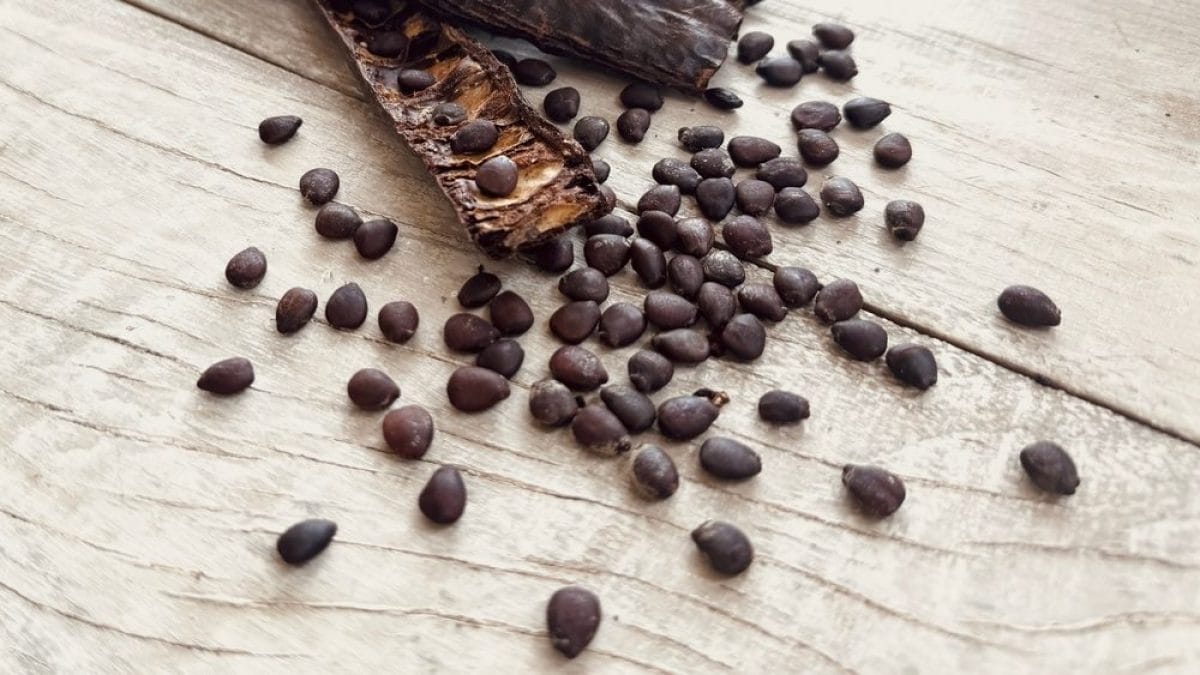
When we talk about carob, we are referring to a food that has always been considered humble, most often used to feed animals, such as pigs and horses, rather than humans. The high energy content of this fruit has been known since ancient times: it is no coincidence that it is called "St. John's bread", as the story goes that John the Baptist ate carob beans to survive in the desert. What are we referring to? Carob is the fruit of the carob tree, a plant native to the Mediterranean areas that in the U.S. is mostly found in California, Arizona, Nevada and some areas of Texas: it is an ancient and centuries-old tree that belongs to the Fabaceae family, the same as legumes.
Carob is recognized by its pod-like shape (similar to that of green beans or snow peas, but dark brown and tougher) containing pulp and seeds: historically, the latter were also used as a unit of measurement for weighing jewelry, given that their weight was practically always the same. In fact, the word "carat," the basis for measuring gold , derives from the Greek term kerátion (carob). From a nutritional standpoint, the "poor" carob has always proved very valuable: during famines, it became an indispensable resource, it is known for being a substitute for cocoa powder (its flavor is sweet and its price is advantageous) as well as an excellent thickener, without forgetting its role as a natural remedy for coughs, stomach aches, or diarrhea. Let's learn more about its benefits and uses in the kitchen.
Carob Beans' Properties and Benefits
Nutritionally, carob beans are rich in beneficial substances for the body: they provide fiber, vitamins (A, C, and group B), and various minerals including calcium, potassium, magnesium, zinc, and selenium. They have a moderate calorie content—about 253 kcal per 100 grams—and are mainly composed of carbohydrates, half of which are simple sugars. They also contain tannins, particularly gallic acid, and antioxidant compounds that, according to major studies, contribute to making them a good ally of the immune system, the intestine, and the cardiovascular system, as well as bone health and general metabolic functions. Finally, it's worth remembering that they are gluten-free.
1. Gut Friends
One of the benefits for which carob is best known concerns the intestine. The tannins present in this vegetable have astringent properties and for this reason they are used as a dietary supplement in cases of diarrhea and dysentery.
2. Antibacterial Action
Tannins also possess antibacterial properties that can help limit the proliferation of unwanted microorganisms in the intestine. This effect helps maintain the balance of the microbiota.
3. Digestion Support
These same compounds also have the ability to bind to dietary proteins, influencing their absorption and digestibility. This means they can facilitate digestive processes, helping to reduce the feeling of heaviness after meals rich in protein.

4. Cholesterol and Blood Sugar Control
The high quantity of fibers present in carob helps to reduce the absorption of lipids and to modulate cholesterol levels in the blood, keeping cholesterol and blood sugar levels at bay.
5. Support the Immune System and Cellular Health
Vitamins with antioxidant action such as A and C, together with selenium, play an important role in protecting cells from oxidative stress and participate in the body's defense processes, contributing to the correct functioning of the immune system.
6. Feeling of Satiety
Thanks to the combined action of fiber and the ability to slow the absorption of sugars, carob can be useful in low-calorie or weight-control diets, because they give a sense of satiety and contribute to a more gradual glycemic response.

Contraindications
Carob is generally considered a safe food, but in some situations, it's advisable to consume it wisely. There's no officially established maximum amount, however, for a healthy adult, a moderate portion of about 20-30 grams per day of pulp or flour is considered adequate as part of a balanced diet. Excessive intake, due to the high fiber and tannin content, can cause side effects such as constipation, bloating, or cramps, as well as reduce the absorption of certain minerals, particularly iron and zinc. Furthermore, due to the presence of natural sugars, those with diabetes or who need to monitor their blood sugar levels should carefully include them in their diet, consulting a doctor or nutritionist first, especially if undergoing medication, to assess the overall impact on metabolic balance.

Uses in Cooking
Carob as a cooking ingredient? Absolutely, but not strictly speaking as a legume, even though they are botanically a legume: they are not used as a source of protein or as a basic ingredient in savory dishes. Their use is probably familiar to those who, for various reasons (including the inability to consume caffeine), need to replace bitter cocoa in recipes: from the dried pulp of the pods, in fact, we obtain what is commonly known as "poor man's chocolate," used in powder form in a 1:1 ratio in cakes, soufflés, creams, puddings, and smoothies, thanks to its sweet, slightly caramelized flavor. From the seeds, however, comes a flour considered a natural thickener (classified with the acronym E410 and required to be listed on the label of packaged products) thanks to its content of galactomannans, soluble fibers responsible for its thickening and stabilizing properties: one of the most classic uses is in the preparation of ice cream, including homemade ones. The pulp infused in alcohol can also be used to make liqueurs with a retro allure, while the seeds, once boiled, become the base for sweet-tasting syrups that don't require the addition of sugar.
;Resize,width=767;)
