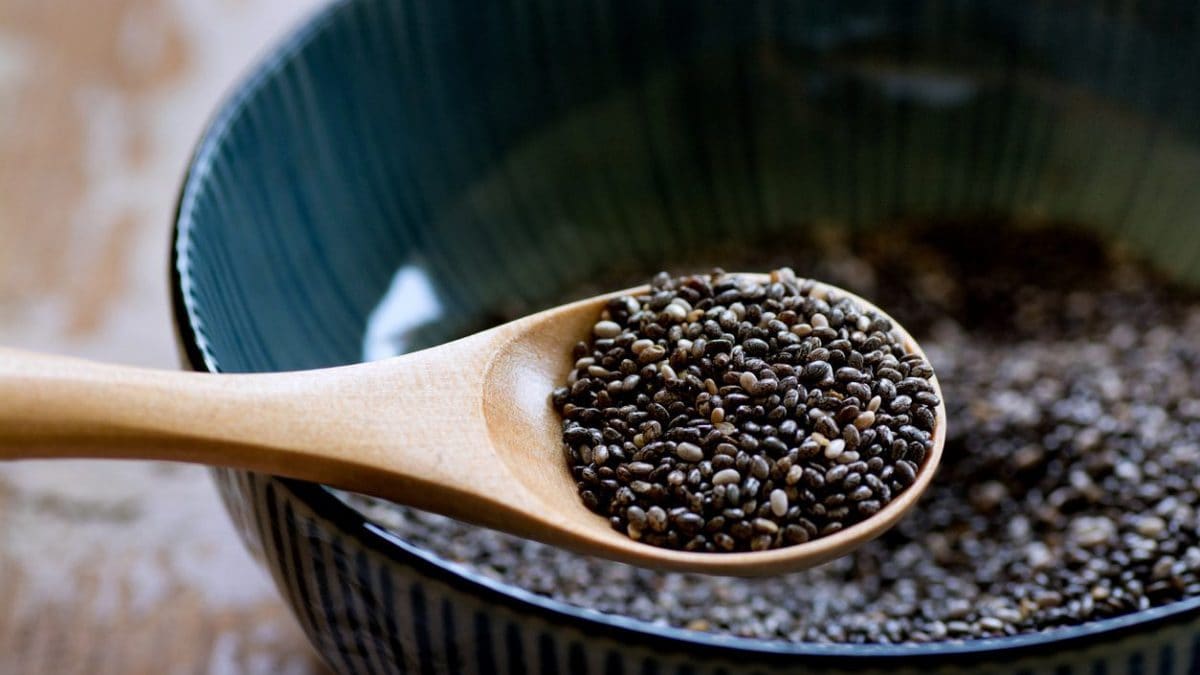
Already known to the Aztecs and Mayans, the tiny, shiny chia seeds are a true force of nature. Their incredible mix of macro and micronutrients, which includes proteins, fiber, vitamins (A, B, C, E), minerals (phosphorus, calcium, potassium, magnesium, sodium, iron, zinc, manganese, copper), folates, omega-3 fatty acids and antioxidants has made them one of the most popular superfoods not only among pre-Columbian civilizations, but also in the modern world, where oilseeds in general are enjoying ever-increasing success and interest thanks to their numerous virtues.
In this case, we're dealing with a versatile food —it can be added to yogurt, smoothies, or salads—that has its origins in Central America, between Mexico and Guatemala, where Salvia hispanica, a herbaceous plant of the Lamiaceae family, is grown. From the ripe fruits come chia seeds, brown, white, gray, and black, which have a unique characteristic: they are hygroscopic, absorbing more than 10 times their weight when immersed in water (or a liquid), a detail that makes them very interesting to use in the kitchen. Let's see how to best use them, why they're good for you, and when, instead, it's advisable to exercise caution.
Chia Seeds' Properties and Benefits
Chia seeds are a functional food because they pack a large amount of nutrients into just a few grams, similar to flaxseeds. They help improve various aspects of health, with the advantage of being easily integrated into the diet (but we'll see that later). Not to mention that they have a low glycemic index, thus maintaining stable blood sugar levels, and are naturally gluten-free. In the meantime, let's explore the main benefits according to Harvard Medical School and any potential contraindications.
A Full Supply of Omega-3s For the Heart and Brain
One of the strengths of chia seeds is the high presence of omega-3s, particularly alpha-linolenic acid (ALA). This is an essential fatty acid that our body cannot produce on its own and must therefore be introduced through diet. Omega-3s play a fundamental role in proper brain function, heart health, and the reduction of inflammatory processes. Several studies link regular ALA consumption to a lower risk of cardiovascular disease.

Fiber, Not Just Digestive Well-Being
100 grams of chia seeds contain 34.4 grams of fiber, both soluble and insoluble. Fiber promotes intestinal regularity, helps prevent constipation, and supports healthy bacterial flora. From a metabolic standpoint, an adequate fiber intake is associated with a reduced risk of type 2 diabetes, some cancers— particularly colon cancer —and coronary heart disease. Furthermore, fiber helps lower LDL cholesterol and triglyceride levels, while increasing HDL cholesterol, which is considered “good” and protective.
Sense of Satiety
Precisely because of their high fiber content, chia seeds expand in volume when they come into contact with water, becoming a gelatinous mass. This also happens in the stomach, thus promoting a feeling of fullness and reducing the sensation of hunger. For this reason, despite being a high-calorie food —486 kcal per 100 grams—they are often recommended as a supplement in low-calorie diets and in general for those who want to better manage their weight.
Antioxidant Action
Chia seeds contain a variety of antioxidant compounds, including tocopherols, phytosterols, carotenoids, and polyphenols. We now know that antioxidants are valuable substances because they counteract free radicals, which, on the contrary, accelerate cellular aging, also undermine the beauty of the skin, and promote the development of chronic diseases.
Complete Proteins
Another plus is their protein content: they provide all nine essential amino acids, a characteristic not so common in the plant world, which is instead found in meat and fish (which is why their proteins are called noble). What are the positive effects? They offer a constant release of energy and promote muscle growth, useful for everyone and especially for those who practice sports, including fitness.

Contraindications
While safe for most people, chia seeds may cause some unpleasant side effects if consumed in excess. Their high fiber content, if introduced too quickly into the diet, can cause bloating or intestinal discomfort. It's best to introduce them gradually, just as is recommended with legumes. Furthermore, those taking blood thinning medications should consult their doctor before consuming them, as omega-3s may conflict with their treatment.
How to Use Them in The Kitchen
A handful of chia seeds, with a daily portion of around 10-15 grams (about 2-3 teaspoons), is very simple to use, also because it also has a delicate, almost neutral flavor, which does not affect the foods it is paired with: for this reason they are used raw, simply added to yogurt, kefir or fruit for breakfast, or as a final garnish on a vegetable and cereal salad, obtaining a light and substantial lunch at the same time.
If soaked, they become a powerful thickener, giving recipes a gelatinous consistency, their ace up their sleeve: they reveal themselves to be the ideal ingredient for making delicious and healthy puddings and desserts, such as the famous chia pudding or mini cheesecakes: they can be prepared quickly in advance, left to rest in the fridge for a few hours (better if overnight) and then they are ready to be enjoyed in the morning, for a delicious and energetic awakening.
;Resize,width=767;)
