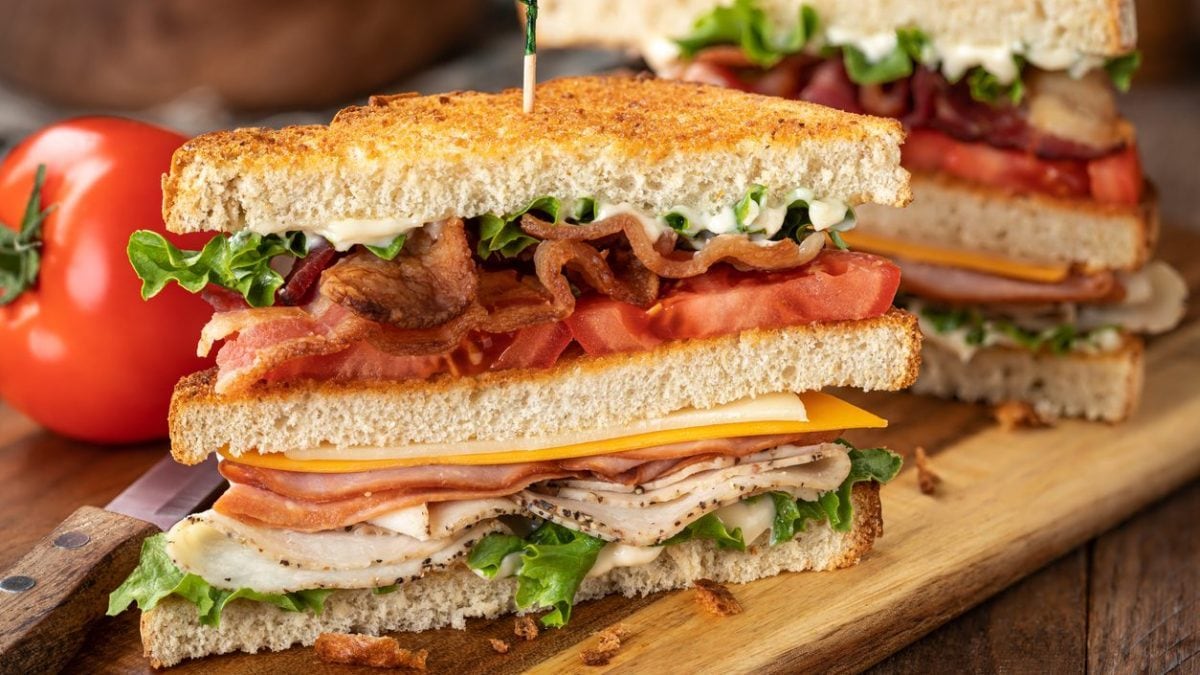
Layers of white bread alternating with a topping of chicken, lettuce, tomato, bacon, and mayonnaise: what are we talking about? The club sandwich, of course. A more elaborate and richer evolution of a toasted sandwich, which we've all eaten at least once in our lives in a hotel, at a beach resort, or simply as a homemade version. Today, it's undoubtedly one of the most famous sandwiches in the world, yet no one knows exactly where it originated: what we can say, almost with absolute certainty, is that it comes from the U.S., but it's not clear by whom.
Three Theories on The Birth of Club Sandwich
Although its shape might make it seem like a recent invention, the origins of the clubhouse sandwich —known simply as the club sandwich—are generally traced back to the late 19th century in the United States, specifically to the New York area. The most reliable sources place its birth within exclusive private circles, called "clubs," such as the Union Club and similar establishments, frequented primarily by the elite of the time: it is precisely in these contexts that a practical, substantial, and ready-to-eat sandwich appears to have been born. Its name appears to have appeared for the first time in 1899 in a New York newspaper article describing a toasted bread sandwich with chicken or turkey and ham, served hot.
Another theory, equally widespread and considered valid, traces its origins to Saratoga Springs, also in New York State, inside the Saratoga Club House – a famous gambling establishment – around the end of the 19th century. Here, however, it is not known exactly by which chef it was conceived: some speak of Danny Mears, others of the club's manager, Richard Canfield, who prepared a sandwich for some ladies inside the club, using leftovers from the pantry. The sandwich was so popular that Canfield decided to include it permanently on the menu.
While the first two theories have clubs and the upper middle class as their common thread, the third and final hypothesis traces the origins of this sandwich to a New York entrepreneur‘s home. It's said that, returning home from work late at night, he decided to make a sandwich with some leftovers he found in the refrigerator. The ingredients included chicken, bacon, lettuce, and tomato, all topped with a layer of mayonnaise. He was so pleased with his creation that he even introduced it to the country club where he was a member, thus helping to spread its fame.
How to Make a Perfect Club Sandwich
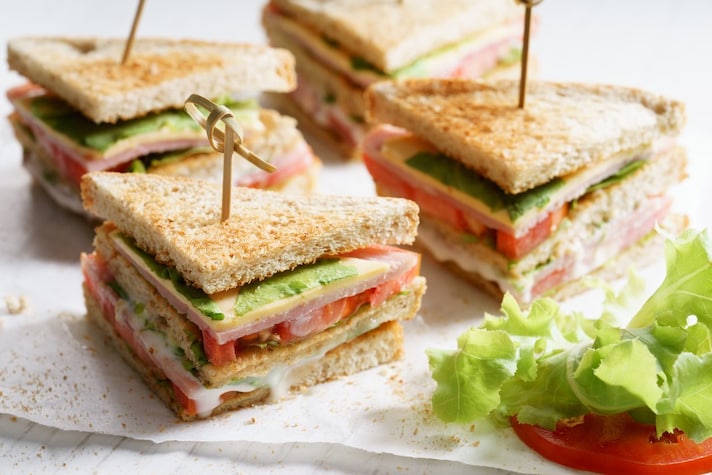
When we talk about a club sandwich, we're not referring to a simple toast, but to a sandwich with a precise layering and an aesthetic that satisfies us just by looking at it. Two, often three, layers of toasted bread enclose chicken, lettuce, tomato, bacon, and mayonnaise: all cut into triangles and held together with special toothpicks. Although it may seem—and in part it is—a simple random combination of ingredients, the preparation of the club sandwich has its own precise logic. Toasting the bread, for example, serves to prevent the mayonnaise or tomato juice from making it too moist, wetting it and compromising its structure: a more compact bread, moreover, is better able to support such a generous filling. The cut also serves not only to help us appreciate the perfect layering, but also to make it easier to grip, preventing any of the condiments from leaking out.
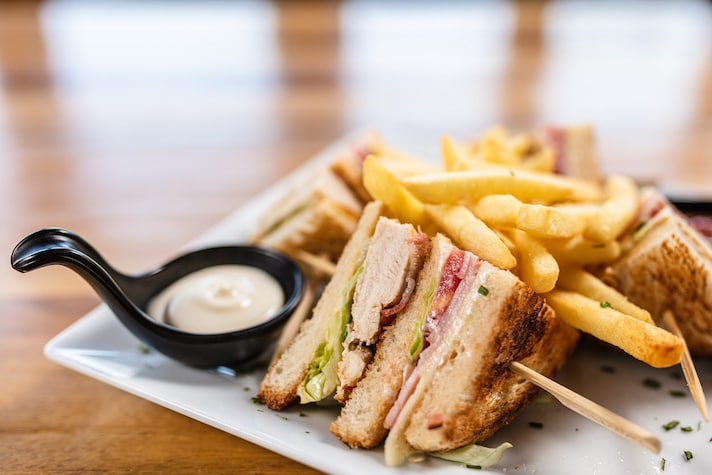
Over time, the club sandwich has undergone numerous reinterpretations: some replace the chicken with turkey, others enrich it with eggs or cheeses, such as cheddar or mozzarella, or those who prefer a "seafood" version made with salmon. What, in any case, can never be missing is a generous portion of French fries as an accompaniment. Its success is probably due to its hybrid nature: it is not a simple sandwich, but a complete meal, which manages to adapt perfectly to the most diverse contexts, from international hotels to diners, by way of pubs and seaside venues, always managing to please everyone's palate.
;Resize,width=767;)
