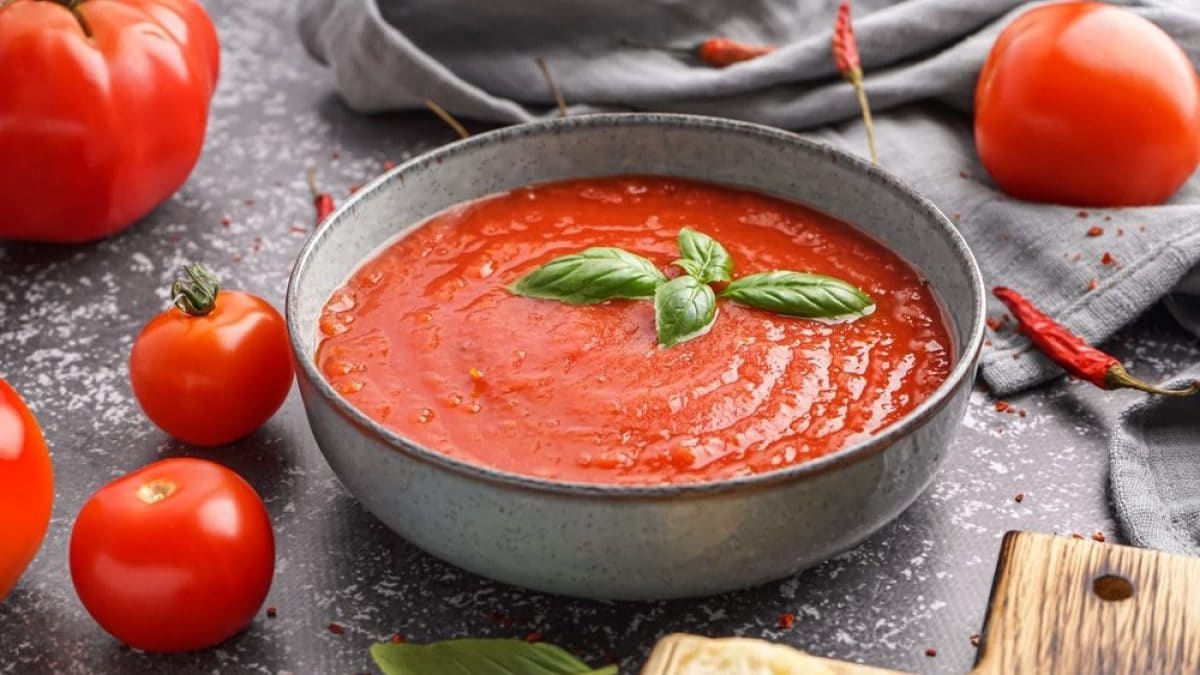
The tomato is magical in many ways. First of all, it looks like a vegetable but isn't, because it falls into the category of fruits from a botanical standpoint, even though its organoleptic and nutritional properties, along with their culinary uses, are actually more similar to those of vegetables. Secondly, it is a truly special ingredient, which you can eat raw or cooked in a variety of ways, because it is so versatile that it pairs well with any type of ingredient you pair it with.

But that's not all: tomatoes are truly unique because they're one of the very few foods that work "in reverse." Almost all foods, when cooked, lose some of their nutritional properties, or at least these are depleted by heat. For tomatoes, it's the complete opposite: while raw, they're rich in vitamins and fiber, when cooked, they release their most precious treasure: lycopene, a carotenoid that also gives tomatoes their characteristic red color.
What is Lycopene and Why Is It Important?
Lycopene is a bioactive substance of plant origin found in certain fruits and vegetables and belongs to the carotenoid family. Although it is present in various foods, to which it gives a different color based on the concentration of pigment in the plant itself, it is particularly present in tomatoes, so much so that it even takes its name from them: scientifically, in fact, the tomato is called Solanum lycopersicum.
What makes lycopene so important for the human body is its function as a natural antioxidant, that is, its ability to help our body fight oxidative stress, a pathological condition caused by an excess of free radicals that the body cannot eliminate naturally. In short, it is a sort of cellular "cleaner," capable of cleaning up cell DNA, especially in the presence of additional stressors, such as smoking, pollution, and exposure to carcinogens. It is therefore a useful substance for preventing the formation of tumor cells, but also for combating heart disease (hypertension and atherosclerosis), diabetes, obesity, and neurodegenerative diseases.

Although lycopene is naturally present in our bodies, we cannot synthesize it, which is why it must be obtained through our diet. This is where our tomatoes come in, the food richest in lycopene. However, they are not the only ones: the substance is also found, albeit in smaller quantities, in watermelon, blood oranges, cantaloupe, guava, pink and red grapefruit, apricots, papaya, and red cabbage. The concentration of lycopene in foods also depends on environmental factors and the cultivation process; in fact, it has been shown that organic fruits and vegetables have a higher concentration of lycopene than those from plants grown using conventional methods.
Here's Why Tomatoes Are More Beneficial When They're Cooked
But what does lycopene have to do with heat and cooking? The answer is both simple and surprising: the high temperatures to which tomatoes are subjected when cooked break down the fruit's cell walls, releasing all the lycopene present within. This is why tomato juices, concentrates, purees, and sauces have a significantly higher lycopene content than raw tomatoes.

Cooking also makes lycopene much more easily absorbed by the digestive system, even better if seasoned with a modest amount of fat, such as a drizzle of extra virgin olive oil, because the substance is fat-soluble lycopene. This is why some of the most traditional dishes, pasta with tomato sauce and pizza with tomato sauce, prove not only delicious but also true elixirs of long life. Remember that not all tomatoes contain the same amount of lycopene: its concentration depends on the variety and, above all, on the degree of ripeness; the ripest tomatoes, those with the brightest red color, can contain anywhere from 3 to 10 mg per 100g of fresh fruit.
;Resize,width=767;)
