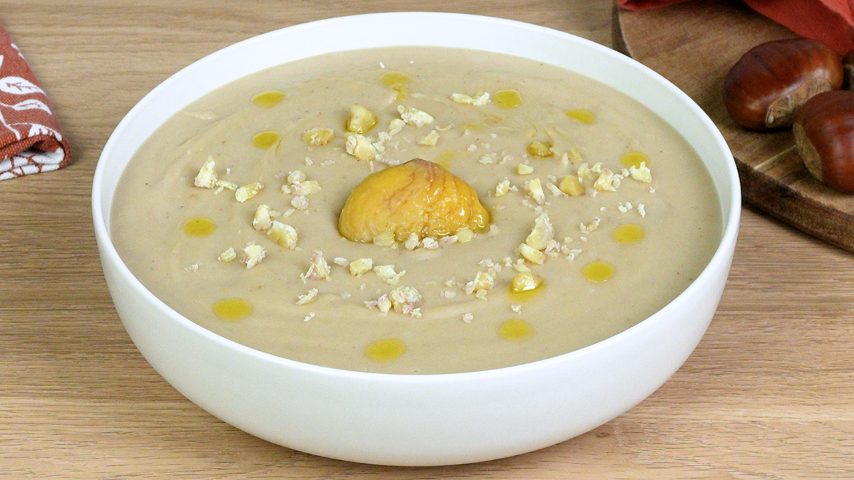
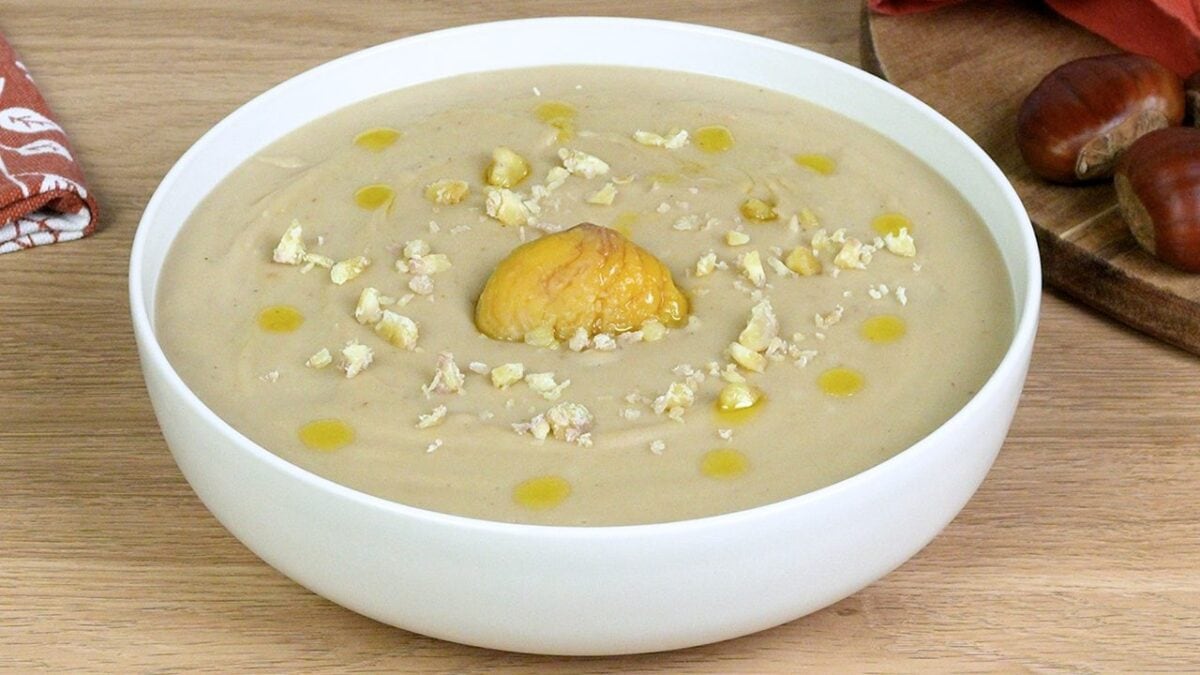
Chestnut Soup is a smooth, comforting fall recipe made with boiled chestnuts, potatoes, onion, celery, bay leaves, and extra virgin olive oil.
The chestnuts give the soup a naturally sweet, nutty character, while potatoes provide body and create an especially creamy texture without requiring milk or heavy cream. Bay leaves add a subtle herbal fragrance that balances the richness.
Warm, simple, and satisfying, this chestnut and potato soup is ideal for chilly autumn evenings, holiday meals, or an elegant first course when chestnuts are in season.
Why Everyone Will Love This Recipe
Chestnut Soup has an unusually silky consistency despite its remarkably simple ingredient list. The chestnuts become soft and almost buttery after simmering, while the potatoes help thicken the soup naturally. Onion and celery provide a savory foundation, keeping the chestnuts' sweetness from becoming overpowering.
It is also naturally dairy-free, since extra virgin olive oil provides all the richness needed for a velvety finish. The reserved chestnuts scattered over the top are more than decoration. They introduce a little texture, making each spoonful more interesting and emphasizing the ingredient that gives this autumn soup its distinctive character.
What Is Chestnut Soup?
Chestnut Soup is a puréed autumn soup in which cooked chestnuts are simmered with vegetables until soft and then blended into a smooth, naturally creamy consistency. While creamy chestnut soups are often associated with European fall cooking, chestnuts also have a fascinating place in American food history. The native American chestnut (Castanea dentata) was once one of the dominant hardwood trees across much of the eastern United States, stretching from New England through the Appalachians and into the South. Its nuts were an important food for both people and wildlife, and Indigenous communities used chestnuts long before European settlement. Early settlers also relied on the tree for food, animal feed, timber, and other practical uses.
That relationship changed dramatically during the early 20th century. Chestnut blight, first identified in New York in 1904, spread through the native range and had effectively removed most mature American chestnut trees from eastern forests by the middle of the century. Chestnuts consequently became less central to everyday American cooking, but they never completely disappeared from the kitchen. Today, they retain a strong seasonal association with late fall and winter cooking, particularly in holiday dishes, stuffings, desserts, purées, and soups.
Cooking Tips
- Score each chestnut before boiling because the cut allows steam to escape and makes the shells considerably easier to remove afterward.
- Peel the chestnuts while they are still warm because both the hard outer shell and the thin inner skin become more difficult to remove once completely cold.
- Check one chestnut before draining the entire batch because larger nuts may require several additional minutes of boiling.
- Reserve a few attractive chestnuts before preparing the soup because whole and crumbled pieces create a simple garnish with contrasting texture.
- Cut the potatoes into evenly sized cubes so they soften at roughly the same rate and blend smoothly.
- Sauté the onion and celery briefly before adding the remaining ingredients because this softens their flavor and creates a more aromatic base.
- Add only enough water to cover the ingredients because starting with too much liquid can make the soup thin and dilute the chestnut flavor.
- Keep extra hot water nearby while the soup simmers because the chestnuts and potatoes absorb liquid and may require a little more during cooking.
- Remove every bay leaf before blending because bay leaves remain tough and should never be puréed into the soup.
- Blend until completely smooth for an elegant velvety texture, or stop slightly earlier if you prefer a more rustic chestnut soup.
- Add additional water only a little at a time after blending because it is much easier to thin a thick soup than to correct one that has become watery.
- Finish each bowl with good extra virgin olive oil because the fresh drizzle adds richness and aroma without masking the delicate chestnut flavor.
Frequently Asked Questions
Can I Use Pre-Cooked Chestnuts?
Yes. Vacuum-packed or jarred cooked chestnuts can significantly shorten the preparation because you can skip the initial 40-minute boiling and peeling stage. Choose plain chestnuts without added sugar or flavorings, then add them directly when the potatoes go into the soup.
Why Is My Chestnut Soup Too Sweet?
Chestnuts have a naturally sweet flavor, and some varieties are sweeter than others. Make sure the soup is seasoned properly with salt and black pepper, and consider adding a little extra celery or a savory herb such as thyme if you want a more balanced flavor.
Can I Make the Soup Without Potatoes?
Yes, although the consistency will be different. Potatoes provide starch that makes the soup especially creamy and substantial, so without them you may need more chestnuts or less water to achieve a similar thickness.
What Herbs Go Well with Chestnuts?
Bay leaves, rosemary, thyme, and sage all pair beautifully with chestnuts. Rosemary and sage provide a stronger woodland flavor, while bay leaves and thyme are subtler and allow the natural sweetness of the chestnuts to remain prominent.
Can I Add Cream?
Absolutely. The soup is already naturally creamy, but a small amount of heavy cream can make it richer and more luxurious. Add it after blending and warm gently without allowing the soup to boil aggressively.
What Can I Serve with Chestnut Soup?
Crusty bread, toasted sourdough, roasted mushrooms, a simple green salad, or crispy bacon all complement the soup well. For a holiday starter, serve smaller portions and garnish with chestnut pieces, herbs, and a drizzle of olive oil.
How to Store
Let the Chestnut Soup cool before transferring it to an airtight container.
Store it in the refrigerator for up to 2–3 days, as indicated in the original recipe. The soup will usually thicken as it chills because of the potatoes and chestnuts. Reheat gently in a saucepan, adding a splash of water or broth until it returns to your preferred consistency.
How to Freeze
Chestnut Soup can be frozen for up to 1 month. Allow it to cool completely, transfer it to freezer-safe containers, and leave a little space at the top for expansion. Thaw overnight in the refrigerator, then reheat gently on the stovetop. Whisk or blend briefly if necessary, since the texture may separate slightly after freezing.
Ingredients
How to Make Chestnut and Potatoes Soup
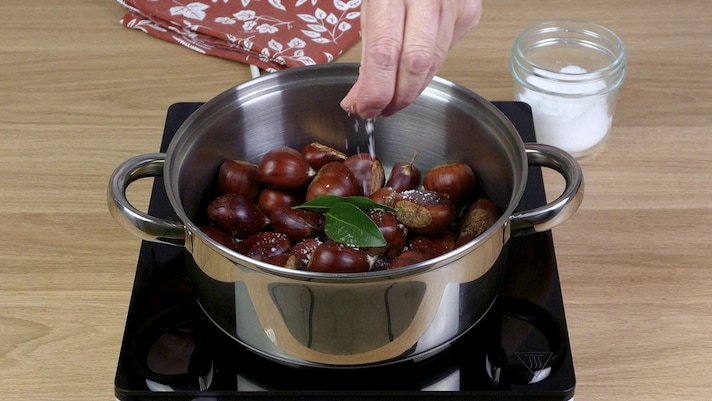
To prepare the chestnut soup, first rinse the chestnuts, then collect them in a saucepan with a pinch of salt and a couple of bay leaves.
To prepare the chestnut soup, first rinse the chestnuts, then collect them in a saucepan with a pinch of salt and a couple of bay leaves.
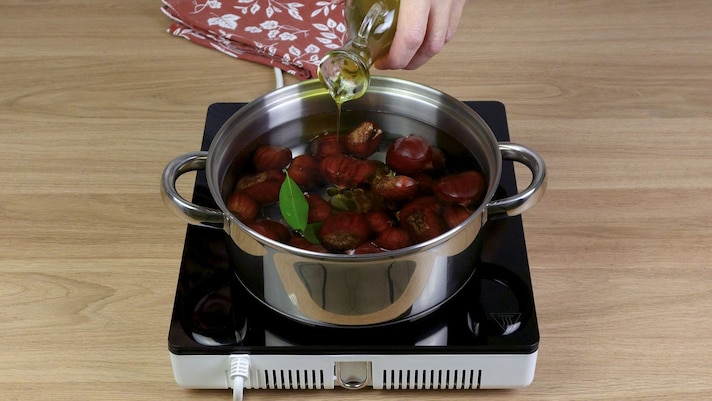
Cover with cold water, pour a drizzle of oil, bring to the boil and cook over medium heat for about 40 minutes.
Cover with cold water, pour a drizzle of oil, bring to the boil and cook over medium heat for about 40 minutes.
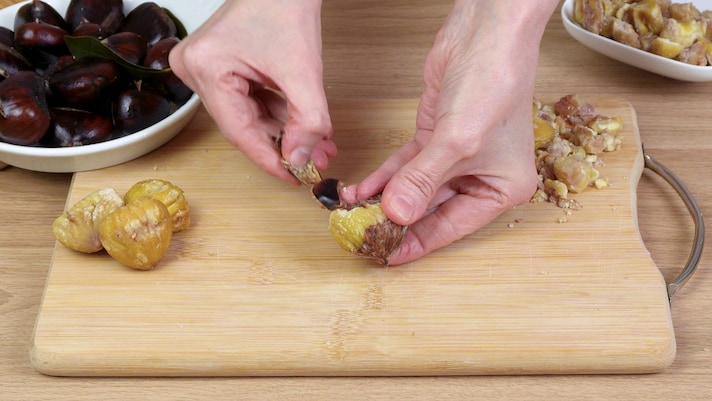
At this point, drain the boiled chestnuts, peel them while still hot, crumble them roughly with your hands and transfer them to a bowl: keep a few whole chestnuts for finishing.
At this point, drain the boiled chestnuts, peel them while still hot, crumble them roughly with your hands and transfer them to a bowl: keep a few whole chestnuts for finishing.
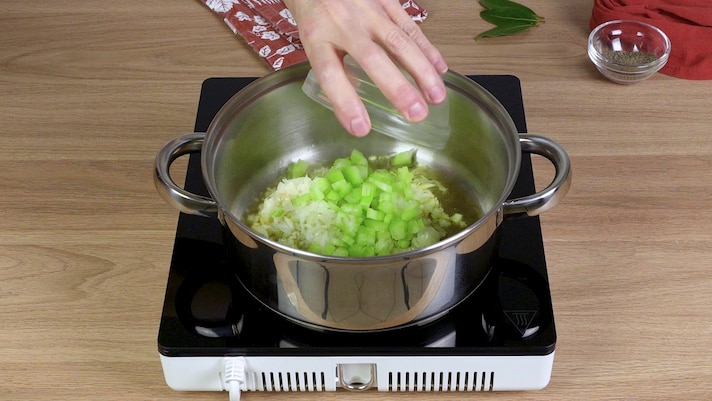
In a tall saucepan, sauté the chopped onion with the diced celery for a couple of minutes with a drizzle of extra virgin olive oil.
In a tall saucepan, sauté the chopped onion with the diced celery for a couple of minutes with a drizzle of extra virgin olive oil.
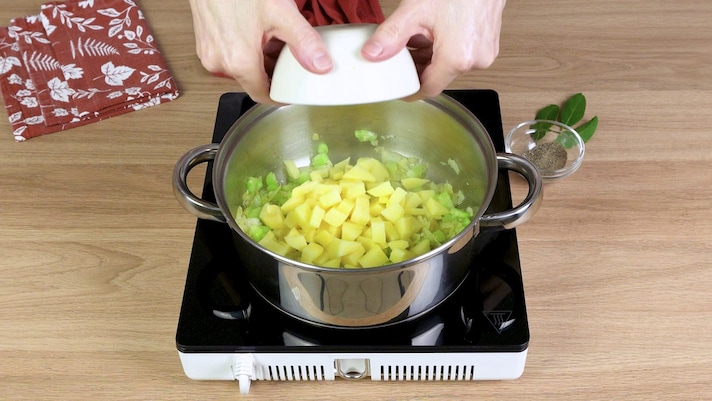
Add the potatoes, peeled and cut into cubes.
Add the potatoes, peeled and cut into cubes.
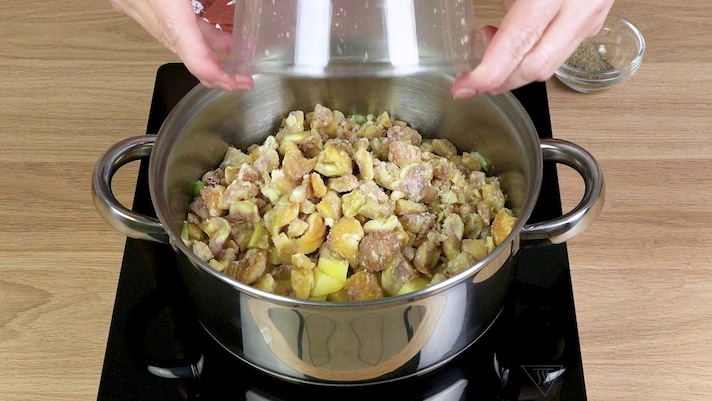
Add the chopped chestnuts.
Add the chopped chestnuts.
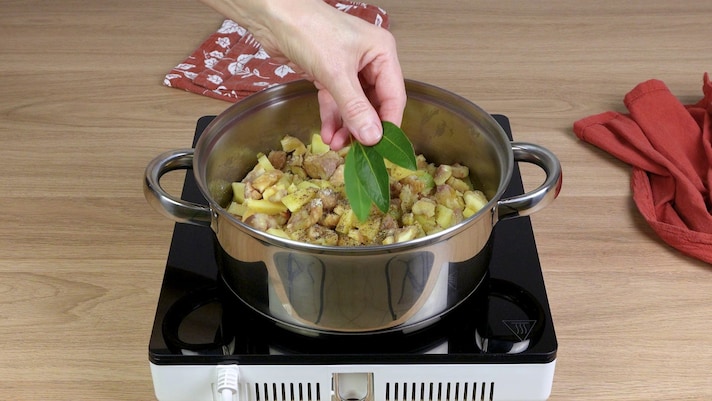
Season with salt and pepper and season with the remaining bay leaves and let it flavor for a few moments.
Season with salt and pepper and season with the remaining bay leaves and let it flavor for a few moments.
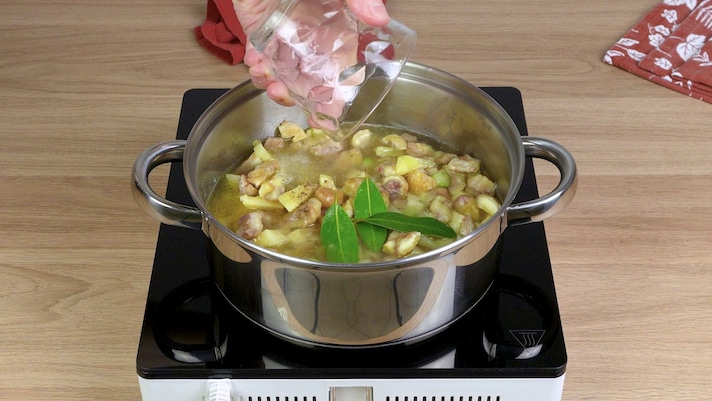
Then cover with water to the brim and let it cook gently for half an hour, stirring occasionally with a wooden spoon: if necessary, add another drop of water.
Then cover with water to the brim and let it cook gently for half an hour, stirring occasionally with a wooden spoon: if necessary, add another drop of water.
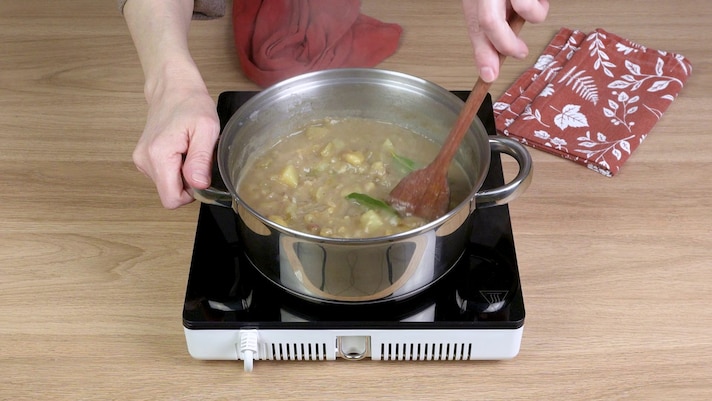
When the potatoes are soft and the bottom is thick and compact, turn off the heat and remove the bay leaf.
When the potatoes are soft and the bottom is thick and compact, turn off the heat and remove the bay leaf.
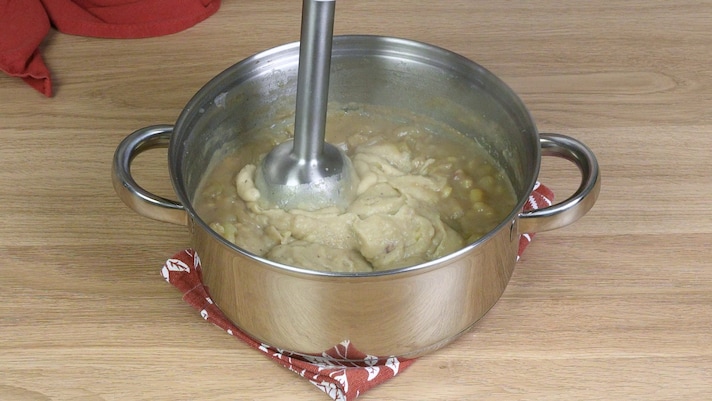
Blend everything well with an immersion blender.
Blend everything well with an immersion blender.
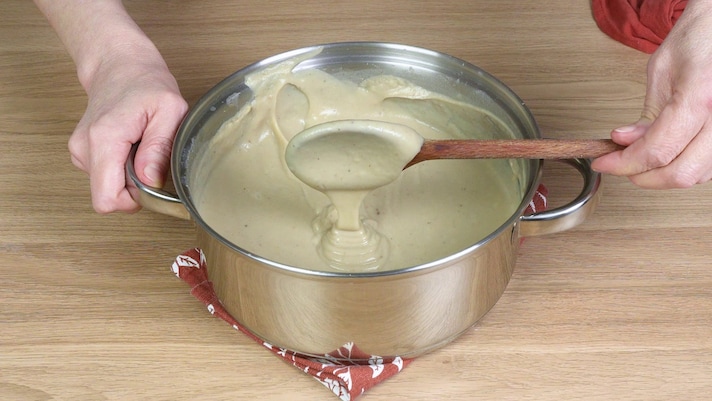
At the end you should obtain a smooth and velvety cream.
At the end you should obtain a smooth and velvety cream.
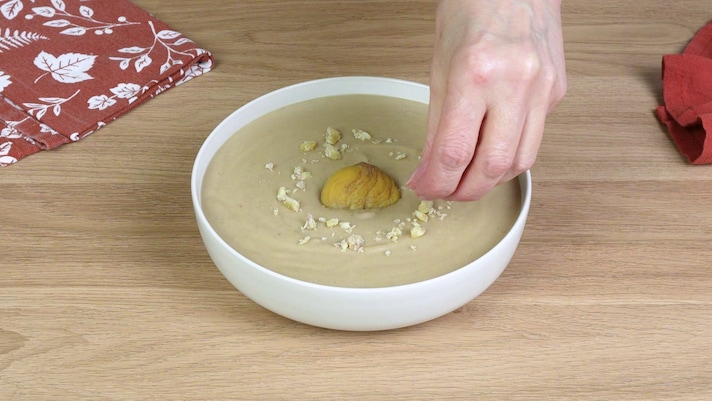
Divide the chestnut soup into individual bowls, garnish with a whole chestnut and chopped chestnuts and finish with a drop of raw oil.
Divide the chestnut soup into individual bowls, garnish with a whole chestnut and chopped chestnuts and finish with a drop of raw oil.
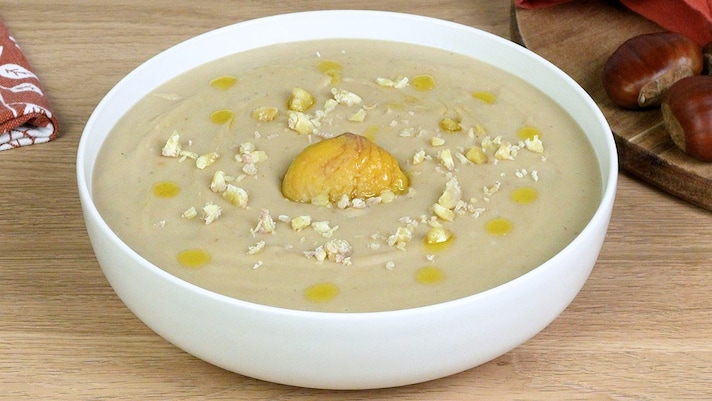
Bring the chestnut soup to the table and serve. Enjoy!
Bring the chestnut soup to the table and serve. Enjoy!


