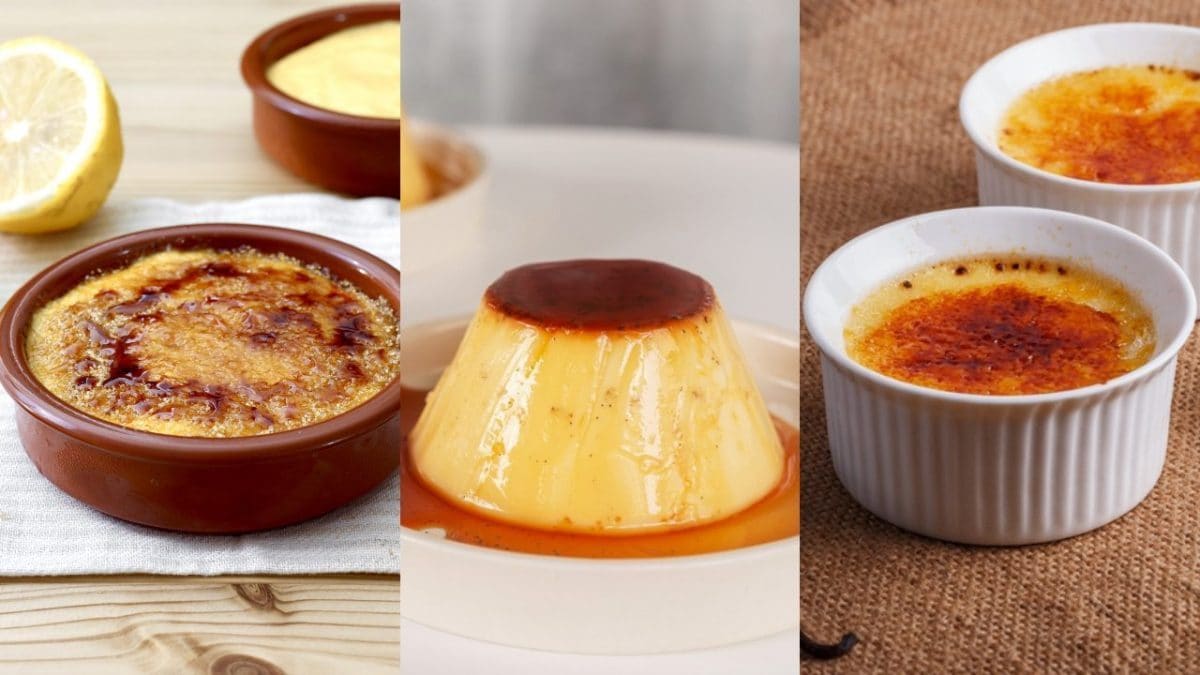
They belong to the large family of spoon desserts and are often confused with each other: we are talking about crema catalana, crème caramel and crème brûlée, desserts that represent a great classic of pastry making, and which can also be made at home, perfect to serve to end a dinner with friends or family.
This delicious trio shares similar (though not identical) ingredients, featuring a flavored egg custard and a caramel topping. Specifically, crema catalana and crème brûlée are considered practically the same thing, but with different names: and with the arrival of crème caramel, things can get a little more complicated. Below, we'll look at the differences, so you'll never have to worry about which dessert to order at a restaurant or pizzeria or make at home.
What is The Difference Between the Three Creams?
Apparently very similar, in reality we are exploring real worlds apart, where the peculiarities are hidden in the use of ingredients, in the proportions, in the presence of aromas, in the cooking methods, which give specific appearance, taste and consistencies.
1. Geographical Origins
Let's start with the origins of these desserts, which isn't as obvious as their names suggest. Crème caramel has its origins in France, Portugal, and Spain, referring to a milk and caramel pudding popular throughout the world in various variations, from Portuguese milk to South American flans. Crema Catalana, on the other hand, originated in Spain, more precisely in Catalonia, linked to the feast of Saint Joseph: some place it as early as the 14th century, invented by chance by some nuns during a bishop's visit. In Spain, it is considered the ancestor of the French crème brûlée, which first appeared in a recipe book at the end of the 17th century. Both versions, however, may have borrowed the recipe for burnt cream, a burnt custard typical of Cambridge.
2. Ingredients
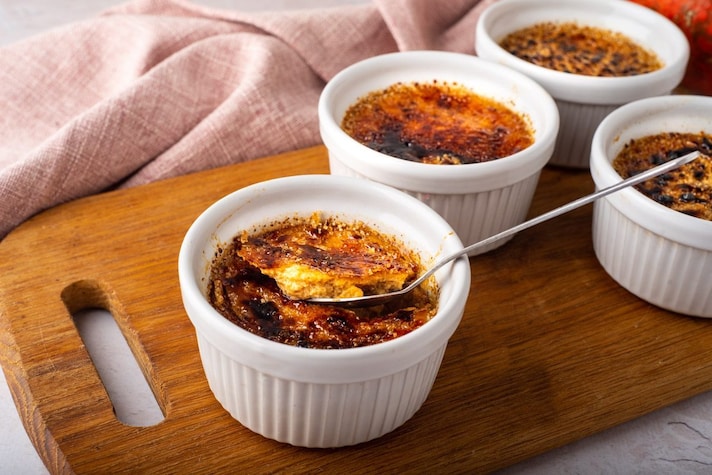
As mentioned above, these two recipes share some key ingredients, such as milk, eggs, sugar, and cream, but despite this, their compositions are very different. Crema Catalana, in addition to milk, egg yolks, and sugar, contains cornstarch (maizena) and is flavored with lemon zest and cinnamon. In crème brûlée, however, the fat comes from cream and a smaller amount of milk: it does not require thickeners and the flavor is vanilla. Finally, crème caramel is also starch-free and is made only with milk, eggs (a mixture of egg whites and yolks), sugar, and vanilla: the addition of a little cream is optional.
3. Preparation
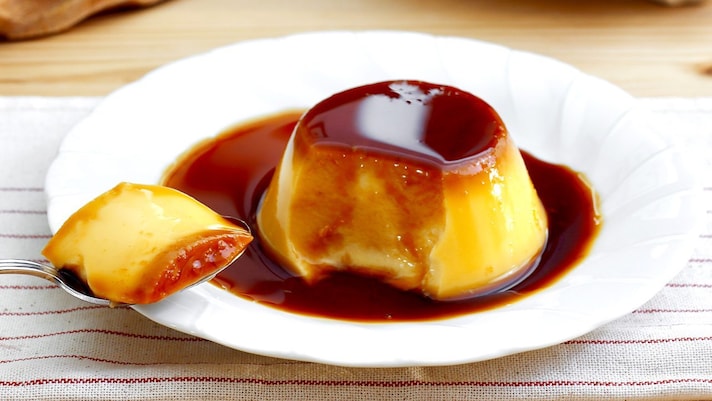
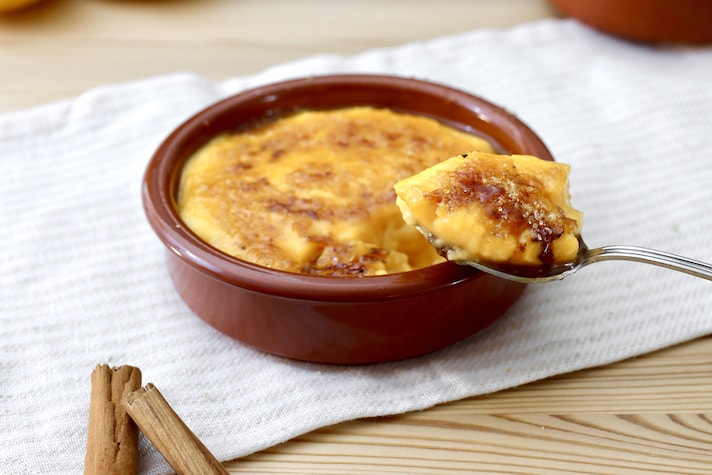
What makes the difference during the preparation phase is the cooking and caramelization of the granulated sugar. Crema Catalana is cooked directly on the stove: it is thickened in a saucepan, then distributed into individual cocottes, left to cool and then completed by sprinkling a little sugar on the surface, which is burned with a blowtorch to form a thin, crunchy film. Crème caramel requires a bain-marie oven: the melted caramel is poured onto the bottom of the mold (large or single-serving), the mixture is added on top and cooked on a baking sheet with water, then left to firm up in the refrigerator and turned out by inverting it just before serving. The crème brûlée is cooked in a bain-marie in the oven in the same cocotte in which it will be eaten: after cooling it is sprinkled with a generous layer of sugar and caramelized with a blowtorch or under the grill, to obtain a thick crust that can be broken with a teaspoon, just as the iconic protagonist of the film Amélie teaches us.
4. Appearance and Taste
At this point, it's easy to see that the final result can't be the same: the crema catalana, inside its little bowls, is fresh and "light," with notes of cinnamon and lemon that add a lively touch to the aroma. The crème brûlée, on the other hand, is more opulent and velvety, thanks to the cream and vanilla, which warm, while the caramelized sugar crust is a bit bitter, perfect for balancing the sweetness. We conclude with the crème caramel, which has a different consistency, similar to that of panna cotta due to the starch and which is characterized by the caramel not being hard, but rather liquid that drips down.
;Resize,width=767;)
