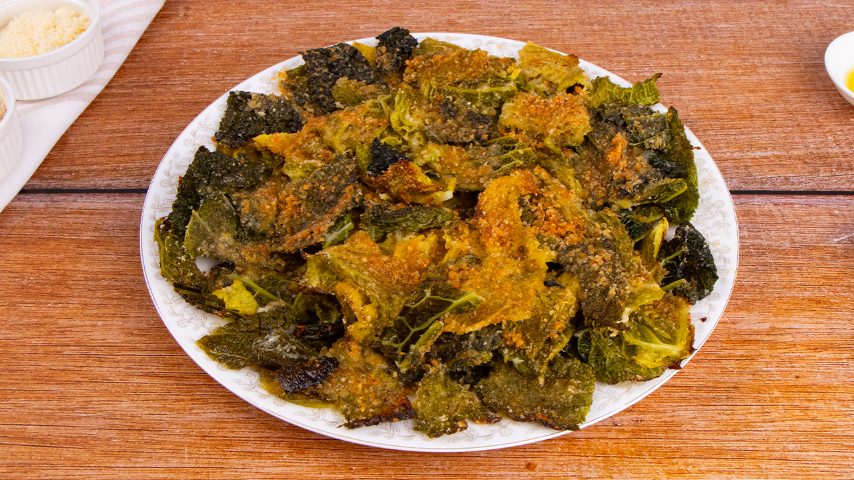
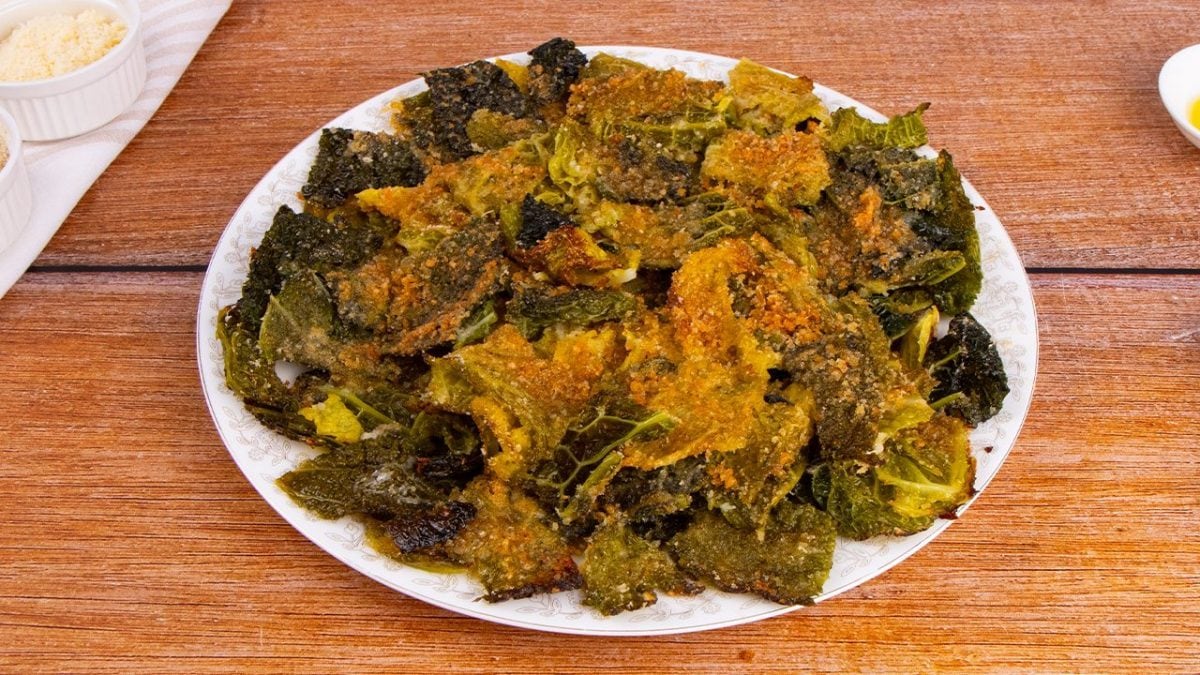
Baked Savoy Cabbage is a simple and flavorful side dish made with tender cabbage, Parmesan, breadcrumbs, garlic, and extra virgin olive oil.
The cabbage is first softened in a pan, then transferred to a baking dish and topped with more Parmesan and breadcrumbs before being baked until golden and lightly crisp on the surface.
It is an easy way to transform a humble winter vegetable into a comforting side dish that works beautifully with roasted meats, fish, eggs, potatoes, or a vegetarian main course.
Why Everyone Will Love This Recipe
This recipe combines a soft, tender cabbage base with a crisp and savory topping. Parmesan adds plenty of flavor both inside the cabbage mixture and over the surface, while breadcrumbs create the golden crust that makes every serving more satisfying. Garlic and olive oil keep the seasoning simple but aromatic, allowing the natural sweetness of the Savoy cabbage to come through.
It is also an easy oven-baked side dish that requires only a handful of ingredients and can be prepared without complicated techniques.
What Is Oven-Roasted Savoy Cabbage?
Baked Savoy Cabbage is a cooked cabbage dish in which Savoy cabbage is first sautéed until tender, then baked with Parmesan, breadcrumbs, and olive oil until the top becomes golden.
Savoy cabbage is recognizable by its deeply crinkled, tender leaves and compact head. Compared with standard green cabbage, its leaves are generally softer and more delicate, making it particularly suitable for soups, braised dishes, rolls, and baked recipes. Cabbage has been an important ingredient in European cooking for centuries because it grows well in cool climates and can be used in a wide variety of preparations.
This baked version has a particularly Italian character thanks to the combination of extra virgin olive oil, garlic, Parmesan, and breadcrumbs, ingredients often used to turn vegetables into simple gratin-style side dishes.
Cooking Tips
- Remove the thick central rib from the Savoy cabbage leaves because it takes longer to soften than the leafy parts and can create an uneven texture in the finished dish.
- Cut the leaves into pieces of similar size so they cook evenly during the initial sauté and are easier to arrange in the baking dish.
- Brown the garlic gently in the olive oil because allowing it to become too dark can make it bitter and overpower the mild flavor of the cabbage.
- Cook the cabbage until softened before transferring it to the oven because the baking stage is mainly intended to create the golden crust rather than fully cook raw cabbage.
- Let excess liquid evaporate in the pan before adding the cabbage to the baking dish because too much moisture can prevent the breadcrumb topping from becoming crisp.
- Mix the first quantity of Parmesan thoroughly through the softened cabbage so its savory flavor is distributed throughout the dish rather than remaining only on the surface.
- Spread the cabbage in an even layer in the baking dish because this helps the breadcrumb and Parmesan topping brown consistently.
- Sprinkle the breadcrumbs evenly rather than piling them in one area because a thin, uniform coating produces a better crunchy texture.
- Drizzle only a small amount of extra virgin olive oil over the topping because enough oil helps it brown, while too much can make the breadcrumbs heavy.
- Serve the cabbage soon after baking if you want to enjoy the strongest contrast between the soft vegetable layer and the crisp Parmesan topping.
Frequently Asked Questions
Can I Use Green Cabbage Instead of Savoy Cabbage?
Yes. Green cabbage can be used, although its leaves are usually firmer and may need a little longer in the pan before baking. Savoy cabbage has a more tender texture, which makes it especially well suited to this recipe.
Can I Add Other Cheeses?
Absolutely. Pecorino can be used for a stronger, saltier flavor, while mozzarella or scamorza can be added if you want a softer, meltier result. Keep in mind that moist cheeses will make the dish less crisp, so use them in moderation.
Can I Make Baked Savoy Cabbage Without Breadcrumbs?
Yes, although the topping will be less crunchy. You can omit the breadcrumbs and use Parmesan alone, or replace them with crushed crackers, ground nuts, or another dry topping that browns well in the oven.
Can I Add Other Seasonings?
Yes. Black pepper, chili flakes, thyme, rosemary, nutmeg, or lemon zest can all work well. Add stronger flavors sparingly so they complement the cabbage rather than masking its naturally mild sweetness.
Why Is My Baked Cabbage Watery?
Savoy cabbage releases moisture as it cooks, so transferring it to the baking dish before that liquid has evaporated can make the final dish watery. Continue cooking the cabbage uncovered in the pan for a few extra minutes before assembling if necessary.
What Can I Serve With Baked Savoy Cabbage?
It pairs well with roast chicken, pork, fish, sausages, baked potatoes, legumes, or eggs. It can also be served as part of a vegetarian meal alongside grains or another substantial vegetable dish.
How to Store
Store leftover Baked Savoy Cabbage in an airtight container in the refrigerator for up to 3 days. Reheat it in the oven until hot if you want to restore some of the crispness of the Parmesan and breadcrumb topping. The microwave also works, although the surface will become softer.
How to Freeze
Let it cool completely, transfer it to a freezer-safe container, and freeze for up to 1 month. Thaw overnight in the refrigerator and reheat in the oven until thoroughly hot. Adding a small amount of fresh breadcrumbs and Parmesan before reheating can help refresh the topping.
Ingredients
How to Make Oven-Roasted Savoy Cabbage
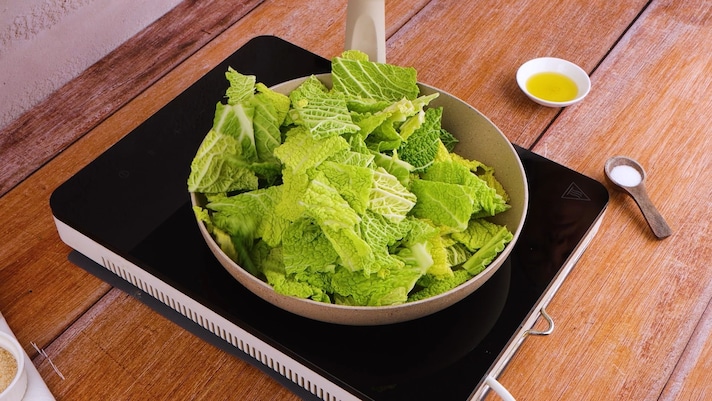
Start by removing the outer leaves of the vegetable, then remove the central core and chop the rest of the cabbage into small pieces. Pour a drizzle of oil into a pan and sauté a clove of garlic, then add the cabbage.
Start by removing the outer leaves of the vegetable, then remove the central core and chop the rest of the cabbage into small pieces. Pour a drizzle of oil into a pan and sauté a clove of garlic, then add the cabbage.
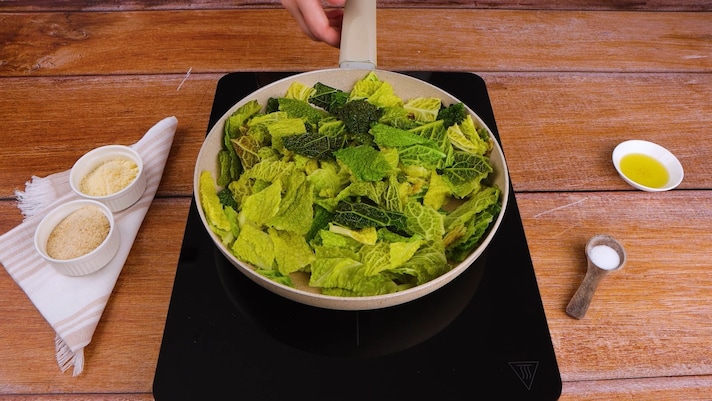
Cook over medium heat, stirring occasionally, until the cabbage is soft.
Cook over medium heat, stirring occasionally, until the cabbage is soft.
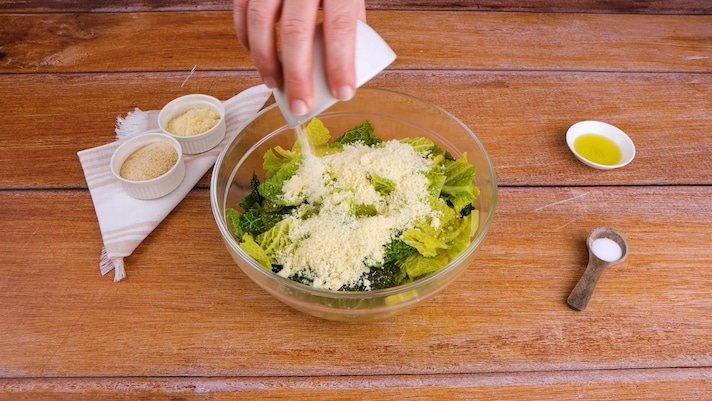
Then transfer it into a bowl, season with a generous pinch of salt and add 70 grams of grated parmesan taken from the total dose, then mix well to flavor the vegetables.
Then transfer it into a bowl, season with a generous pinch of salt and add 70 grams of grated parmesan taken from the total dose, then mix well to flavor the vegetables.
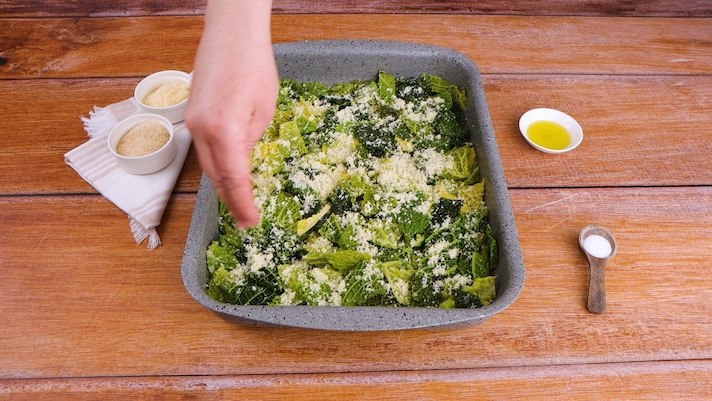
Spread the cabbage in a baking dish and sprinkle the surface with the remaining Parmesan cheese.
Spread the cabbage in a baking dish and sprinkle the surface with the remaining Parmesan cheese.
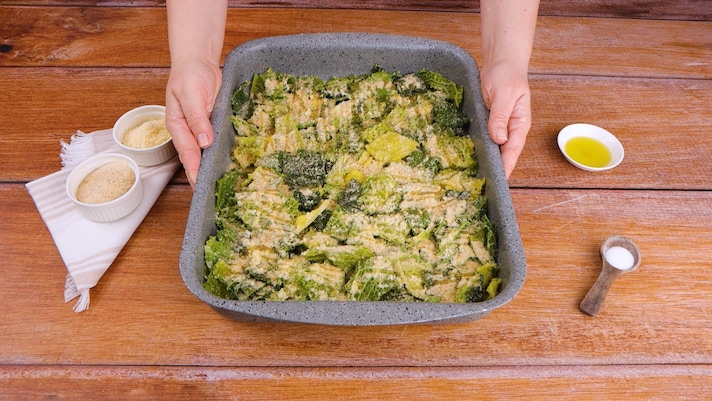
Complete with breadcrumbs and a drizzle of oil, then cook in a preheated static oven at 395°F/200°C for 25 minutes, until the surface is well browned and crispy.
Complete with breadcrumbs and a drizzle of oil, then cook in a preheated static oven at 395°F/200°C for 25 minutes, until the surface is well browned and crispy.
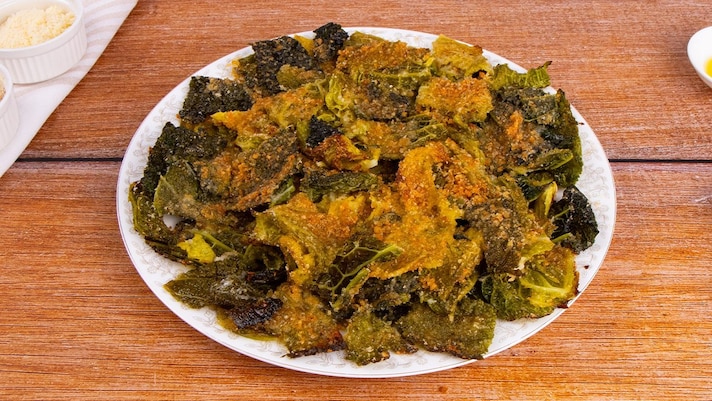
The baked cabbage is ready to be enjoyed!
The baked cabbage is ready to be enjoyed!


