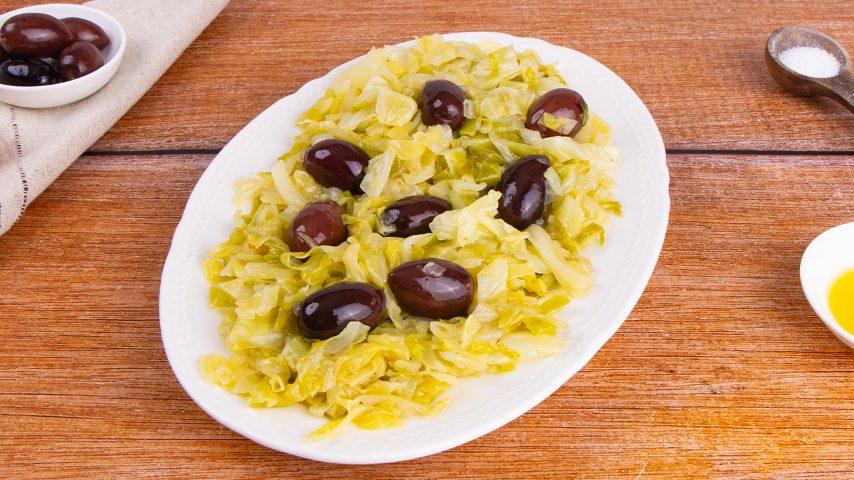
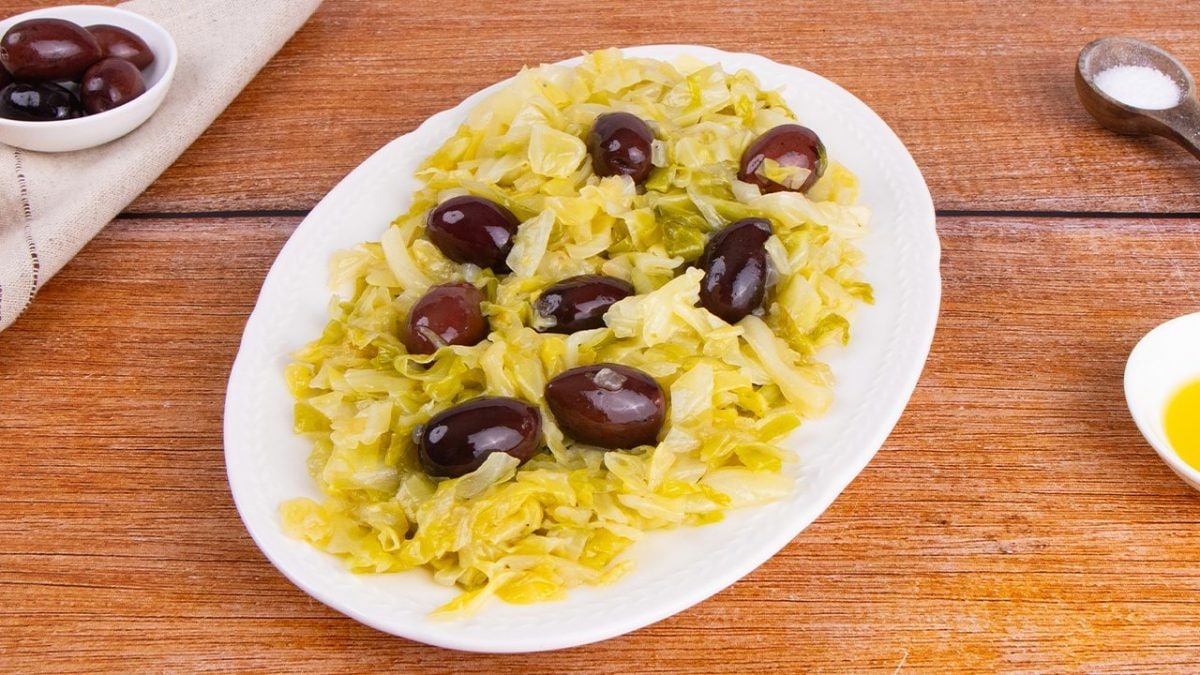
Sautéed Savoy Cabbage is a simple and flavorful side dish made with tender cabbage, sweet onion, vegetable broth, extra virgin olive oil, and briny Kalamata olives.
The cabbage cooks gently in the pan until soft but still pleasantly textured, while the onion adds sweetness and the olives bring a savory Mediterranean note. A little vegetable broth helps everything cook evenly without making the dish heavy.
It is an easy recipe to serve alongside meat, fish, legumes, potatoes, or grain-based dishes, and it comes together with just a handful of ingredients.
Why Everyone Will Love This Recipe
This sautéed cabbage is proof that simple vegetables can be full of flavor. Savoy cabbage has a naturally mild and slightly sweet taste, which pairs beautifully with the stronger, salty character of Kalamata olives. The onion softens as it cooks and creates a flavorful base, while extra virgin olive oil gives the dish richness.
It is also quick and practical. The cabbage needs only about 10 minutes of covered cooking before the final seasoning is added. The recipe is easy to adapt too. You can add chili flakes, garlic, herbs, or a squeeze of lemon depending on what you are serving with it.
What Is Sautéed Savoy Cabbage?
Sautéed Savoy Cabbage is a pan-cooked vegetable side dish made by softening shredded Savoy cabbage with onion, olive oil, and a small amount of broth. Savoy cabbage is known for its wrinkled, tender leaves and softer texture compared with many standard green cabbages. It has long been used in European home cooking in soups, braised dishes, stuffed recipes, and simple vegetable sides.
This version has a Mediterranean-style flavor profile thanks to the use of extra virgin olive oil and Kalamata olives, which are known for their deep purple color and rich, fruity, slightly briny taste. The combination creates a rustic but flavorful side dish that works especially well in cooler months, when cabbage is often at its best.
Cooking Tips
- Slice the Savoy cabbage into strips of similar thickness so it cooks evenly and softens at roughly the same rate.
- Remove the thick central core before slicing because it takes longer to cook and can remain tougher than the leaves.
- Cook the onion gently until translucent because allowing it to soften slowly brings out its natural sweetness without burning it.
- Use hot vegetable broth if possible because adding warm liquid helps maintain the temperature of the pan and keeps the cooking process steady.
- Do not add too much broth because the cabbage will also release some of its own moisture while cooking.
- Keep the pan covered during the first stage because the trapped steam helps soften the cabbage quickly without needing excess liquid.
- Add the Kalamata olives near the end because they only need enough time to warm through and flavor the cabbage.
- Taste before adding extra salt because Kalamata olives and vegetable broth may already provide enough seasoning.
- If there is too much liquid left after cooking, remove the lid and let the cabbage cook for a few extra minutes so the excess moisture can evaporate.
- Serve the dish warm rather than piping hot if you want the flavor of the olives and extra virgin olive oil to stand out more clearly.
Frequently Asked Questions
Can I Use Regular Green Cabbage Instead of Savoy Cabbage?
Yes. Green cabbage can be used, although its leaves are firmer and may need a little more cooking time. Savoy cabbage is more tender, so it softens quickly and gives the dish a lighter texture.
Can I Use Another Type of Olive?
Absolutely. Black olives, green olives, or Taggiasca olives can all work well. Each variety changes the flavor slightly, with Kalamata olives giving the dish a stronger and more robust Mediterranean character.
Can I Add Garlic?
Yes. Add one minced or lightly crushed garlic clove after the onion has softened and cook it briefly before adding the cabbage. Avoid browning it too much because burnt garlic can make the dish bitter.
Can I Make This Dish Spicy?
Yes. Add chili flakes or a small amount of fresh chili while cooking the onion. A little heat pairs especially well with the salty olives and slightly sweet cabbage.
Why Is My Cabbage Too Watery?
The cabbage may have released more moisture than expected, or too much broth may have been added. Remove the lid and cook for a few extra minutes over medium heat until the excess liquid reduces.
What Can I Serve With Sautéed Savoy Cabbage?
It pairs well with roasted chicken, grilled fish, pork, sausages, lentils, beans, rice, couscous, or baked potatoes. It can also be served as part of a vegetarian spread alongside other Mediterranean vegetables.
How to Store
Store leftover Sautéed Savoy Cabbage in an airtight container in the refrigerator for up to 3 days. Reheat it gently in a skillet over low heat, adding a very small splash of broth or water if it has become dry.
How to Freeze
Let it cool completely, transfer it to a freezer-safe container, and freeze for up to 1 month. Thaw overnight in the refrigerator and reheat in a skillet. If the cabbage releases water after thawing, cook it uncovered for a few minutes until the liquid evaporates.
Ingredients
How to Make Sautéed Savoy Cabbage

Peel the onion, chop it finely and set it aside.
Peel the onion, chop it finely and set it aside.

Cut the cabbage in half, then slice it into strips.
Cut the cabbage in half, then slice it into strips.

In a pan, add the extra virgin olive oil and the onion, then fry until it becomes translucent.
In a pan, add the extra virgin olive oil and the onion, then fry until it becomes translucent.

Add the cabbage and the vegetable broth.
Add the cabbage and the vegetable broth.

Cover with a lid and let it cook for 10 minutes.
Cover with a lid and let it cook for 10 minutes.

After 10 minutes, season the cabbage with pepper and salt.
After 10 minutes, season the cabbage with pepper and salt.

Add the olives and mix everything well.
Add the olives and mix everything well.
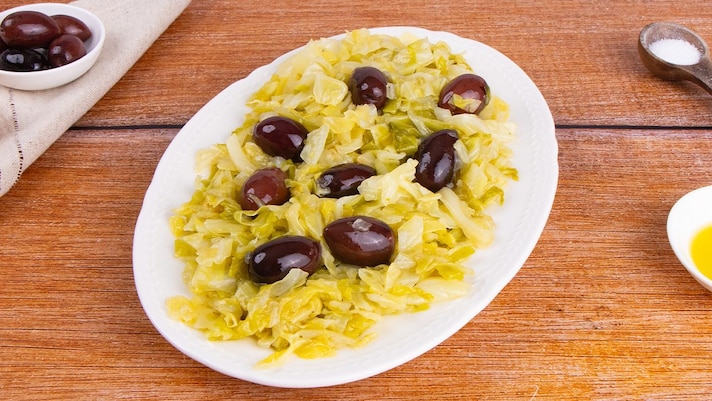
Serve the cabbage on a serving dish and enjoy!
Serve the cabbage on a serving dish and enjoy!


