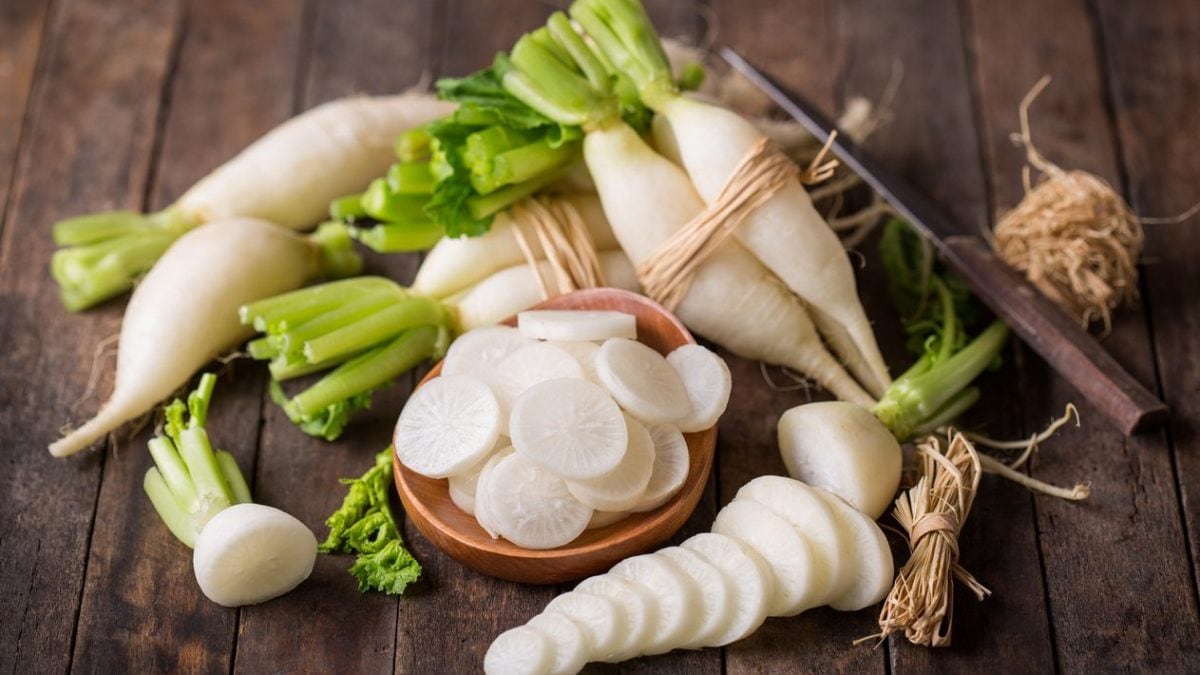
With its unique flavor and biological richness, daikon has left Japan and is becoming popular around the world. It is a particular variety of white radish, a beloved food in its homeland (where radishes in general are already used in many dishes) characterized by a fresh, aromatic, and slightly spicy flavor that also pairs very well with Mediterranean cuisine. Daikon—also known as winter radish, oriental radish, or white radish—is a vegetable belonging to the Cruciferae/Brassicaceae family and is actually only the most famous representative of a very diverse species: daikon can also take on shades of red, purple, and green, and its shape can be cylindrical, spherical, or oblong.
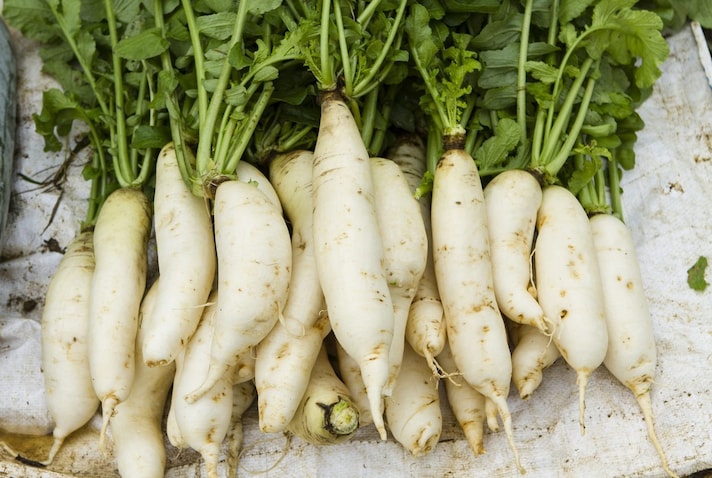
The daikon we're examining, the one known as white radish, is called aokubi daikon. It's the edible root of Raphanus sativus and resembles a large carrot. It's quite large, reaching up to 30 cm in length and a diameter of at least 5-6 cm, but its biological composition is almost identical to our small red radish. Its consistency is similar to that of a radish, as is its flavor. However, given its considerable length, the upper portion of the daikon has a sweeter flavor, while the lower part, narrower and thinner, is characterized by its spiciness. But it doesn't end there, because daikon isn't just delicious; it's also an excellent ally for the well-being of the human body.
Daikon's Properties and Benefits
Daikon has an interesting nutritional profile, featuring a low calorie content (about 15-25 kcal per 100 grams) combined with a wealth of nutritional properties. Its profile is particularly rich in vitamin C (about 22 mg per 100 grams) and B vitamins. An excellent source of folate, a key antioxidant, it is rich in mineral salts, has a high fiber content that promotes natural intestinal regularity, and a high water content that makes it an excellent natural detoxifier. These are just some of the many properties of daikon: here are all the benefits of white radish in detail.
1. Diuretic Function
Daikon is a vegetable composed of approximately 94% water, making it an incredibly hydrating food with detoxifying, diuretic, and draining properties. This ability provides concrete help in combating water retention and makes it excellent for eliminating waste from the body, especially when added to smoothies and juices.
2. Digestive and Intestinal Well-Being
Daikon boasts a high fiber content, which is essential for promoting and supporting gastrointestinal health, particularly in preventing constipation and intestinal transit disorders. Furthermore, white radish also contains a series of digestive enzymes that facilitate the digestion of carbohydrates and proteins, improving the assimilation of nutrients during meals.
3. Anti-Inflammatory Properties
Thanks to its vitamin C and zinc content, daikon is an excellent food for strengthening the immune system and minimizing infections and seasonal ailments, such as colds and flu. It also helps counteract the damaging effects of free radicals, promoting cell protection. It has anti-inflammatory properties thanks to antioxidant polyphenols such as quercetin and ferulic acid, which have powerful immunostimulant properties, and acts as a mucolytic, thinning mucus.
4. Ally of The Line
White radish is one of the most recommended foods for those following a low-calorie diet or generally wanting to keep their figure under control: not only is it extremely diuretic and very low in calories, but it contains such a quantity of fibre that it has a useful satiating effect.
5. Good Preventive Food
Daikon's nutritional richness makes it an excellent preventative food, useful for maintaining a healthy body and combating a variety of diseases. Vitamins, minerals (especially magnesium and potassium), antioxidants, and fiber are a valuable aid in preventing heart disease, diabetes, and neurodegenerative disorders, while the presence of isothiocyanates, a particular type of antioxidant typical of white foods, has a protective effect against cellular aging.
Daikon's Contraindications
The biggest problem daikon can cause is potential gastrointestinal problems, especially if you consume the white radish raw or in large quantities. Due to its high fiber content, it could cause digestive discomfort and worsen symptoms if you already suffer from gastritis, gastroesophageal reflux disease, irritable bowel syndrome, or colitis. Be careful if you have thyroid problems, too , as the presence of certain substances (especially goitrogens, plant-based molecules) can interfere with thyroid function.
Daikon's Uses in Cooking
Used both in animal feed and to extract an oil for use in cosmetics, daikon is best known for its culinary use in various Eastern cuisines, such as Korean (in Korea it is used to make the famous kimchi), Chinese, Vietnamese, and Indian, although it is in Japanese cuisine that it finds its greatest expression. Like ginger, daikon can be found fresh but also dried, used as a sort of spice.
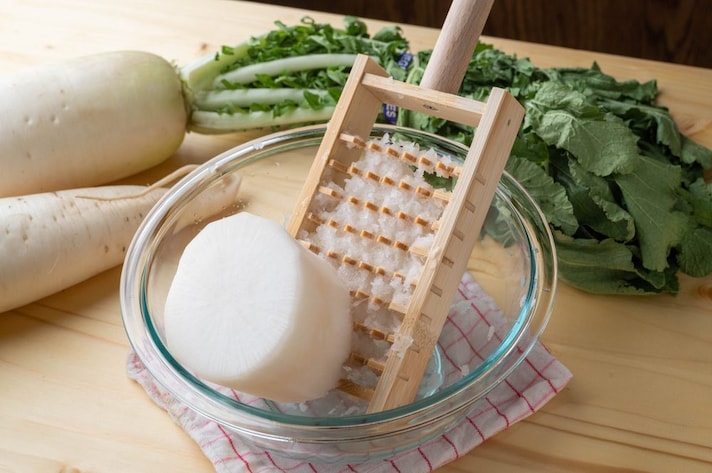
Fresh daikon can be eaten raw, grated, or flaked. It's often baked with other vegetables, such as potatoes, or steamed to preserve all its nutrients. It's ideal as a side dish for fish dishes, adding a refreshing touch to various soups and cream soups, but it can also be au gratin or stewed, seasoned with miso sauce. It's also excellent raw in salads, carpaccio, and tartare with an exotic flavor, or roasted and then seasoned with aromatic herbs and extra virgin olive oil.
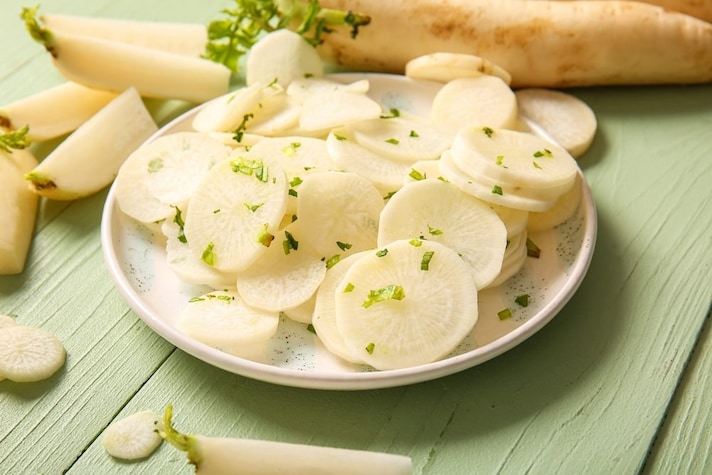
Daikon is particularly well-suited to soups and broths because it absorbs flavors and becomes very tender during cooking. It's also excellent fried: cook it like potatoes and you'll discover how crispy and tasty it can be. Marinated in vinegar, sugar, and salt, daikon root can be made into a crunchy, sweet-and-sour pickle, known as "takuan" in Japan and "danmuji" in Korea, often served as a side dish or accompaniment to main courses. Finally, as mentioned, daikon can be dried and used as a true spice: grating the tip produces a spicier product, while using the part near the leaves produces a milder flavor.
;Resize,width=767;)
