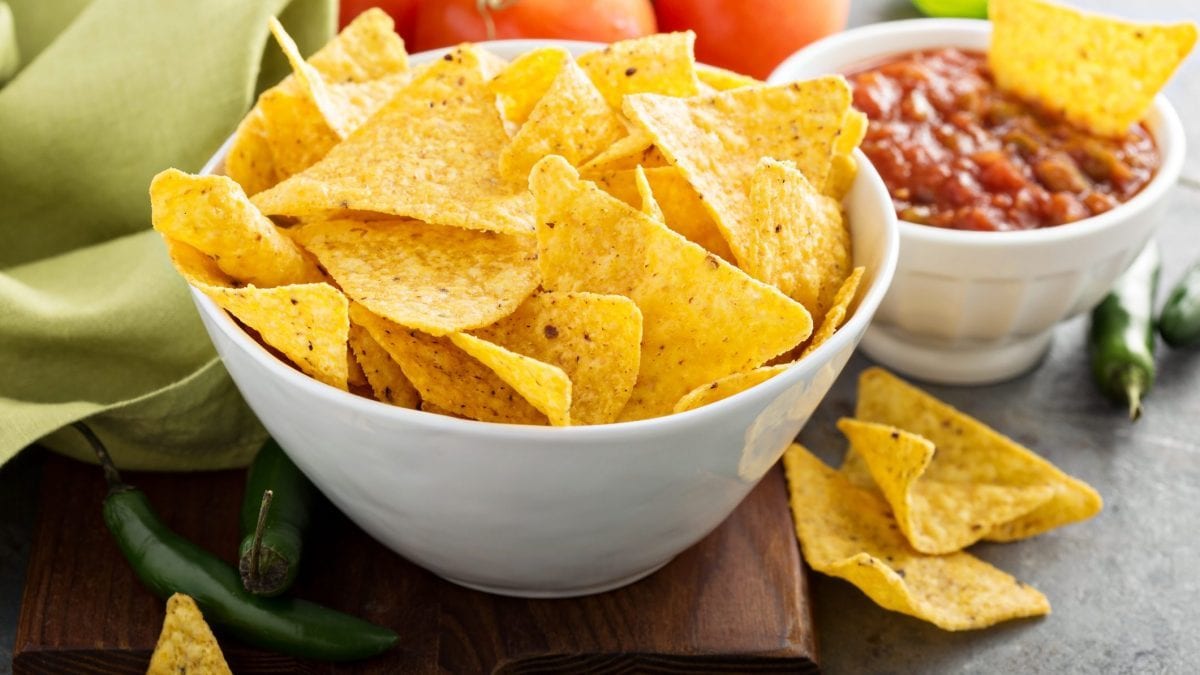
There are some things in life we're so convinced of that it's truly difficult to accept that we've always been wrong. Yet many say that we never stop learning, and indeed, that's exactly the case: therefore, in this article, we want to support this thesis and debunk a belief that almost no one would have thought to question. Nachos, those crunchy fried or toasted corn triangles, aren't actually called that: their real name is totopos. But then, why do we call them nachos? Because, after all, it's not entirely wrong, but it depends on how they're served and the dish we're dealing with: we'll explain everything below.
Nachos Vs. Totopos: What's The Difference?
Although they originate from faraway Mexico, we're all familiar with nachos: we've eaten them at least once in a restaurant, at a party, or even as a snack at the movies. However, if for some reason you're completely unaware of their existence, they're small corn triangles served with melted cheese, guacamole, jalapeños, and various salsas. So far, so good… so what's the problem? Very often, when we use the word nachos, we're also referring to just the corn triangles: in reality, however, these are called totopos.
The confusion arises especially outside Mexico, where the term nachos has become a sort of generic label for triangular tortilla chips. In Mexican tradition, however, the distinction is very clear and distinct: totopos are tortillas cut and fried, while nachos are a dish in their own right, prepared using totopos as a base, then topped with various ingredients.

Totopos First, Nachos Later
We are therefore faced with two closely related products, but belonging to different categories: one is an ingredient that serves as the base for the second, a complete recipe that requires the addition of other elements. Although they go hand in hand, their origins date back to different historical periods. Totopos are much older than nachos and have their roots in the traditional cuisine of Oaxaca and the Isthmus of Tehuantepec. According to various sources, they derive from the habit of recovering leftover tortillas by cutting them and cooking them again to preserve them longer. The term totopo also appears to have even older origins and derives from the Nahuatl tlaxcaltotopochtl, a word composed of tlaxcalli, meaning "tortilla," and totopoktli, meaning "toasted": it is a direct reference to the traditional preparation of these corn chips. In fact, according to authentic Mexican tradition, totopos are prepared from tortillas obtained from nixtamalized corn, that is, subjected to an ancient processing with water and alkaline lime which improves the consistency, flavor and nutritional properties of the cereal.

Nachos, on the other hand, have a much more recent and documented history: they were invented in 1940 in Piedras Negras, a Mexican city on the border with Texas, by Ignacio Anaya García, maître d'at the Victory Club restaurant. The most widely accepted reconstruction is that a group of US military wives arrived at the restaurant when the kitchen was already closed: to improvise something to serve, Anaya cut some corn tortillas into triangles and covered them in cheese and jalapeños, then put them to heat. When the customers asked the name of the recipe, he replied: "Nachos especiales". It seems, in fact, that "Nacho" was actually the nickname given to Ignacio. From that moment on, the dish began to spread rapidly in the United States, especially in the Southern states, becoming one of the symbols of Tex-Mex cuisine. Over time, the recipe evolved to include cheddar, ground beef, beans, sour cream, guacamole, and numerous other toppings. It's precisely this rich and filling version that dominates the collective imagination today and corresponds to the most common definition of "nachos."

