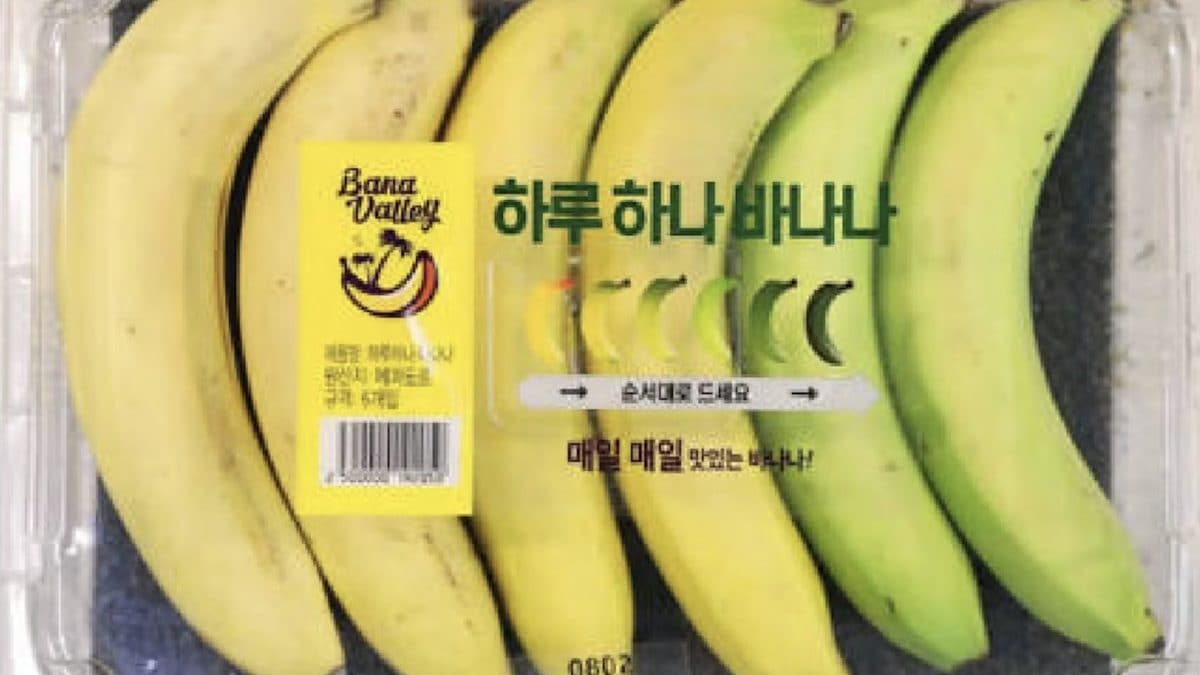
Bananas are beloved around the world, but they're often fickle: sometimes, just taking them out of your sight for a moment is enough for them to ripen, causing them to quickly become soft; other times, bananas remain unripe for days. This problem has led to innovative solutions like "one-a-day bananas," an idea introduced by the South Korean supermarket chain E-Mart. These packages contain six bananas at varying degrees of ripeness: some ready to eat, others still green and destined to ripen in the coming days. But is enclosing bananas in plastic really a smart solution? Probably not.
The Problem of Packaging and Environmental Impact
The idea, implemented in South Korea since 2018, allows consumers to have a perfectly ripe banana every day of the week, avoiding waste and making consumption more convenient. "One-a-day bananas," or haru hana in Korean, are designed to solve a common problem: bananas tend to ripen all at the same time, often forcing consumers to eat them quickly or throw them away. With this packaging, consumers can plan their consumption gradually, following the fruit's natural ripening process. However, the South Korean company has also become known for other innovative ideas that perhaps create more problems than solutions: it has experimented with other ways to make "difficult" fruits more accessible, such as ready- to-eat coconuts or pre-cut watermelons. Spoiler alert: you can eat bananas even if they have spots, not to mention all the leftover recipes you can make with these fruits.

While the idea of progressively ripening bananas is practical, there's a major issue to consider: packaging. A huge amount of unnecessary plastic is used to hold together foods that already have perfect packaging: hygienic, practical, even ergonomic. A perfectly designed edible object that Koreans take and wrap in cellophane. In all likelihood, to avoid wasting the fruit (which would be compostable), we add more non-biodegradable plastic, which contributes to global pollution, requires resources for production, and has a significant impact on marine life and terrestrial ecosystems. The idea would make a little more sense if the bananas were packaged in compostable or biodegradable packaging, but we still don't see the real motivation behind this idea, which entails, among other things, additional costs for producers and consumers.
;Resize,width=767;)
