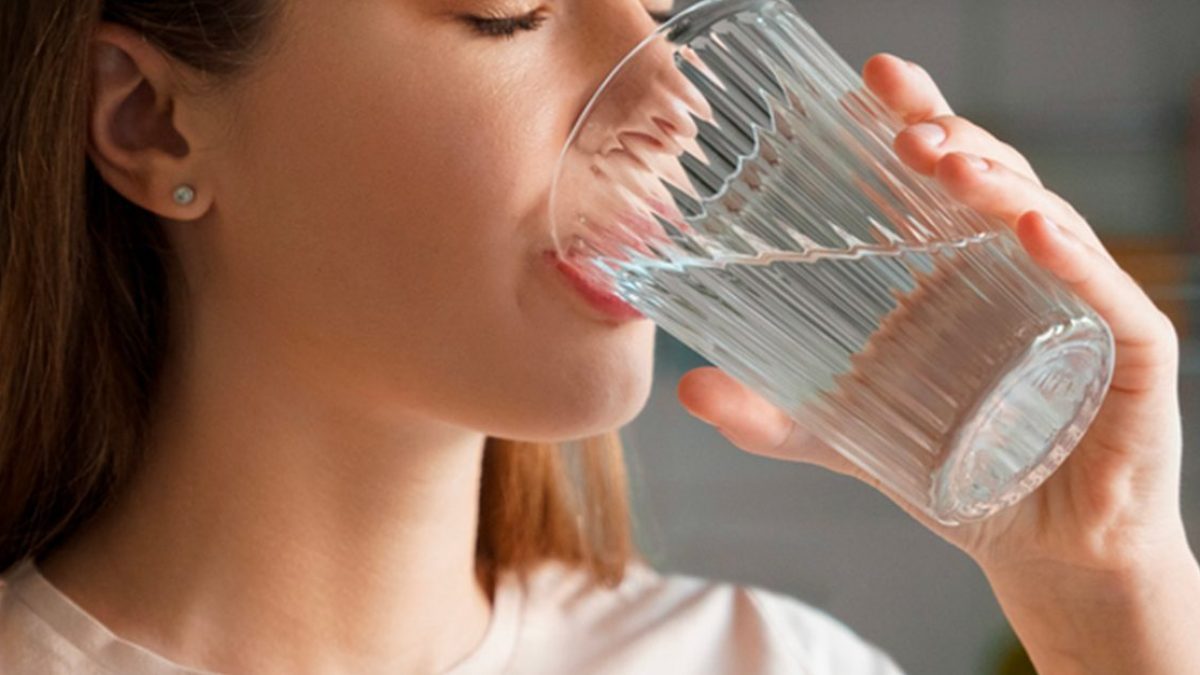
It's now a certainty: water has a flavor. This question has long been debated in the scientific world, but more and more research by industry experts demonstrates that different types of water can have different tastes. The fact that water has a flavor, therefore, is not a matter of suggestion but a reality that depends on several factors, including its origin and the possible treatments it undergoes before being bottled.
Let's discover together all the nuances of water and learn to distinguish its different tastes, but also to understand the characteristics to pay attention to to understand what influences the flavor of the vital liquid for our body.
Does Water Really Have Taste?
In school, you were probably taught that water is an "odorless, colorless, and tasteless" liquid, but in reality, this isn't quite the case, and science itself proves it. In fact, water can have a different flavor from one type to another, determined by a series of factors that influence the taste we perceive in our mouths.
The taste of water can be sweeter or more acidic, more balanced, more calcareous, to name a few, and this depends on various components related to the way and place it springs, which necessarily influence its flavor. The main influences on the taste of water are three:
- Minerals. Before reaching its source, water travels a path that can be kilometers long, winding through rocks and soil, from which it obviously absorbs the main components. Minerals such as calcium, magnesium, and potassium influence the water and determine its flavor: in general, waters low in minerals are more flavorless, while those rich in minerals have a more pronounced flavor.
- pH. The pH of water is the parameter that measures its acidity and alkalinity, and is a fundamental component in determining the flavor of water: if it is low, the water will perceive a fresher and lighter taste, if it is higher, the taste you will perceive will be sweeter.
- Effervescence. The presence of carbon dioxide in water determines its natural effervescence and helps give a touch of liveliness to the flavor of the water, making it more fizzy and refreshing.
After years of debate on the topic, several recent studies are increasingly demonstrating that the taste of water isn't just a suggestion, but a true scientific reality. One of the most interesting is a study from the University of Padua that demonstrates the differences in taste between three different types of water, also explaining the reasons for those differences.

Water Tasting Parameters and Possible Flavors
Now you understand that not all water tastes the same, but how can you evaluate its flavor? There are a series of parameters you can use to evaluate the flavor of water and understand which one you like best.
First, you need to train yourself to perceive the actual taste of water: as we've explained, it can vary from sweet to neutral, from salty to bitter, depending on the mineral components and the factors that influence the water before it's bottled. Then, you need to learn to taste a glass of water just as you would a glass of wine: this will help you understand the sensation it leaves in your mouth, a good way to evaluate the flavor of mineral water. You might perceive it as smooth and silky, or heavier and full-bodied, and in many other ways that depend largely on personal perception. Retronasality, or the sensation you feel when you swallow water and its flavor rises from the back of your mouth to your nose, can also influence the overall perception of the flavor of mineral water.
- Generally speaking, we can say that low-mineralized waters are more tasteless than oligomineral or medium-mineralized waters;
- waters with a lot of calcium are sweeter;
- the bitterness comes from a high magnesium content;
- The presence of bicarbonates and chlorides makes the water more sapid;
- The sulfur-rich water is easily identifiable by its strong odor reminiscent of rotten eggs: as you know, this is not drinkable, but it is typical of many thermal waters used since ancient times for healing purposes.

How to Match Water and Food
You probably know that drinks like beer and wine pair well with different foods based on their flavor, but you've probably never thought of doing the same with water. And yet, thanks to its infinite flavor nuances, even water can be paired with foods based on its flavor once we've trained our palate to recognize tastes and no longer perceive it as a sort of non-flavor.
Much depends on personal taste, but generally speaking, there are some flavor combinations that are particularly effective. Highly mineral waters, for example, pair well with the intense flavors of aged cheeses, game, and fish, while low-mineral water is perfect with Mediterranean diet foods, especially bread and pasta. Lighter, more delicately flavored waters enhance soft cheeses and almost all desserts.
;Resize,width=767;)
