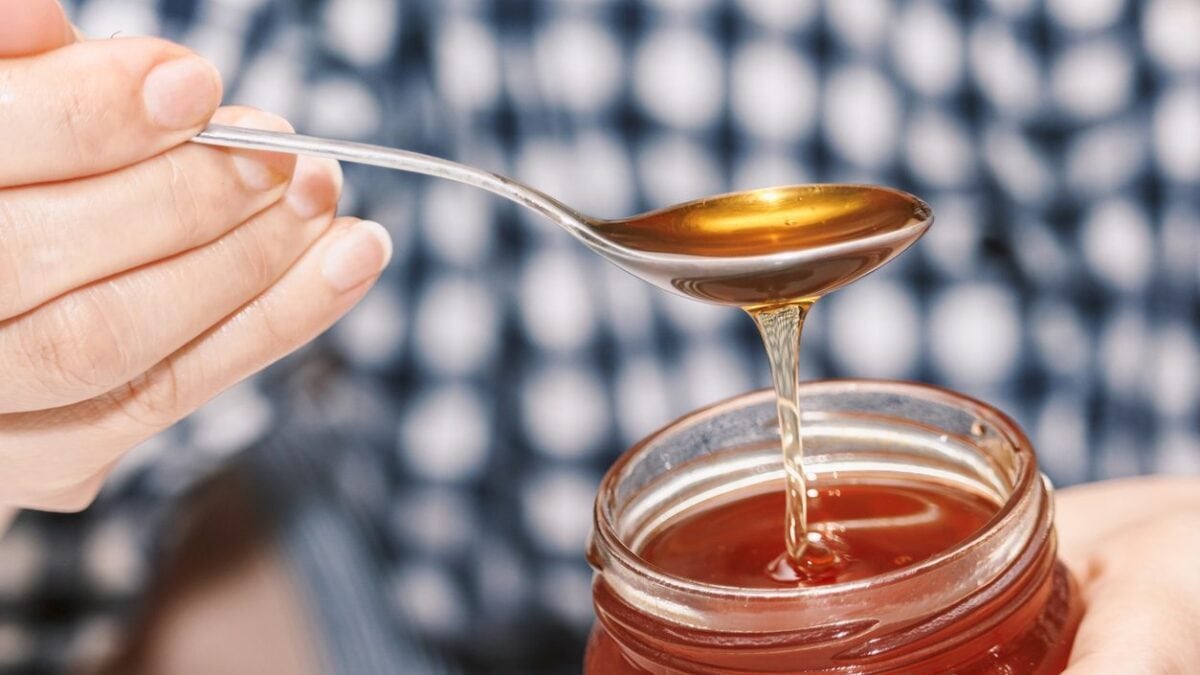
Honey is a wonderful food, one of the most precious the natural world has to offer. Produced by the tireless work of bees, particularly the species known as Apis Mellifera, which collect and process flower nectar, honey is nicknamed the "nectar of the gods," and for good reason. It has been loved since ancient times, not only for its nutritional value, but also for its many benefits—a natural antibacterial and anti-inflammatory, energizing, and soothing agent—and for its numerous cosmetic properties, especially for skin and hair care. Precisely because humans have been using honey for millennia, a whole series of beliefs and false myths surrounding this precious product have developed over time.
One such myth is that you should never use a metal spoon to scoop honey from a jar: the belief is that metal can trigger a chemical reaction that alters the taste and properties of the product. This is fundamentally incorrect, especially when it comes to the classic stainless steel spoon. Even this false theory, however, contains a grain of truth: this reaction could occur, but only under specific and prolonged conditions. Let's find out how the belief that a metal spoon spoils honey arose, what's true, and what happens when honey comes into contact with so-called "reactive metals."
Why People Believe Honey Should Not Come Into Contact With Metal
Tracing the origins of a popular belief is never easy, but we can identify a series of factors that influenced the rise of the belief that honey should never be taken with a metal spoon. First, there was a widespread fear regarding acidity and enzymes. Honey is a naturally acidic substance (with a pH between 3.5 and 6.1), and this led people to fear that acids could corrode the metal of the spoon, releasing ions capable of denaturing or "killing" the beneficial enzymes present in honey. Added to this is confusion with past cases involving poor-quality metal containers or the contact of honey with reactive metals, the only ones that can actually cause a product to deteriorate. It should be noted that, in the past, it was common to use poor-quality or less stable metals to produce cutlery, and these could actually oxidize or alter the flavor of acidic foods if left in contact for a long time.
This has certainly contributed to spreading the belief that metal should be avoided in contact with honey. A good deal of the blame must also be attributed to the marketing of wooden or ceramic spoons, often presented as more “natural” and safe only to be sold at a higher price. Furthermore, companies often exploit the nostalgia effect, idealizing the past and ancient materials, forcing the desire for simplicity and a return to origins. Even the promotion of the classic wooden honey spoon has helped reinforce the idea that wood is the only “pure” way to enjoy honey, while the use of this utensil, while useful, has nothing to do with the behavior of honey when in contact with the material it is made of.
What Really Happens When Metal and Honey Come Into Contact
Using a standard stainless steel spoon to scoop and consume honey is completely risk-free: when this type of metal comes into contact with honey, absolutely nothing happens. Stainless steel is, in fact, a stable and safe material, widely used in beekeeping equipment and food processing facilities. Brief contact with honey does not alter the product in any way, either chemically or organoleptically, and the belief that it kills the honey's enzymes is completely false. In reality, enzymes are neither alive nor dead, but merely active or inactivated, and contact with stainless steel does not alter their activity. Furthermore, the enzymes are present in such small quantities that they are irrelevant to human health.
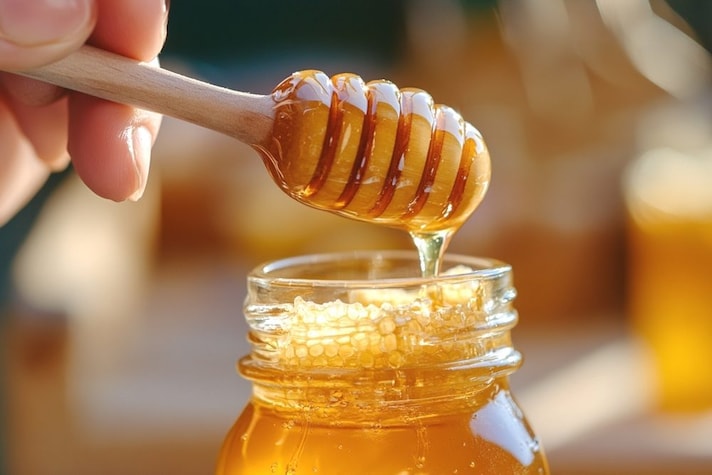
So, if a teaspoon can be used safely without any harmful effects, why use a honey dipper? It's preferred solely for functional reasons: the spiral-carved wood allows for the perfect collection and dispensing of honey, without accidentally dripping. Along with its practical function, it also offers a certain aesthetic beauty: the wooden utensil always lends a rustic, natural touch to honey tasting, and adds a touch of refinement, ideal for those who appreciate not only the taste but also the ritual of drinking honey.
Stainless Steel Vs. Reactive Metals
As with all myths, the myth about the reaction between metal and honey also contains a grain of truth. While it is true that brief exposure of stainless steel in a product does not cause any type of reaction, it is also true that the situation changes in the case of prolonged use of reactive metals: these are all metals that tend to lose electrons very easily and react vigorously with oxygen, water, and acids. If honey comes into contact, especially for a long period of time, with metals of this type (for example, copper, raw iron, or aluminum), chemical reactions could actually occur that alter its quality. Stainless steel, on the other hand, is considered a basically inert (non-reactive) material, which does not alter the flavor or color of foods and is highly resistant to many chemical agents and humidity.
The Best Tools for Honey and How to Store It Correctly
Having debunked this myth, we can now say that stainless steel spoons, teaspoons, and stirrers are perfectly safe for honey, just like wood: both materials are perfectly safe and do not release any substances that alter the product. To avoid ruining honey, however, it is also important to know how to store it properly. The real risk, in fact, is not the spoon, but the container in which the honey is stored. The best material of all is glass: it is chemically inert, does not absorb odors or release substances, and protects the honey perfectly when combined with an airtight cap.
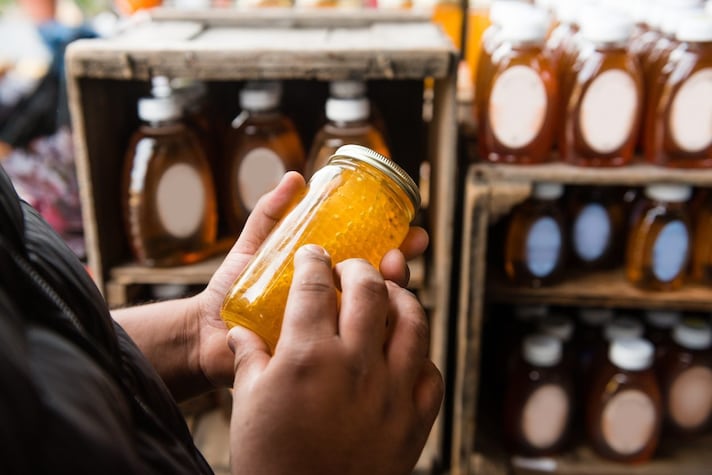
Choosing the right container, however, is not enough: honey is highly sensitive to humidity, direct light, and temperatures that are too low or too high. To avoid spoiling, store your jar in a dry environment, with an average temperature between 50°F/10°C and 68°F/20°C, and place it in a cupboard or pantry, away from direct sunlight and exposure to heat. If the honey crystallizes, don't worry, it's a natural process. Re-liquifying it is easy: just heat it very gently in a bain-marie, without exceeding 104°F/40°C–113°F/45°C.

