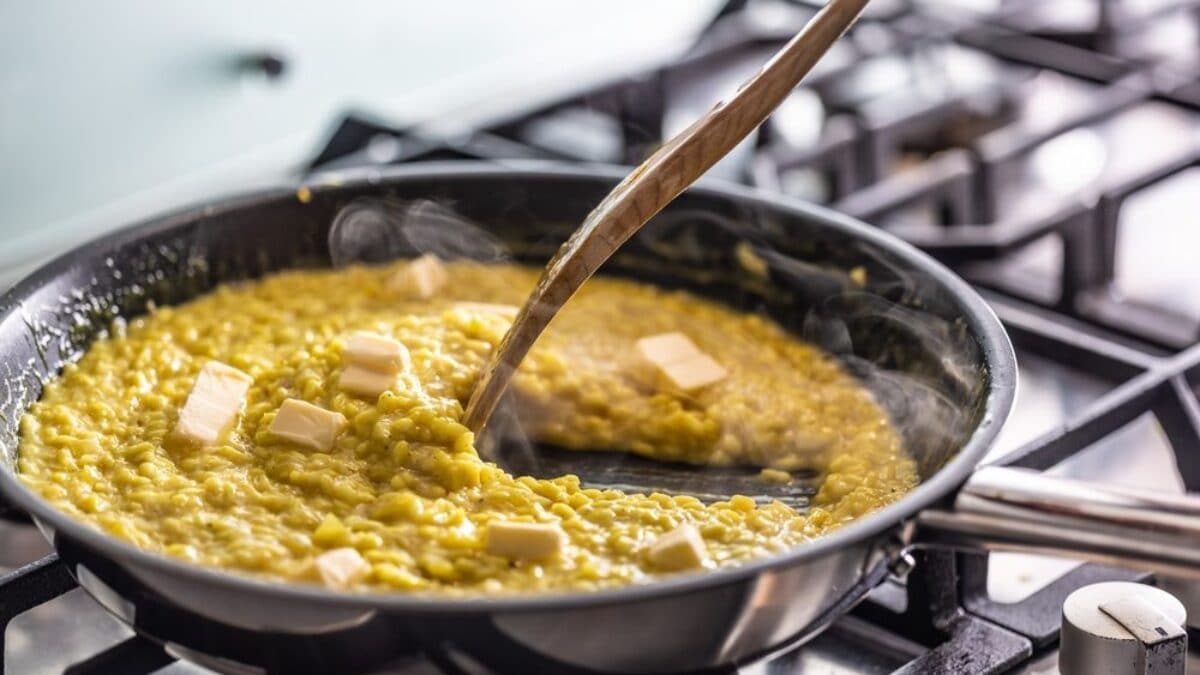
A curious idea has recently begun to circulate with some persistence: to cream risotto, you don't need butter, oil, cheese, or other fats; simply adding an ice cube at the end of cooking would be enough. The explanation, often provided in very short videos or visually convincing demonstrations, is that the cold and stirring make the risotto as creamy as a traditional creaming.
The problem is that this statement confuses different phenomena: an ice cube can indeed lower the temperature of the risotto, slightly dilute the cooking liquid, and help modify the consistency of the starch, but it cannot replace the physical and sensorial role of a fat. Saying that ice "creams" like butter is attributing properties to frozen water that it does not possess.
The fake news likely stems from a real misunderstanding: in professional kitchens, very cold butter , sometimes almost frozen, is often used during the final stage of risotto. But the crucial point is precisely this: it's still butter: the cold helps control the temperature and the dispersion of the fat, but it's the fat itself that contributes to the creamy, glossy texture of the risotto.
What Does It Really Mean, to "Cream" a Risotto?
In everyday language, mantecare is often used as a synonym for "to make creamy"; in cooking, however, the term indicates a more precise operation. Mantecare means incorporating and distributing a fatty component within a preparation rich in water, often with the help of starches or proteins that help stabilize the mixture. In risotto, this operation generally takes place off the heat or at very low heat, adding butter, oil, cheese, or other fatty ingredients and stirring vigorously.
The result does not depend on a single element, but on the interaction between:
- the water present in the broth and rice;
- the starch released from the grains;
- the added fat;
- the movement during the final phase.
This combination creates a more homogeneous, enveloping, shiny and stable consistency.
Starch's Role in Risotto
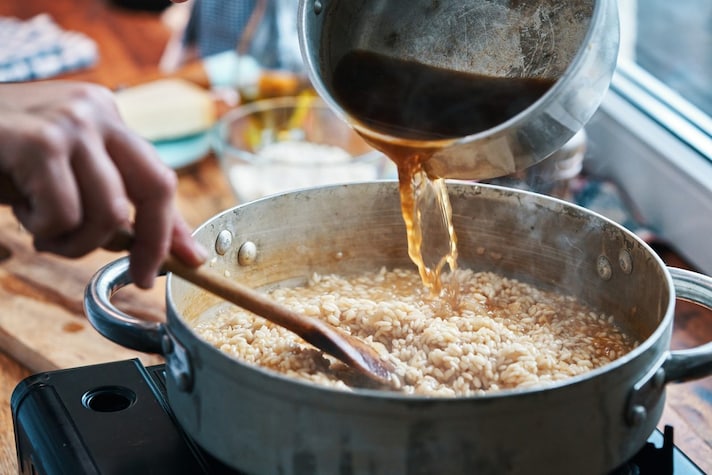
During cooking, rice releases some of its starch into the surrounding liquid: the starch absorbs water, swells, and increases the viscosity of the cooking liquid. It's one of the main factors responsible for risotto's creaminess: for this reason, you can achieve a creamy risotto even without adding butter or cheese.
A suitable variety, proper toasting, the gradual addition of broth, and careful cooking can produce a very thick and pleasant starchy sauce. This, however, doesn't mean the risotto has been creamed with ice: it simply means the starch has thickened the cooking water. The distinction is important: the creaminess can come from the starch, while traditional creaming also involves the incorporation of a fat component.
What An Ice Cube Actually Does
An ice cube is solid water: when it melts into the risotto, it produces some easily observable effects. First, it lowers the temperature of the dish, which can slow down the residual cooking time and make the final stage more manageable; second, it adds a small amount of water, which can thin out a risotto that's too dry.
If the risotto is shaken vigorously while the ice melts, the starch already present in the liquid is better distributed: the dish may therefore appear smoother and creamier. But that creaminess doesn't come from the ice; it comes from the starch that was already in the risotto. Ice can alter the temperature, density, and fluidity, but it doesn't add fat, doesn't create an emulsion on its own, and doesn't add the same sensation of smoothness and persistence on the palate.
Why Cold Butter Works
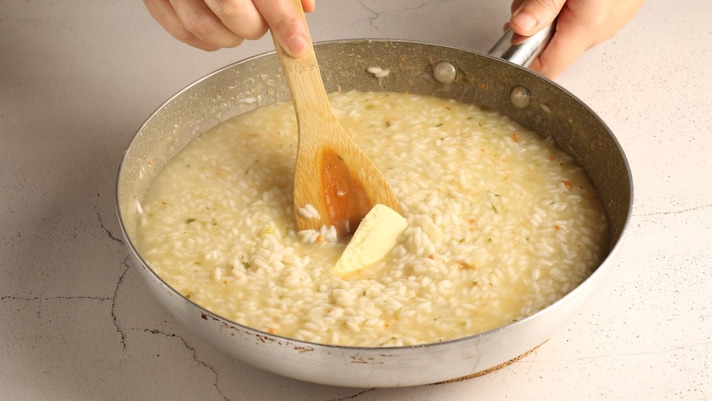
Confusion often arises from the professional use of cold butter. In many kitchens, in fact, the butter intended for creaming is kept in the refrigerator and added to the risotto as soon as it's removed from the heat.
This technique has a precise logic: the cold butter melts gradually and can be incorporated with greater control. The drop in temperature also helps prevent the fat from separating quickly or the risotto from overcooking.
However, the cold is only a favorable condition: the ingredient that performs the main function remains butter, with its fatty component and its particular structure. Replacing cold butter with an ice cube means eliminating the very element of the technique.
Creamy Isn't Always Achieved By Stirring
One of the most common misunderstandings is judging the result by looking at it alone: if the risotto appears creamy, it is assumed that it has been stirred correctly.
In reality, a preparation can be creamy for many different reasons. It may contain a lot of starch, cream, cheese, vegetable purees, emulsified fats, or simply a large amount of thickened liquid. Creaminess isn't judged solely by appearance. It also varies:
- the sensation on the palate;
- the lucidity;
- the ability of the risotto to remain fluid without becoming watery;
- aromatic persistence;
- the stability of the consistency during service.
A risotto thickened with just water and starch may be pleasant, but it will have different characteristics than one creamed with butter or oil.
Why The Trick Looks Convincing in Videos
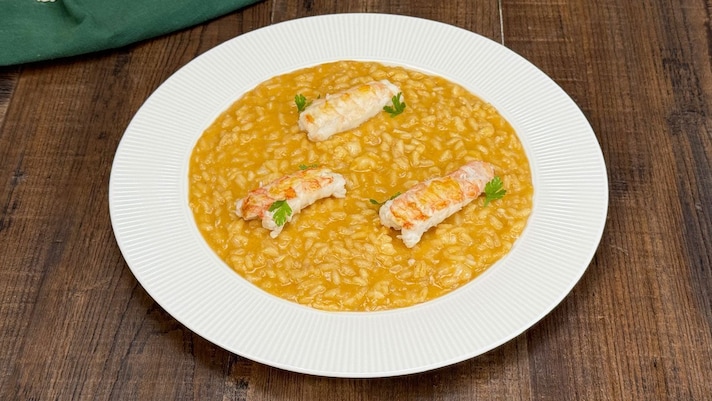
Food fake news often works because it takes a real effect and misinterprets it. In a video, the transition from a warm, thick risotto to a smoother, creamier one can appear spectacular . Adding ice, followed by vigorous stirring, produces an immediately visible change.
What the video doesn't always show is that the rice already contains gelatinized starch: it doesn't even show how much liquid was present beforehand, what variety of rice was used, whether fat was added beforehand, or how long the risotto was kneaded.
The final effect is therefore attributed to the cube, when in reality it depends on the entire cooking process and the presence of starch. This is a classic causality error: two phenomena occur one after the other, and the second is assumed to be caused entirely by the first.
Ice's Possible Negative Effects
Adding ice to risotto isn't necessarily disastrous, but it can create several problems if done inappropriately. For example, adding too much ice can lower the temperature excessively, making the dish lukewarm; it can also dilute the flavor and make the base too watery. If the risotto is already cooked properly, adding water can alter the balance between the grain and the cream. In some cases, the result initially appears runny, but quickly loses structure in the dish.
It must also be considered that fat does not only perform a technical function: it conveys aromas, rounds out the taste, reduces the perception of some harshness and contributes to the overall pleasantness.
By eliminating it, the sensory profile of the risotto changes significantly.
Can You Make a Good Risotto Without Butter?
The answer is yes: to cream a risotto, you need a fat, not specifically butter. A risotto can be creamed with extra virgin olive oil, flavored oils, cheeses, nut creams, or other ingredients containing fat.
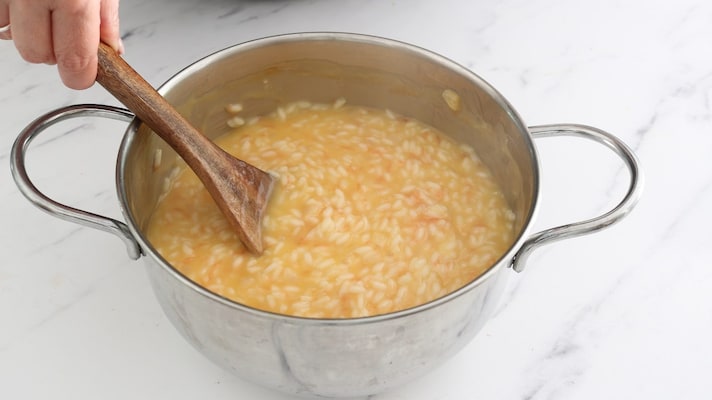
A risotto can be creamy even without added butter, oil, or other fats. In this case, the consistency depends mainly on the starch released by the grains during cooking: the starch binds the water, increases the viscosity of the base, and creates a natural cream.
Proper management of the broth, choosing the right rice, and stirring it at the end help distribute this starchy component evenly. The result can be very creamy, but technically, this isn't a creaming process with fat: it's a creaminess achieved by the thickening and natural emulsion of the starch with the cooking water.

